
Reviewed · DACHAU CONCENTRATION CAMP TOURS
Dachau Memorial Public Tour
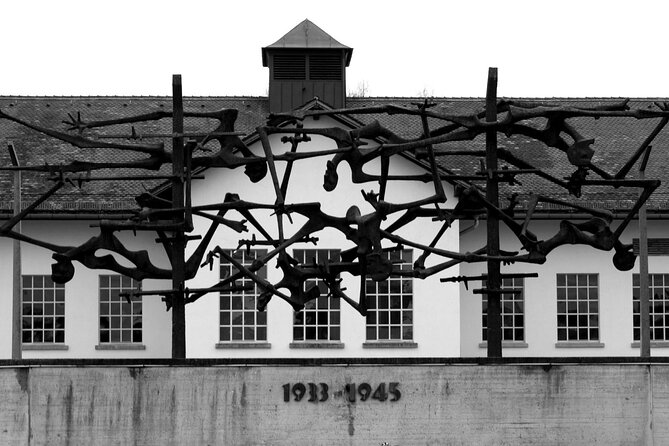
Dachau was the Nazis’ first concentration camp, opened in 1933, and this five-hour tour takes you from central Munich to a place where the machinery of persecution became a model for wider brutality. The visit is not a casual history outing. It is a sobering look at forced labor, abuse and the lives of people imprisoned there.
I like that the tour makes room for prisoners’ daily experiences, not just dates and political decisions, and that it includes accounts of survival and liberation. Public transport is included, too, which removes one practical task from a demanding day.
The main caution is reliability: the experience has a low overall rating, including a serious complaint about conflicting meeting information and a tour that did not happen. Confirm the start time and guide’s location before setting out, and consider whether you would rather visit with a more dependable arrangement.
What to know before you go
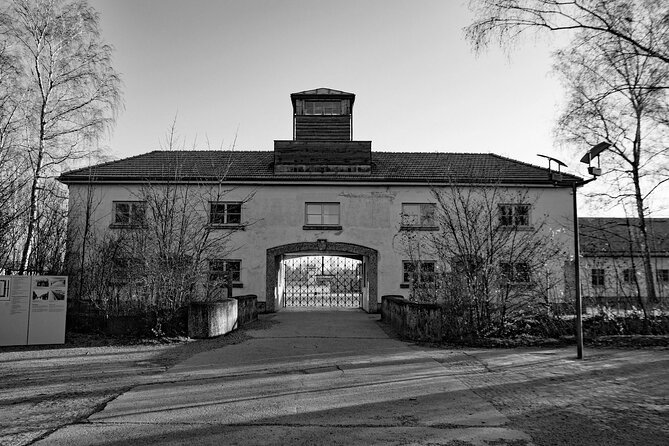
- Dachau opened in 1933: It began as a camp for political prisoners and later became a forced-labor camp.
- The visit covers more than camp administration: The tour’s themes include prisoners’ daily lives, guards, medical experiments, Roma prisoners and survivor accounts.
- The scale is difficult to absorb: More than 200,000 inmates passed through Dachau during its 12 years of operation; around 40,000 people were killed.
- Meet in central Munich: The meeting point is the Fish Fountain at Marienplatz 8.
- Transport is included, food is not: Your public transport ticket is covered, but bring money for anything you want to eat or drink.
- Plan for a serious subject and uncertain logistics: The tour lasts five hours, and reliable confirmation of the meeting arrangements matters.
From Marienplatz to Dachau
The day begins at the Fish Fountain, at Marienplatz 8 in central Munich. This is a useful, recognizable address, but the meeting details deserve extra attention. One customer described conflicting information about the guide’s location and contact details, and said the tour never took place. That is a serious warning, not a minor quibble.
Before the day of the visit, check that you have a clear start time and know how to identify or contact the guide. The tour is in English and led by a local professional guide, but no guide’s name or phone number is provided here. If you cannot confirm the arrangements, pause before travelling to the meeting point.
Public transport is included in the $126 price. That helps simplify the trip from Munich, though the exact route and transport schedule are not specified. The five-hour duration is for the experience as a whole, so allow that amount of time in your day and avoid booking another activity too close afterward.
There is no food or drink included. You may want to eat beforehand or bring something for after the visit, but do not treat the tour as a meal stop. The subject matter is grim, and a quiet break afterward may be more useful than rushing straight into another appointment.
More Dachau memorial tours from Munich:
- Dachau Concentration Camp Memorial Site Tour from Munich by Train
★ 4.5 · 5,637 reviews - From Munich: Dachau Memorial Site Day Tour
★ 4.8 · 2,723 reviews - From Munich: Dachau Memorial Site Half-Day Trip
★ 4.7 · 2,526 reviews
A camp built as a model of terror
Dachau opened in 1933, soon after the Nazis came to power. It was the first concentration camp established by the regime in Germany, initially intended for political prisoners. Its role changed over time, and forced labor became central to the camp system.
The tour frames Dachau as an Academy of Terror: a place that served as a model and training ground for brutality. That context matters. Dachau was not an isolated episode or merely a site where terrible things happened. Its operation helped establish methods and practices that spread through the Nazi camp system.
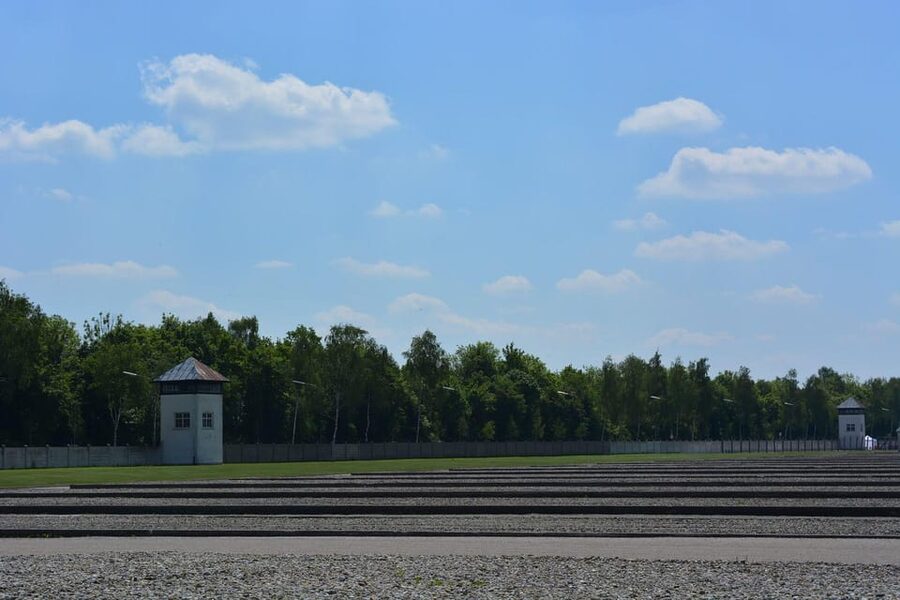
During 12 years of operation, more than 200,000 inmates were held there. Around 40,000 people from 34 nations were killed, and American forces liberated the camp in 1945. Those figures are important, but numbers alone can make suffering feel abstract. A guided account can connect them to the people behind them: prisoners from different backgrounds, their treatment, and the daily conditions imposed on them.
The tour’s emphasis on historical context is one of its strongest reasons to go with a guide. A memorial visit can leave you with questions about how the camp functioned, who was imprisoned, and how violence became routine. The stated themes promise attention to those questions, though the precise order of stops and the amount of time spent on each are not specified.
Prisoners’ lives, guards and camp dynamics
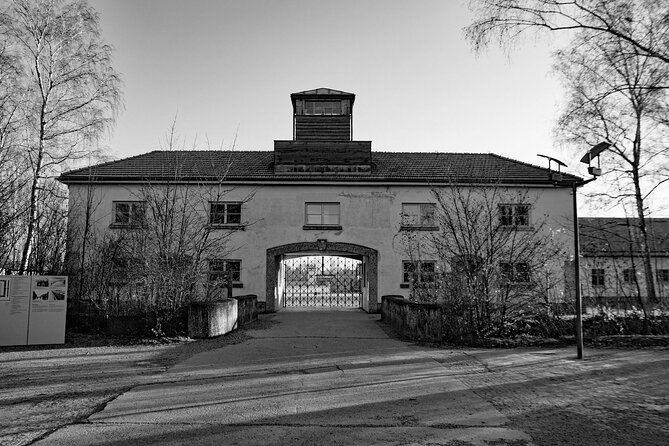
One of the most useful parts of the tour is its focus on daily life and the relationship between prisoners and guards. That subject shifts the visit from a list of events to an explanation of how control worked. You are invited to consider not only what happened, but how the camp’s structure shaped ordinary moments for people held there.
The information provided does not give a stop-by-stop route or name particular buildings. So I would not plan around seeing a specific structure or assume the guide will spend a set amount of time at any one location. The reliable expectation is thematic: the tour addresses prisoners, guards and the dynamics of camp life.
That distinction is worth keeping in mind when you compare guided and independent visits. A professional guide can explain relationships and context as you move through a memorial, while a self-guided visit gives you more control over pace. If you want someone to connect the history for you, the guided format may be valuable. If you need long stretches of silence or time to read at your own speed, ask how much flexibility the public group allows.
This is a solemn site, not a place to hurry through for a few striking photographs. You may find that the history is easier to process when you take time between sections. The tour’s five-hour length gives a broad window for the visit and travel, but no precise schedule is supplied, so you cannot know in advance how much time will be spent at the memorial itself.
Medical abuse and the Roma prisoners
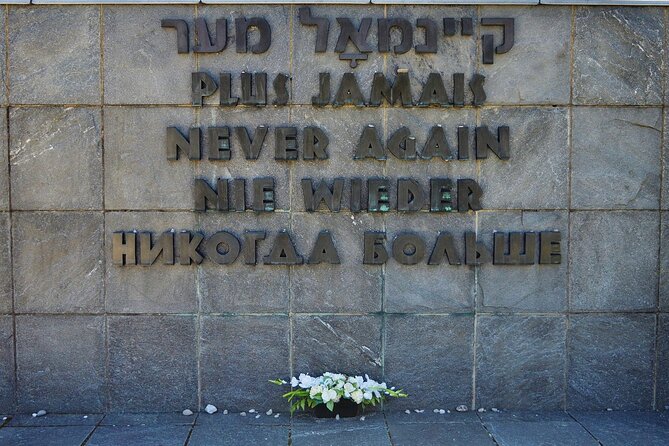
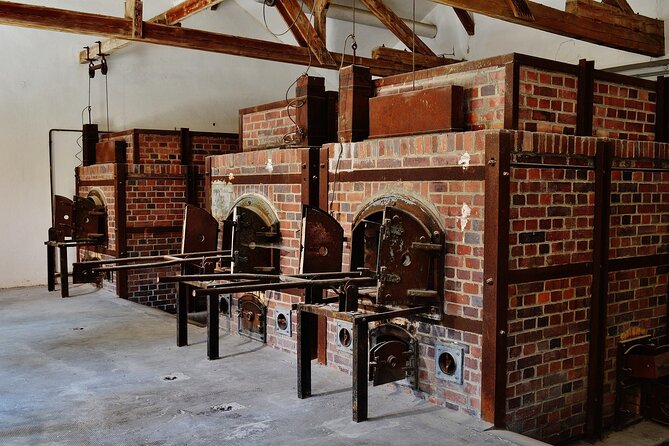
The tour also addresses medical experiments conducted on helpless prisoners. This is among the most disturbing subjects in the program, and it deserves careful treatment. The aim is not shock for its own sake. It is to understand how people were subjected to medical abuse without consent and with no regard for their lives or dignity.
If this material is especially difficult for you, be honest with yourself before booking. The overview identifies medical experiments as a tour topic, but does not explain how graphic the discussion is or whether you can skip part of it. You can ask the guide about the approach, but do not assume the group can be split or that a particular section is optional.
The focus on Roma prisoners is another valuable element. Their persecution and suffering have often received less attention in popular accounts of the Nazi era. Including their stories helps widen the history beyond the groups most commonly discussed, and gives you a fuller sense of who was imprisoned and targeted.
No specific names, biographies or individual stories are identified in the tour information. The promised emphasis is on the Roma prisoners’ fate and untold stories of suffering. If you want to learn about particular people, ask the guide whether individual accounts are included. That is a fair question, especially if personal histories help you connect with a difficult subject.
Or spend the day another way:
- From Munich: Neuschwanstein & Linderhof Castle Full-Day Trip
★ 4.5 · 12,494 reviews - Neuschwanstein & Linderhof Castle-Fairytale Day Tour from Munich
★ 4.5 · 7,275 reviews - Munich: Third Reich & WWII Walking Tour
★ 4.6 · 6,181 reviews - Neuschwanstein Castle Tour from Munich
★ 4.5 · 5,117 reviews
Survivor accounts and the meaning of liberation
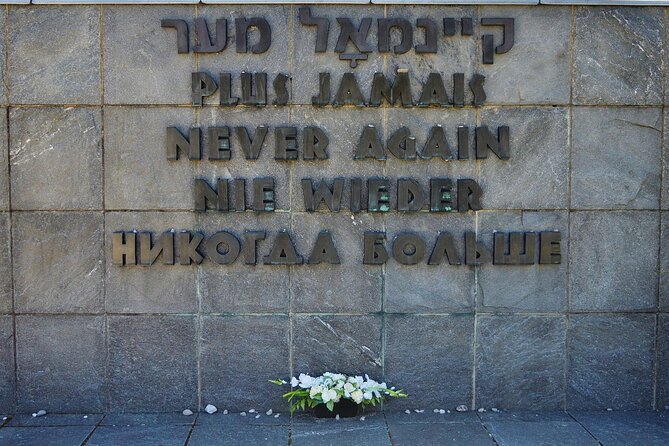
The tour includes survivors’ stories, bringing a human perspective to the history of the camp. Statistics explain scale; testimony can show what survival meant to individuals. It also helps keep the focus on prisoners as people, rather than allowing the camp’s machinery to become the whole story.
The experience is described as a memorial to courage and survival, with attention to resilience and liberation. That does not make the visit uplifting in any simple sense. Rather, survivor accounts can offer a counterweight to the cruelty, while making clear that survival was not the outcome for everyone.
Dachau was liberated by the American army in 1945. The tour’s historical arc reaches that point, but the material provided does not specify how much time is devoted to liberation or what particular accounts are used. If that part of the story matters most to you, ask before the tour begins.
A guided visit is particularly useful here if you want help connecting individual testimony to the broader history. Yet even a good explanation cannot make the subject easy. Give yourself room to listen, think and take a pause if needed. This is a memorial, and a respectful visit may mean allowing the history to sit with you rather than racing to the next stop.
Is $126 fair value?
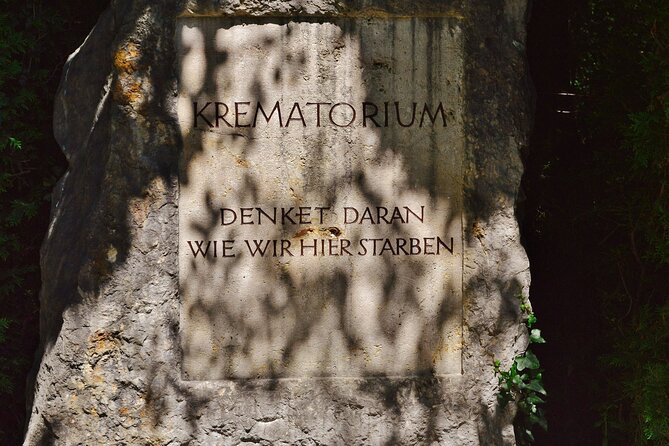
At $126 per person, this is not a budget outing. The fee includes a local professional guide for the public tour, a public transport ticket and the online payment processing fee. Food and beverages are extra. The value rests mainly on the guide’s interpretation and on having transport included, rather than on any stated admission or meal benefit.
For someone who wants a structured, English-language account of Dachau, a guide can be worth paying for. The themes are substantial, and a well-led explanation can help you understand the camp’s history, its role as a model of terror, and the experiences of prisoners. The transport ticket also makes the cost easier to assess than a guide-only fee, although no separate prices are provided for comparison.
The risk is that a high price feels particularly poor value if the meeting arrangements fail. A verified booking and a clearly confirmed guide location should be basic expectations. Since a previous customer reported a missed tour and confusion over contacts, I would not rely on vague instructions. Get the details in writing and check them before leaving for Marienplatz.
The overall rating is 3.1 from three reviews, a small sample that should not be treated as a verdict on every departure. Still, the practical complaint is specific and serious. There is also a comment asking for more reliable booking times. That makes schedule confirmation the main concern, not the historical subject matter.
The activity allows free cancellation up to 24 hours in advance for a full refund and offers reserve-now, pay-later booking. Those terms give you some flexibility, but they do not solve the need to confirm the actual start time and meeting arrangements.
Who will get the most from this visit
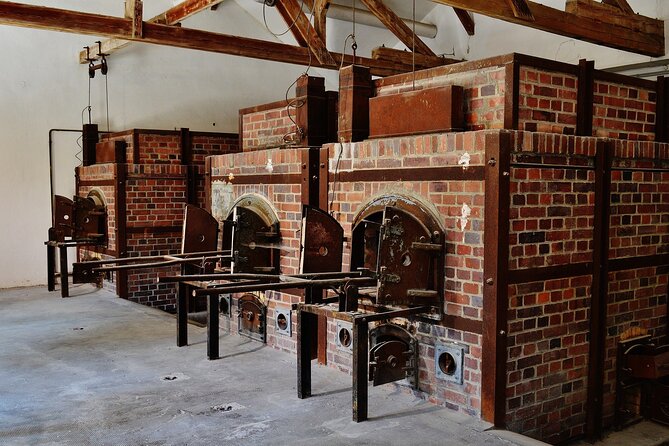
This tour suits you if you want an English-speaking guide to explain Dachau’s history and can give a half-day to a difficult memorial visit. It is especially relevant if you want to hear about prisoners’ daily lives, Roma prisoners, medical abuse and survivor accounts, rather than focusing only on the camp’s dates and liberation.
It may be less suitable if you prefer to explore entirely at your own pace, need a very firm itinerary in advance, or are not ready for graphic and emotionally heavy history. The tour description does not specify group size, exact stops, or how much flexibility you have during the visit, so ask about those points if they will affect your decision.
I would also consider how you want the day to feel afterward. Dachau is not an activity to squeeze between light sightseeing plans. You may want some unstructured time after returning to Munich. That is not a formal part of the tour, just a sensible way to give yourself breathing room after confronting a painful history.
Should you book the Dachau Memorial Public Tour?
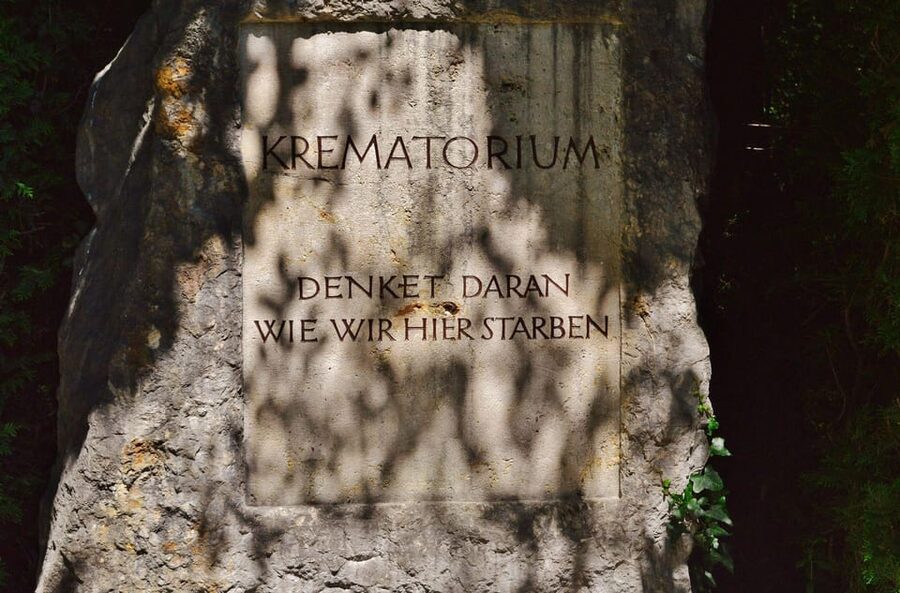
Book it if a guided English-language account, included public transport and the focus on prisoners’ stories match what you want from a visit to Dachau. The subjects covered are important, and the guide can help you understand the camp as both a place of suffering and a model for a wider system of terror.
Hold off until you have clear confirmation of the departure time, guide location and contact details. At $126, the tour should be dependable as well as serious in its subject matter. If those basics are confirmed and you are prepared for an emotionally demanding half-day, it can be a worthwhile way to approach the memorial. If they remain unclear, choose a visit plan you can verify.
FAQ
How long is the Dachau Memorial Public Tour?
The tour lasts five hours.
What language is the tour in?
The live tour guide speaks English.
Where is the meeting point?
Meet at the Fish Fountain, Marienplatz 8, 80331 Munich, Germany.
Is public transport included?
Yes. A public transport ticket is included.
Are food and drinks included?
No. Food and beverages are not included.
Can I cancel for a refund?
Yes. You can cancel up to 24 hours in advance for a full refund.
Just added in Munich
- Private day trip from Munich to Eagle’s Nest, Salzburg and back★ 4.5 · 15 reviews
- Private Castle Tour from Munich: Neuschwanstein, Hohenschwangau, and Linderhof★ 4.5 · 12 reviews
- Private Eagle’s Nest Tour from Munich ending in Salzburg★ 5.0 · 8 reviews
- Private Day Trip from Munich to Eagle’s Nest and Hallstatt★ 4.5 · 9 reviews
- Private day trip from Munich to Salzburg and Hallstatt★ 4.5 · 17 reviews
- Private Day Trip from Munich to Neuschwanstein and Linderhof★ 4.0 · 11 reviews
- Private Day Trip Munich to Harburg, Dinkelsbuhl & Rothenburg★ 4.5 · 24 reviews
- Private day trip from Munich to Eagle’s Nest and Salzburg★ 4.5 · 9 reviews
Dachau Concentration Camp Tours, compared.
Dachau Concentration Camp Memorial Site Tour from Munich by Train
Read our review →
Early-Start Dachau Memorial Half-Day Tour from Munich
Read our review →
Full-Day Dachau Concentration Camp Memorial Site Tour from Munich
Read our review →
Dachau Small-Group Half-Day Tour from Munich By Train
Read our review →
Munich World War II Sites Including Dachau Concentration Camp
Read our review →
Browse the lists this tour appears in