
Reviewed · MUNICH GHOST TOURS
Munich: Scary Tour with actors in GERMAN
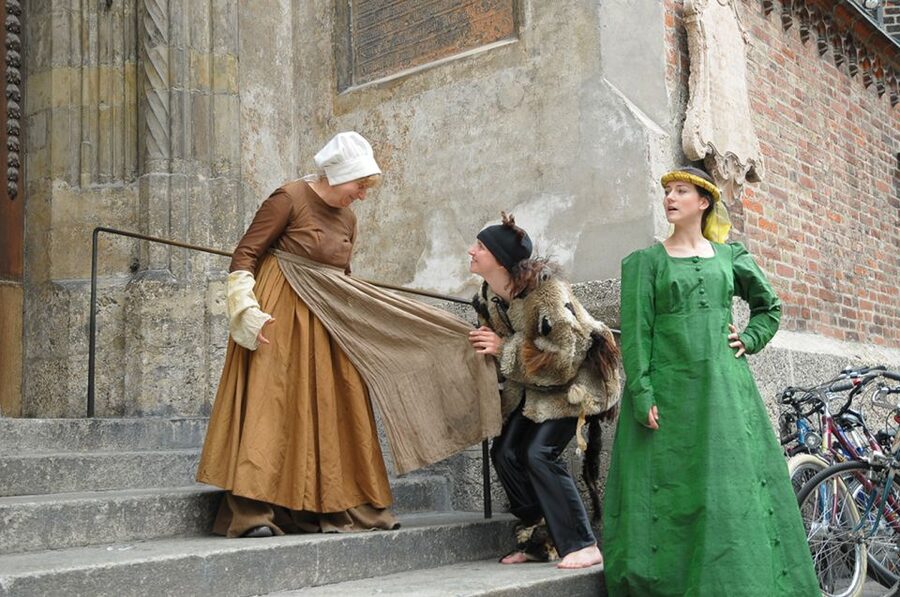
Munich’s handsome old center has a darker side: witch trials, public executions, torture, and a red-light district that lasted until the 1970s. This 90-minute walking tour brings those stories to life with actors in historic costume, moving from Neuhauser Tor to churches, squares, and old civic buildings.
I like two things about this format. The scenes give the history a human face, and the route links famous sights such as the Frauenkirche and the Town Hall to stories you might otherwise miss. The guide also supplies historical context, so the drama is more than a string of spooky tales.
The main consideration is language: the tour is in German, with no English or Chinese option listed. If you understand German, it is a lively way to explore the city’s less polished past. If you do not, the acting may be fun to watch, but much of the tour’s value lies in the spoken stories.
Key points before you book
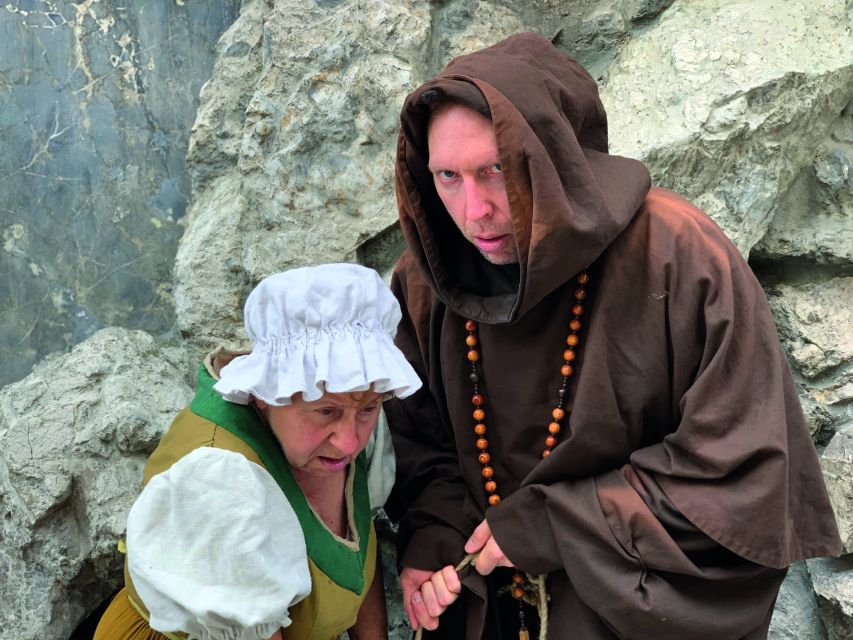
- A theatrical take on Munich’s past: Actors in historic costumes reenact scenes tied to witch hunts, executions, and the devil.
- A central walking route: You pass Neuhauser Tor, St Michaelis Church, the Frauenkirche, the Town Hall courtyard, St Peter’s Church, and the Old Town Hall.
- A mix of drama and history: The guide connects the performances to researched facts and explains the stories behind each stop.
- A German-language experience: The tour guide speaks German, so language skills matter more here than they would on a visual sightseeing walk.
- A brisk 90 minutes: The route concentrates on the old center and its darker stories, rather than trying to cover all of Munich.
- Rain or shine: Dress for the weather, as the walk takes place in all conditions.
Munich’s darker past, acted out on the street
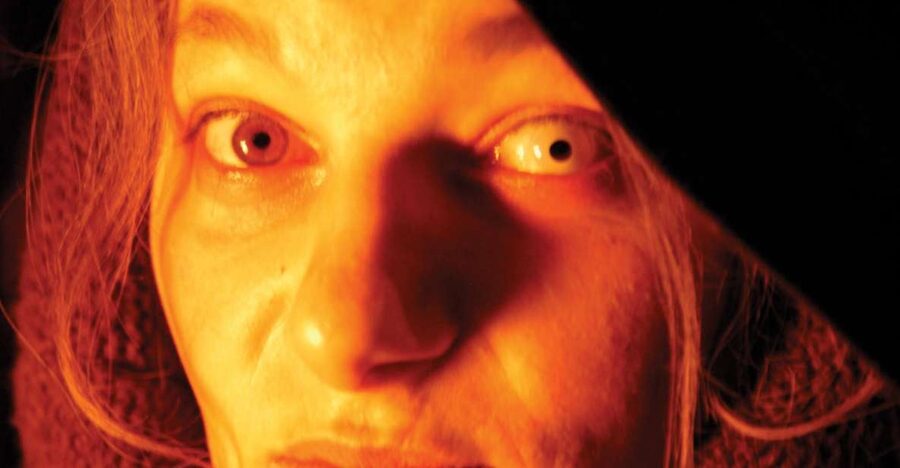
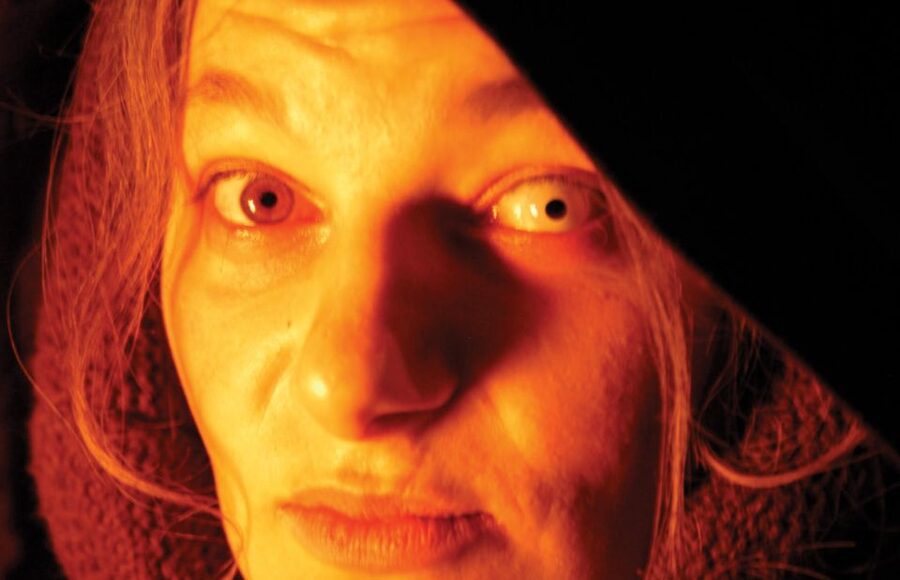
This is not a conventional architecture walk with a few ghost stories added for atmosphere. The focus is on the uncomfortable parts of city life: witchcraft accusations, prostitution, torture, and executions. Professional actors take on figures from the past, while a guide fills in the historical frame.
That balance is the tour’s appeal. The scenes help break up a walking route and make the stories easier to picture, while the factual explanations keep the experience from becoming pure melodrama. The performances are described as engaging and sometimes humorous, with opportunities for audience involvement. If you prefer a quiet, lecture-style tour, that theatrical approach may feel like a distraction. If you like history with a bit of stagecraft, it should hold your attention.
The subject matter is dark, but the tone is not presented as unrelentingly grim. Stories about the devil’s shoe size, an alchemist trying to sell his art, and the peculiar work of a hangman add moments of odd humor. That contrast helps explain how people in earlier Munich understood crime, religion, and social order, without turning every stop into a solemn memorial.
More ghost and dark history tours in Munich:
- Munich Ghosts and Spirits Evening Walking Tour
★ 5.0 · 1,900 reviews - Munich: Raven Black Witches and Executioners Walking Tour
★ 4.7 · 294 reviews - Munich – Illuminati & other Secret Societies, Tour in German
★ 4.7 · 122 reviews
Starting at Neuhauser Tor
The meeting point is beneath the archway of the Karlstor at Karlsplatz, also known as Stachus. Look for the guide carrying a large blue bag marked with the white words Weis(s)er Stadtvogel. That detail is useful in a busy central square, where several groups may be gathering.
The walk begins at Neuhauser Tor, where people condemned to execution were led out of town. The location introduces an important theme: punishment was public, but the execution site sat beyond the city limits. As you start here, you get a sense of the old boundary between the protected town and the place where authorities carried out the harshest sentences.
From there, the route follows historic Salzstraße toward the former Jesuit school. The tour connects the school and the period of witch hunts with a story involving Duchess Renata and Jesuit Father Ignatius. During construction of St Michaelis Church, its tower collapsed. The disaster was blamed on supposedly wicked women, a revealing example of how religious belief and fear could turn misfortune into an accusation.
This section is especially useful if you want more than a list of dates and buildings. The performance frames the beliefs that shaped people’s actions, while the guide explains the historical setting. The story is striking, though its subject matter can be unsettling: women accused of witchcraft faced real danger, not merely a theatrical plot.
St Michaelis, the Schöner Turm, and a goldsmith’s fate
St Michaelis Church brings the group into one of the tour’s central themes, the collision between faith, authority, and fear. The dramatic account of the collapsed tower gives you a way to connect the building’s history with the witch-hunt mindset of the period.
At the Schöner Turm, you hear the story of an unfortunate goldsmith. The supplied information does not give further detail about his case, so expect a narrative stop rather than a full legal history. Still, the sequence matters: after a story of witchcraft accusations, the tour shifts to another person caught in the dangers of the past.
The route’s strength is its variety. You are not asked to stand at one site for the whole 90 minutes; the walk keeps moving through the old center, with each place introducing a different tale. The trade-off is that this is an overview. You will get memorable episodes and context, but not an exhaustive account of every event or building.
The Frauenkirche and the devil’s bargain
The Frauenkirche is one of Munich’s defining landmarks, and this tour gives it an unusual companion story. A gust of wind leads into the tale of the devil helping the church’s master builder. The guide explains why the devil is linked to the building, why it is windy there, and even raises the question of the devil’s shoe size.
That blend of folklore and local legend is a good fit for an evening walk. You get to look at a familiar landmark through a different lens, while the story gives the stop a memorable hook. The supernatural material is presented alongside historical facts, so you can enjoy the legend without mistaking every detail for documented history.
The route also includes accounts of potions, broom rides, toads’ tongues, and children’s hands. These are grim details, and they speak to the fears and accusations associated with witchcraft. If you are travelling with children, consider their comfort with frightening themes before booking. No age guidance is provided, so you will need to make that call based on your own group.
More tours in Munich:
- From Munich: Neuschwanstein & Linderhof Castle Full-Day Trip
★ 4.5 · 12,494 reviews - Neuschwanstein & Linderhof Castle-Fairytale Day Tour from Munich
★ 4.5 · 7,275 reviews - Munich: Third Reich & WWII Walking Tour
★ 4.6 · 6,181 reviews - Dachau Concentration Camp Memorial Site Tour from Munich by Train
★ 4.5 · 5,637 reviews
The Town Hall and an alchemist’s pitch
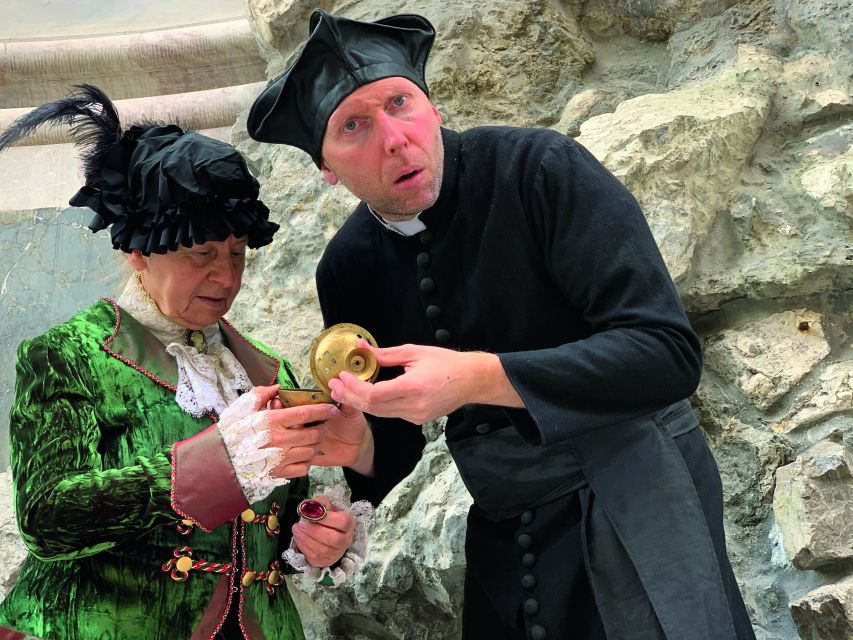
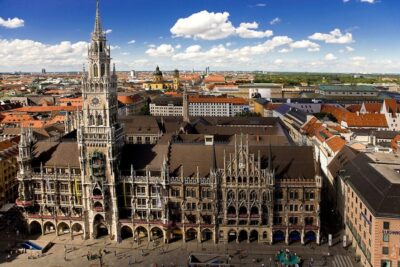
At the magnificent Town Hall, the group meets the alchemist Marco Bragadino, portrayed as a supposed goldsmith eager to draw people into his arts. His story adds another kind of deception to the tour’s themes. Earlier stops deal with accusations and punishment; here, the focus turns to promises of transformation and the lure of making gold.
The Town Hall setting also helps connect the stories to civic life. These are not tales set in a separate fantasy world. They belong to the same streets and central buildings you are seeing on a city visit, which makes the theatrical approach more tangible.
The tour includes the Town Hall courtyard, but the available information does not specify how long the group spends there or whether you enter any buildings. Treat this as an outdoor walking tour through central Munich, not as a tour of church interiors or museum collections.
St Peter’s Church and the hangman’s trade
At St Peter’s Church, the tour turns to the everyday life of a hangman. You learn about his appearance, why people avoided him, and the use of a gallows rope. One of the tour’s most surprising details is that hangmen were not only involved in torture and executions; they also worked as pimps.
This kind of detail gives the tour a sharper social focus. The hangman was both part of the city’s system of punishment and a person marked by the work he did. The stories are not just about spectacular crimes or royal decisions. They also touch on the occupations, stigma, and survival strategies that shaped daily life.
A scene about a beautiful woman escaping certain death adds another dramatic turn. The precise circumstances are not provided, so you should expect a story rather than a detailed case study. The performances are a key part of the experience here: they help keep a succession of dark subject matter from feeling like a lecture.
The Old Town Hall, torture, and the former red-light district
At the Old Town Hall, the route passes the site of a former torture chamber as the guide tells gruesome stories. The location brings the tour back to the machinery of punishment introduced at Neuhauser Tor. Together, the two stops suggest how public justice and hidden suffering were woven into the old city.
The final part of the walk reaches the Platzl, once home to Munich’s red-light district. The district remained there until the 1972 Olympic Games. Its disappearance from the historic center is a useful reminder that Munich’s past is not only medieval or early modern. The city’s modern image as a clean, respectable metropolis also involved decisions about which people and businesses could remain in the center.
The tour links this history to the song Skandal im Sperrbezirk by the Spider Murphy Gang. The reference adds a modern cultural note to an otherwise much older set of stories. It also explains why prostitution is no longer part of the historic center’s daily life in the way it once was.
This closing section broadens the tour’s focus. You move from witchcraft accusations and executions to urban change and the reshaping of city life. That range makes the walk more than a ghost tour, though anyone looking for a lighthearted evening stroll should know that prostitution, torture, and executions are central subjects.
What the performances add
The most praised part of this experience is the acting. The actors break up the spoken explanations with short scenes, making the route feel more immediate than a standard guided walk. The performances are also described as funny at points and as involving participants, which can help maintain the group’s attention over the full 90 minutes.
The strongest value comes when acting and explanation work together. A scene can give you a vivid image, but the guide’s historical context helps you understand why the event mattered. People who enjoy clear explanations, memorable anecdotes, and a lively delivery are likely to get more from this tour than those who want a strictly academic treatment.
One practical limitation follows from that same strength: the spoken material is essential. The guide language is German, and the tour is not listed in English or Chinese. If you do not speak German, you may still appreciate the costumes and places, but you will miss much of the meaning behind the scenes.
Is $46 fair for 90 minutes?
At $46 per person, this is not the cheapest way to see Munich’s old center. You are paying for a guided route plus a professional acting team, not simply for someone to point out major buildings. The performances and story-led structure are what justify the higher price compared with a basic walk.
Value depends on your interests. If you enjoy dark local history and can follow German, the combination of theatrical scenes and researched facts gives the 90 minutes a clear purpose. The route also covers several central landmarks, so you get history and orientation in one outing. If you mainly want architectural facts, prefer a longer tour, or cannot follow German, the price is harder to justify.
The short format is an advantage if you have limited time or want an evening activity that does not take up half a day. It is also a focused tour, not a broad introduction to all of Munich. Plan to pair it with a separate visit if you want detailed coverage of the city’s art, royal history, or major interiors.
Practical details for the walk
The tour lasts 90 minutes and takes place in the evening hours. Starting times vary, so check the available dates and times before you plan the rest of your day. The route is in central Munich and includes several named churches and historic civic sites.
It is listed as wheelchair accessible, and the tour runs rain or shine. Since most of the experience is a walk between outdoor locations, wear shoes suited to city streets and bring weather-appropriate clothing. That is sensible preparation, not a special dress code.
Booking can be made with a reserve-now, pay-later option, and cancellation is free up to 24 hours in advance for a full refund. The provider is Weis(s)er Stadtvogel GmbH. No group size or named guide is specified, so do not plan around either.
Should you book this Munich tour?
Book it if you speak German, like history with a theatrical edge, and want to hear about Munich beyond its grand churches and polished squares. The actors, the devil’s story at the Frauenkirche, the hangman’s unusual side work, and the former red-light district give the route plenty of memorable material.
Skip it if you need an English-language tour or would rather avoid stories about torture, executions, and witch hunts. For the right audience, the 90-minute format offers a vivid, entertaining way to connect Munich’s central landmarks with the people and beliefs that shaped their past. At $46, it makes best sense when you value the acting as much as the walk.
FAQ
Is the tour in English?
No. The live tour guide speaks German. English and Chinese tours are not listed.
How long does the tour last?
The tour lasts 90 minutes. Starting times depend on availability.
Where is the meeting point?
Meet under the archway of the Karlstor at Karlsplatz, also called Stachus. The guide carries a large blue bag with Weis(s)er Stadtvogel written on it in white.
Which landmarks does the route pass?
The route includes Neuhauser Tor, St Michaelis Church, the Frauenkirche, the Town Hall courtyard, St Peter’s Church, and the Old Town Hall.
Does the tour run in bad weather?
Yes. The walk takes place rain or shine.
Is the tour wheelchair accessible?
Yes. It is listed as wheelchair accessible.
Just added in Munich
- Private day trip from Munich to Eagle’s Nest, Salzburg and back★ 4.5 · 15 reviews
- Private Castle Tour from Munich: Neuschwanstein, Hohenschwangau, and Linderhof★ 4.5 · 12 reviews
- Private Eagle’s Nest Tour from Munich ending in Salzburg★ 5.0 · 8 reviews
- Private day trip from Munich to Salzburg and Hallstatt★ 4.5 · 17 reviews
- Private Day Trip from Munich to Neuschwanstein and Linderhof★ 4.0 · 11 reviews
- Private Day Trip from Munich to Eagle’s Nest and Hallstatt★ 4.5 · 9 reviews
- Private Day Trip Munich to Harburg, Dinkelsbuhl & Rothenburg★ 4.5 · 24 reviews
- Private day trip from Munich to Eagle’s Nest and Salzburg★ 4.5 · 9 reviews
Munich Ghost Tours, compared.
Munich Ghosts and Spirits Evening Walking Tour
Read our review →
Raven Black Witches and Executioners Walking Tour
Read our review →
Illuminati & other Secret Societies, Tour in German
Read our review →
Ghosts of Munich: The Haunted Apprentice Exploration Game
Read our review →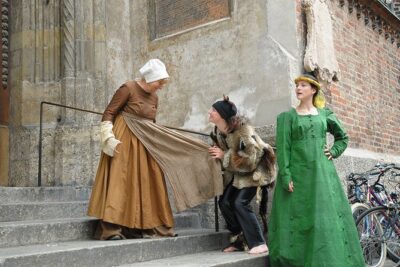
Browse the lists this tour appears in