
Reviewed · MUNICH HISTORY TOURS
Augsburg: Historical Highlights Private Walking Tour
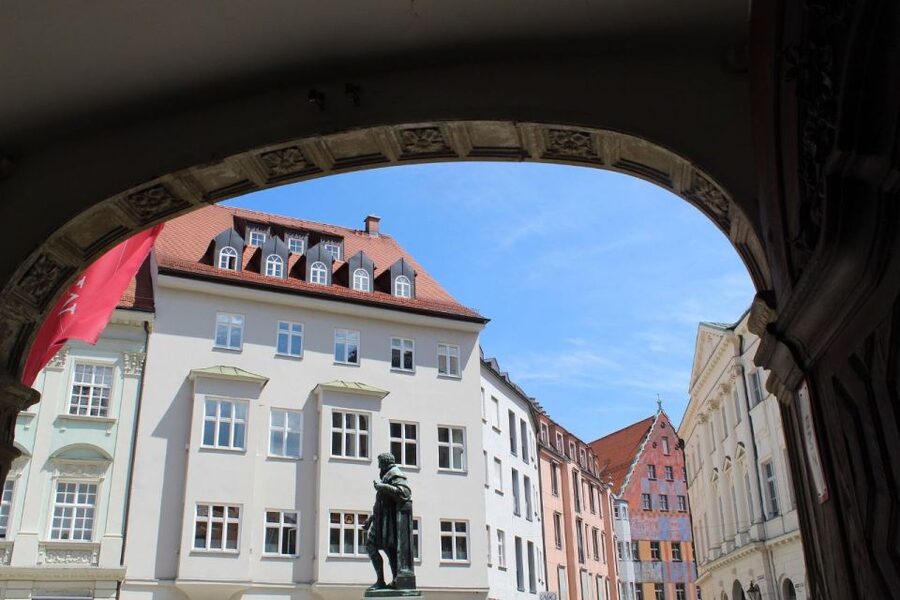
Augsburg packs an unusually long timeline into a walk through its old city. Founded as a Roman colony in 15 B.C., it grew into a provincial capital and is now the capital of Swabia in Bavaria. This private tour connects that Roman beginning with the Fugger family’s social settlement, the city’s striking Town Hall and the birthplaces of Mozart’s father and Berthold Brecht.
I like two things in particular: you can shape the stops with your guide, and the route brings together civic, social and cultural history rather than focusing on just one era. The tour also ends at Schaezlerpalais, a notable survivor of World War II.
The main consideration is price. At $362 for a group of up to 15, it can be good value when shared, but expensive for one or two people. A comparison with a similar walk priced at €115 has also been raised, so it is worth checking other local options before you commit.
Key points to know before booking
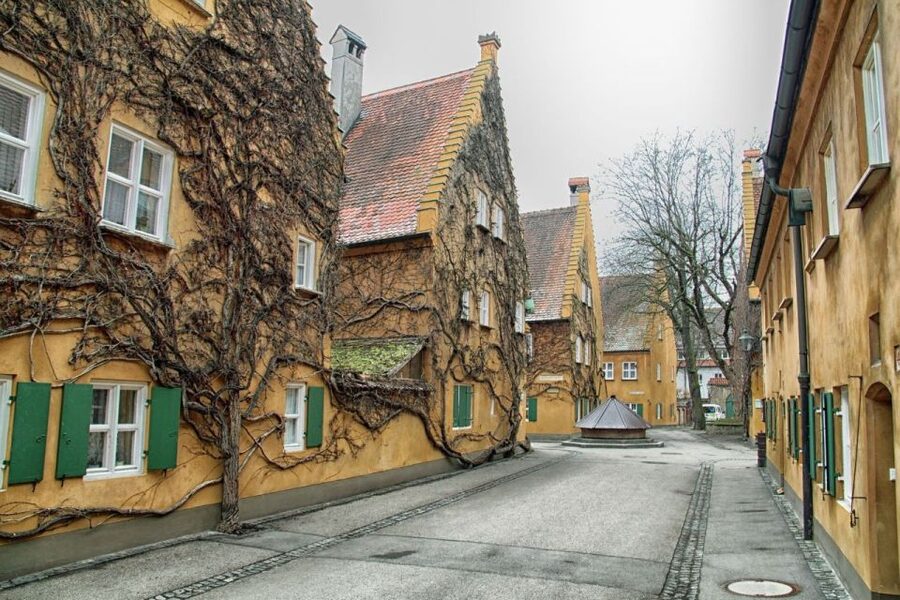
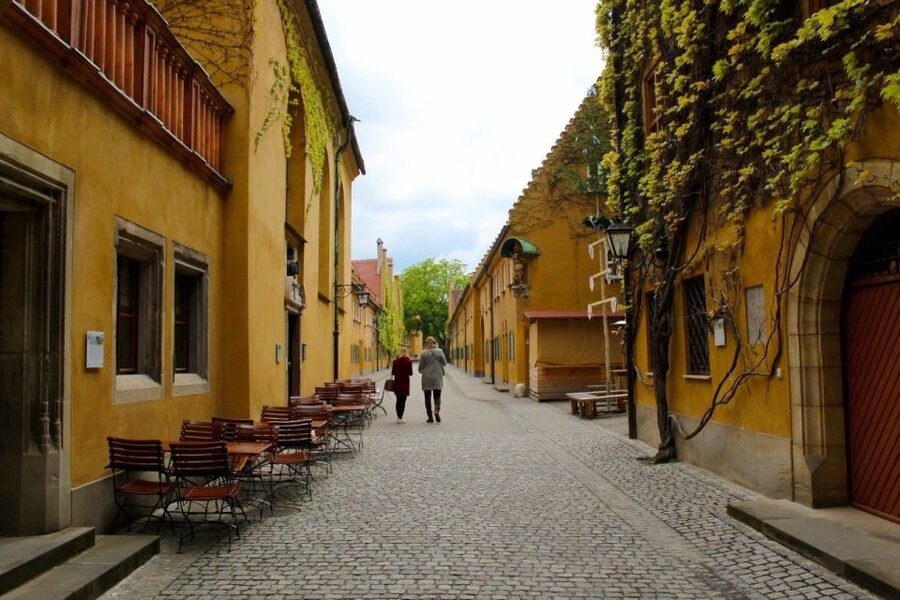
- Start at the Fuggerei: Meet at the world’s oldest social settlement, founded by the Fugger family.
- Follow Augsburg’s timeline: The walk covers the city’s founding as a Roman colony in 15 B.C. and its later role as Swabia’s capital.
- See the Town Hall: The tour includes Augsburg’s landmark civic building, described as the first building in the world with six floors.
- Make the walk your own: You can discuss which highlights matter most with your private guide during the tour.
- Connect the city to famous lives: Stops include the birthplace of Mozart’s father and the birthplace of artist and writer Berthold Brecht.
- Finish at Schaezlerpalais: The palace survived World War II without a scratch, giving the tour a final stop with a striking wartime story.
A two-hour walk across two millennia
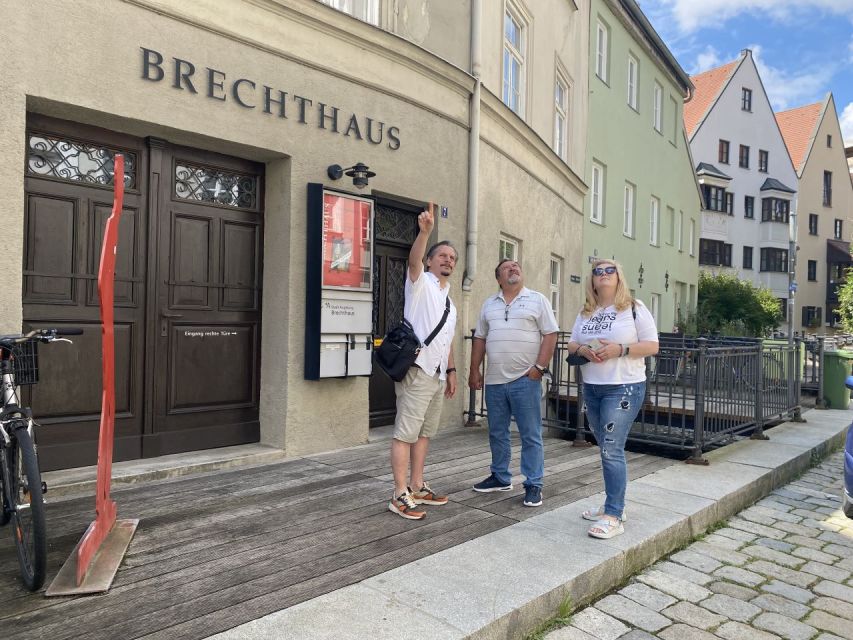
Two hours is enough to give you a useful map of Augsburg’s past, though not enough to explore every site in depth. This is a highlights walk, not a museum visit or a full-day study of the city. Its value lies in having a local guide connect the stops and explain how Augsburg changed from Roman colony to medieval and modern regional center.
The tour is private, so you are not joining a large mixed group. That matters in a short visit: you can ask questions, set the pace with your guide and decide on the spot which parts deserve more attention. The stated maximum is 15 people, making it suitable for a family or group of friends who want one shared guide.
The meeting point is the Fuggerei, and the walk concludes at Schaezlerpalais. The supplied details do not give a stop-by-stop timetable, so treat the named places as the tour’s main sights rather than a promise that you will enter each one. Entrance fees are not included.
More walking tours in Munich:
- Munich: Third Reich & WWII Walking Tour
★ 4.6 · 6,181 reviews - Third Reich Walking Tour Munich
★ 4.5 · 4,291 reviews - Munich: Old Town & Viktualienmarkt City Walk in German
★ 4.7 · 2,304 reviews
Begin with Augsburg’s Roman roots
Augsburg’s story starts in 15 B.C., when it was founded as a Roman colony. The guide explains how it grew into the capital of a Roman province, then became the capital of Swabia in Bavaria. It is also described as Germany’s third-oldest city, a useful point of context as you move through its streets.
That broad timeline helps make the later sights more than a collection of handsome buildings. You get a sense of Augsburg as a place shaped by successive roles: Roman settlement, provincial center and present-day regional capital. If you are new to the city, this is a practical way to get oriented before exploring on your own.
The tour is not advertised as an archaeological walk, and the information provided does not specify Roman remains or particular excavation sites. Its focus is the story of the city and its major landmarks. If you want a close look at Roman artifacts or detailed excavation history, ask the guide what can be covered within the two-hour schedule.
At the Fuggerei, see a social idea made concrete
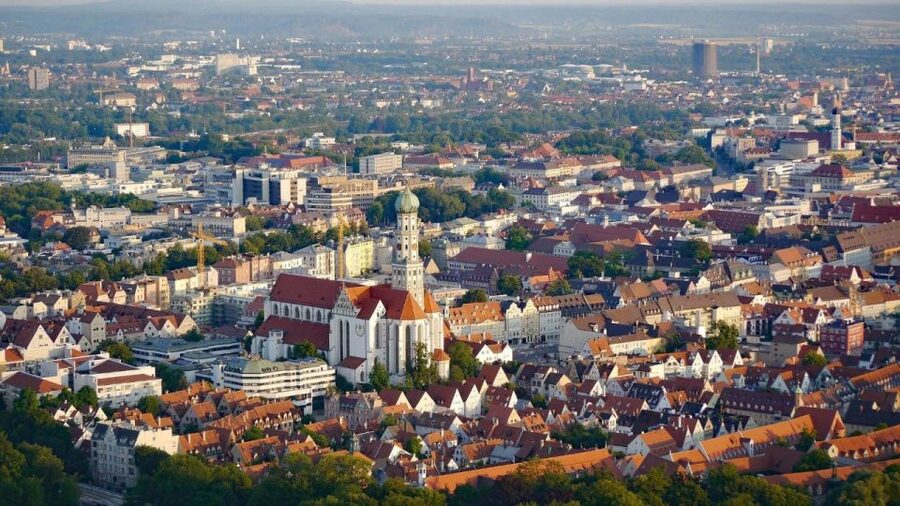
Starting at the Fuggerei gives the tour a clear link between Augsburg’s past and an enduring social institution. The Fugger family founded the settlement, described as the oldest social settlement in world history. That makes it more than a stop associated with a wealthy family: it introduces the idea of civic giving and the Fugger legacy in a place directly connected to both.
The Fuggerei also gives you a useful point to ask questions early. You can talk with your guide about the family’s role in Augsburg and decide whether you want more time on this part of the city’s story or prefer to move on to architecture, literature and music history. The tour explicitly allows you to customize its highlights with your guide.
Keep in mind that the tour price does not include entrance fees. The information provided does not say whether you will enter any site or what access costs might apply, so ask before booking if seeing the interior of the Fuggerei is important to you. The meeting point is here, but that alone does not guarantee a paid visit inside.
Look up at the six-floor Town Hall
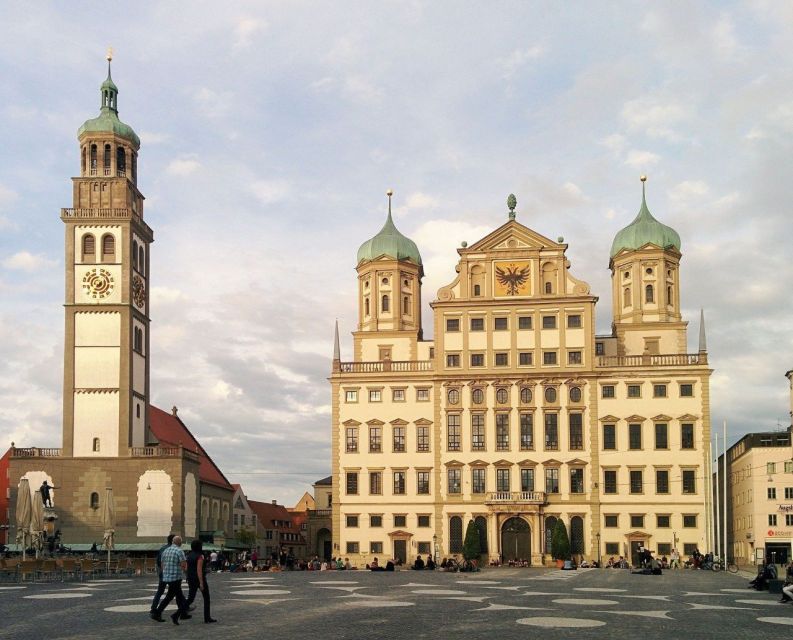
Augsburg’s Town Hall is one of the tour’s main architectural stops. It is described as the first building in the world to have six floors, a striking claim that gives the guide a chance to explain the building’s importance in the city’s civic life.
For you, this is a good moment to shift from family and social history to the public face of Augsburg. Town halls often say something about how a city sees itself, and this one is a central landmark on the walk. The tour description does not promise entry, so plan to appreciate it as an exterior stop unless your guide confirms otherwise.
The Town Hall also provides a natural place to pause and ask how Augsburg’s status changed over time. With a local guide, you can connect the Roman provincial capital to the later city represented by its civic architecture, rather than treating the building as a photo stop alone.
More history tours in Munich:
- Munich Old Town Walking Tour
★ 4.5 · 1,287 reviews - Munich: Spooky Tour of Old Town in German
★ 4.6 · 1,112 reviews - Munich: Walking Tour Old Town and Viktualienmarkt
★ 4.7 · 839 reviews - Munich: Old Town Walking Tour
★ 4.7 · 589 reviews
Find the city in the lives of Mozart and Brecht
The walk includes the birthplace of Wolfgang Amadeus Mozart’s father, a detail that can surprise visitors who associate Mozart only with other German-speaking cities. It links Augsburg to music history through the family background of one of the best-known composers in Europe.
You will also visit the birthplace of Berthold Brecht, the acclaimed German artist and writer. These stops offer a more personal way to encounter Augsburg: instead of hearing only about rulers, buildings and institutions, you see how the city connects to creative lives.
The supplied details do not identify the exact format of these visits or promise entry into the birthplaces. Expect your guide to point them out and provide context, then ask if you want more time on either figure. The private format helps here, since you can steer the conversation toward music, literature or the city’s broader history.
End at Schaezlerpalais, a wartime survivor
The tour finishes at Schaezlerpalais, which survived World War II without a scratch. That fact gives the final stop a strong link to the upheaval of the twentieth century and offers a striking contrast with the city’s much older Roman and Fugger-era stories.
The palace is a fitting end to a tour that moves across very different chapters of Augsburg’s past. It also gives you a chance to ask your guide how the city’s historic buildings fared during the war. No interior visit is included in the stated price, and the available information does not specify whether the guide takes you inside.
What the private format adds
A private guide can make a short city walk more useful, especially if you have particular interests or limited time in Augsburg. You can ask for explanations that suit your group and, according to the tour details, adjust the highlights on the spot. That flexibility is the strongest practical reason to choose this over a fixed group route.
The guide speaks German or English. The published details do not name the individual guide, so you cannot choose a particular person in advance based on the information provided. Still, the tour’s most praised qualities are its informative explanations, the guide’s experience and the ability to respond to what the group wants to see.
The private format does not automatically mean a highly personalized itinerary before the walk begins. If you have a must-see stop, a specific historical interest or a preference to spend more time at the Fuggerei, tell the guide at the start. Two hours goes quickly, and setting priorities will help you get the most from it.
Is $362 fair value?
The price is $362 per group of up to 15, not per person. If a full group shares the cost, it works out to about $24 per person. For two people, it is $181 each; for a solo traveler, the full group rate makes this a costly way to see the city.
That calculation is only part of the value question. You are paying for a private local guide, the freedom to ask questions and the option to adapt the walk, not for entrance fees. If those features matter to you, the price may make sense for a group. If you mainly want a basic overview, compare the cost with other guided walks before booking. A comparable tour has been cited at €115, a notable difference worth checking against current alternatives.
The tour has a 4.9 rating from nine reviews, and the strongest praise centers on how informative and engaging the guiding can be. One participant also described a guide who adjusted the walk to the group’s wishes and shared extensive knowledge. That is the kind of experience that can justify a private rate, but it is not a guarantee of a particular guide or style.
Who should book this walk?
I would consider this tour if you have two hours in Augsburg and want a clear overview with room to ask questions. It suits first-time visitors, history-minded groups and anyone interested in seeing how Roman, Fugger, musical and literary stories meet in one city.
It is especially appealing if you are traveling with a group that can share the price. The private arrangement lets you choose which themes deserve attention, and the German or English guide options make it accessible to many visitors.
It is a weaker fit if you need wheelchair access, since the tour is not suitable for wheelchair users. It may also disappoint if you expect admission to every landmark or an extensive interior visit: entrance fees are excluded, and the tour is described as a walking tour of the city’s main highlights. For a slower, more detailed study, you may want to spend additional time at individual sites after the walk.
Should you book it?
Book this tour if you value a personal guide, want to connect Augsburg’s major landmarks into one story and can split the group price. The Fuggerei, the six-floor Town Hall, the two birthplaces and Schaezlerpalais make a well-chosen set of stops for a short introduction to the city.
Think twice if you are traveling alone or as a pair on a tight budget. The guide’s flexibility and local context are the main reasons to pay the private-tour premium, so decide whether those matter more to you than a cheaper, less tailored walk. If you do book, arrive with one or two subjects you most want to hear about and tell the guide at the outset.
FAQ
How long is the tour?
The walking tour lasts two hours.
Where does the tour start?
Meet at the Fuggerei.
Where does the tour finish?
The tour concludes at Schaezlerpalais.
What languages are available?
The live guide speaks German or English.
Are entrance fees included?
No. Entrance fees are not included in the tour price.
Is the tour suitable for wheelchair users?
No. The activity is listed as not suitable for wheelchair users.
More private tours in Munich
- Mike’s Neuschwanstein & Linderhof Private Tour from Munich
★ 5.0 · 197 reviews - Dachau Concentration Camp Private Tour by Train from Munich
★ 5.0 · 185 reviews - Neuschwanstein & Linderhof Castle Luxury Private Tour from Munich
★ 5.0 · 171 reviews - Neuschwanstein Castle, Ettal Abbey and Oberammergau Private Tour from Munich
★ 5.0 · 160 reviews
More city sightseeing tours in Munich
- Munich: Big Bus Hop-On Hop-Off Sightseeing Bus Tour
★ 4.0 · 842 reviews - Munich: Classic Guided City Tour by Bike (English Tour Only)
★ 4.7 · 534 reviews - Munich Private Tour with a Local – Highlights & Hidden Gems
★ 5.0 · 469 reviews - Munich: City Highlights Guided Segway Tour
★ 4.6 · 266 reviews
Just added in Munich
- Private day trip from Munich to Eagle’s Nest, Salzburg and back★ 4.5 · 15 reviews
- Private Castle Tour from Munich: Neuschwanstein, Hohenschwangau, and Linderhof★ 4.5 · 12 reviews
- Private Eagle’s Nest Tour from Munich ending in Salzburg★ 5.0 · 8 reviews
- Private Day Trip from Munich to Eagle’s Nest and Hallstatt★ 4.5 · 9 reviews
- Private day trip from Munich to Salzburg and Hallstatt★ 4.5 · 17 reviews
- Private Day Trip from Munich to Neuschwanstein and Linderhof★ 4.0 · 11 reviews
- Private Day Trip Munich to Harburg, Dinkelsbuhl & Rothenburg★ 4.5 · 24 reviews
- Private day trip from Munich to Eagle’s Nest and Salzburg★ 4.5 · 9 reviews
Munich History Tours, compared.

Old Town & Viktualienmarkt City Walk in German
Read our review →


Mystic Munich – Sagas and Legends of the Old Town
Read our review →
Munich 3-Hour Segway Tour: Nazi Munich & Royal Architecture
Read our review →
Fall in Love with Munich in a Private Old Town Walking Tour
Read our review →Browse the lists this tour appears in