
Reviewed · MUNICH THIRD REICH TOURS
Third Reich Walking Tour Munich
Munich is where the Nazi Party grew from a fringe movement into a force that seized power, and this walk puts that story on the streets where it unfolded. You’ll see places tied to Nazi rallies and political meetings, then hear how propaganda and violence helped drive the country toward war.
I like two things about this tour: it links familiar central Munich sights to events that are easy to miss, and it makes room for memorials to people who opposed the regime. The walk also ends at Marienplatz, so you can carry on exploring without having to find your way back to the starting point.
The main consideration is the pace and setting. This is a fully outdoor walk, and two and a half hours of history can be a lot to absorb, especially in cold weather or if you want more time for questions at every stop.
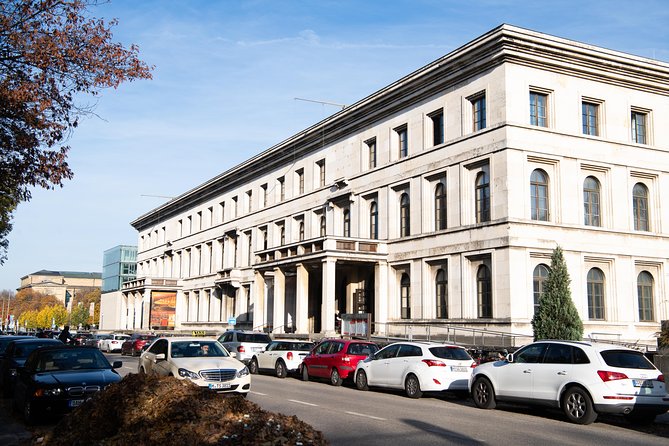
- Königsplatz: See a major Nazi Party landmark and learn how public spaces served political spectacle.
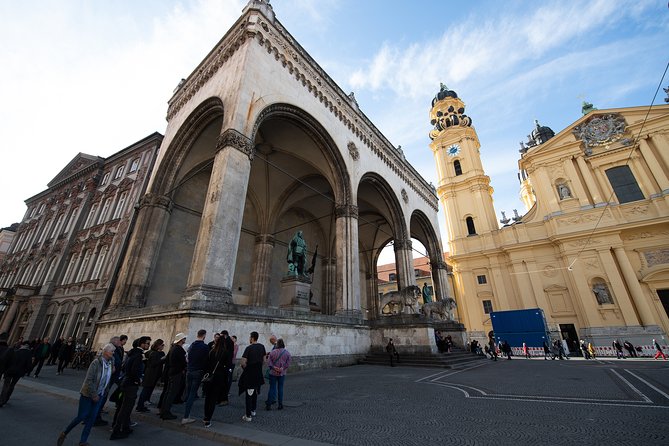
- Odeonsplatz: Trace the site’s use for Nazi marches and memorials, one of the tour’s longer stops.
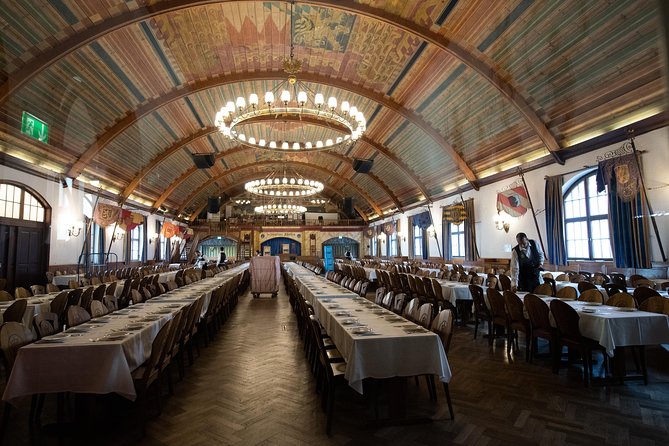
- Hofbräuhaus: Hear how a famous beer hall also figured in Nazi political life.
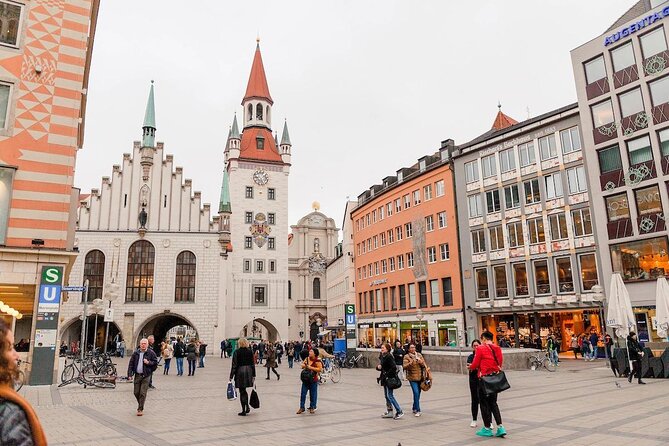
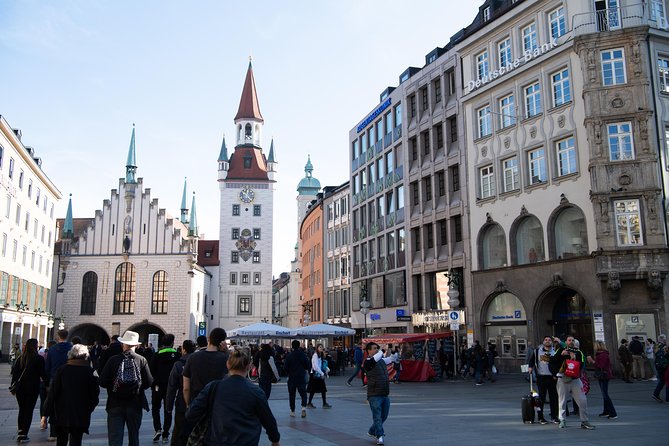
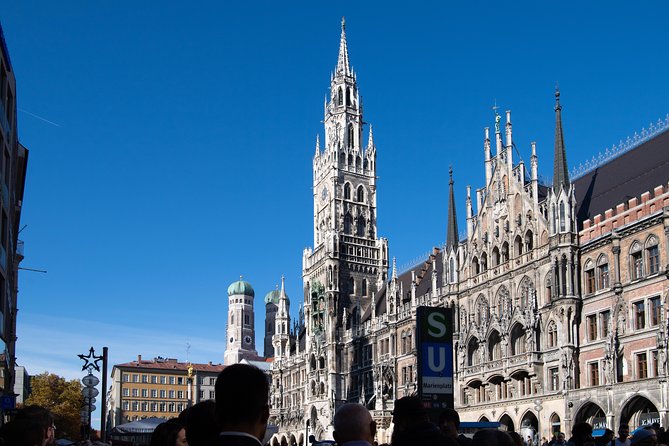
- Old Town Hall: Connect a central civic landmark to Munich’s Nazi-era story.
- Marienplatz finish: End in the city center, with time to continue sightseeing.
- Small-group limit: The tour allows up to 25 people, and it runs in English.
Munich’s streets tell the story
This is not a museum tour with a few outdoor stops attached. It is a walking lesson in how a political movement took root in a real city, using its meeting places, public squares and civic landmarks. The guide connects the Nazi Party’s beginnings in Munich with propaganda, its hateful ideology and the devastation of World War II.
That setting matters. A name on a page can feel remote; a square or beer hall you can stand beside makes the past harder to treat as an abstraction. The tour also looks beyond the machinery of Nazi power, bringing attention to people who suffered or lost their lives under the regime and those who resisted it.
The subject is grim, and the route does not turn it into a spectacle. Expect historical explanation and time at sites linked to political organizing and public displays of power. It is a useful way to understand why Munich holds such a central place in the story of the Third Reich.
Starting near Munich’s center
The meeting point is Radius Tours, at Dachauer Str. 4, a short check-in stop before the group sets out. The tour ends at Marienplatz, so the route takes you through the center rather than returning you to the start. That is a practical advantage if you want to continue sightseeing or stop for a meal afterward.
The tour is offered in English and uses a mobile ticket. The group size is capped at 25, which keeps the gathering more manageable than a large coach group, though it is not a private tour. You’ll be on foot for about two and a half hours, with no transport included.
The exact walking distance is not specified, but the tour is described as an urban walk. Wear shoes you can comfortably walk in, and dress for the weather. One useful detail from the tour’s day-to-day experience: guides have sometimes checked with the group about taking a coffee or bathroom break. Treat that as a possibility, not a guaranteed stop.
More Third Reich and WWII tours in Munich:
- Munich: Third Reich & WWII Walking Tour
★ 4.6 · 6,181 reviews - Munich: Birthplace of the Third Reich Guided Walking Tour
★ 4.6 · 771 reviews - Munich World War II Sites Including Dachau Concentration Camp
★ 4.5 · 570 reviews
Königsplatz and the politics of public space
Königsplatz is one of the route’s first major stops. It was an important Nazi Party landmark, and the guide explains how the Nazis used the square as a setting for political display. The stop is about 15 minutes, enough to orient you and begin connecting the place to the wider story.
The value here is not simply seeing a grand open space. It is learning how political movements make use of public architecture and ceremony to project authority. You’ll get more from the square if you listen for the link between the physical setting, propaganda and the party’s rise.
This is an outdoor stop, so the guide’s account does much of the interpretive work. Some visitors may want more time to look around or take photographs, but the tour has a larger route to cover. If a particular landmark catches your attention, note it down so you can return on your own.
Odeonsplatz and the memory of marches
Odeonsplatz gets the longest listed stop, about 30 minutes. The Nazi Party used the square for marches and memorials, making it a key place for understanding how political ritual became part of public life. Here, the guide can slow down and explain more of the site’s significance.
The tour’s attention to memorials matters. Munich’s past is not only a story of those who gained power; it is also a story of the people targeted by the regime and those who opposed it. The broader tour includes memorials to people who died resisting Nazi ideology, though the precise memorial stops are not specified.
The square is central and open to the weather, with no indoor setting to take the edge off a cold or rainy day. Bring a layer you can keep on while standing still. Several guides have been praised for making difficult material clear and welcoming questions, but your guide and group dynamic will naturally shape the conversation.
Hofbräuhaus: more than a beer hall
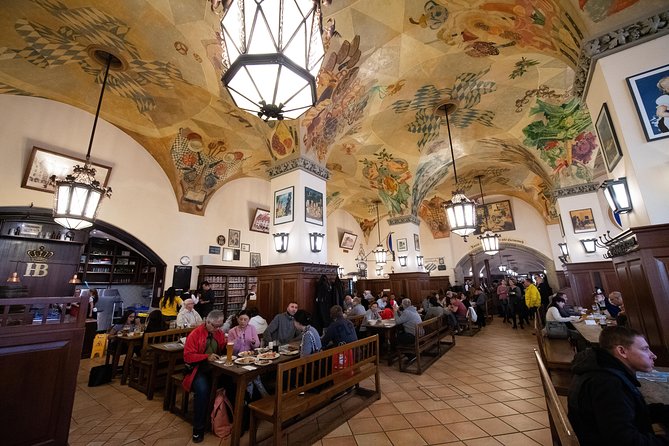
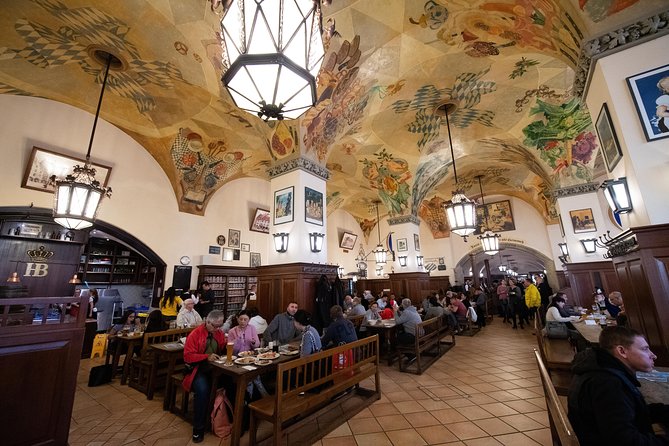
The Hofbräuhaus is widely known as a Munich beer hall, but the tour places it in the context of the Nazi Party’s political activity. The stop lasts about 20 minutes. That contrast is useful: a place that feels like part of the city’s ordinary social life also carries a connection to the movement that helped reshape Germany.
The guide’s explanation helps you avoid treating the history as a list of dates and names. You hear how political ideas were discussed and promoted in spaces people already used. The tour does not include a meal or drink, so think of this as a historical stop, not a beer-hall visit.
It is also a reminder that the past sits alongside present-day Munich. The walk is designed to explain that connection without confusing a building’s current role with its earlier one.
More walking tours in Munich:
- Munich: Old Town & Viktualienmarkt City Walk in German
★ 4.7 · 2,304 reviews - Munich: Night Watchman Walking Tour
★ 4.7 · 2,092 reviews - Munich Ghosts and Spirits Evening Walking Tour
★ 5.0 · 1,900 reviews - Munich Old Town Walking Tour
★ 4.5 · 1,287 reviews
Old Town Hall and Marienplatz
At the Old Town Hall, the guide brings the route back to Munich’s civic center. The stop is about 15 minutes. It is a chance to understand how Nazi-era history intersects with the places you might otherwise pass while sightseeing in the Old Town.
The final stop is Marienplatz, where the tour concludes after about 20 minutes. Ending here is convenient: you can continue through the center, return to a favorite site or simply pause and sort through what you have heard. The route does not bring you back to Radius Tours, so plan your next step from the city center.
Taken together, the stops give you a compact introduction rather than an exhaustive account of every site or event. The time between landmarks is part of the experience too: walking through the city helps connect separate locations into one broader story. Still, if you want extended discussion at each stop, a two-and-a-half-hour group tour will feel brief.
A guide makes the difference
The tour’s value depends heavily on the guide’s ability to explain a sensitive and complicated subject in clear language. Guides named on past tours include Jake, Michael, Nicola, Aileen, Nik, Paul, Scott and Michelle. Your guide may be someone else, but the strongest descriptions of the experience share a few practical qualities: clear speaking, openness to questions and the ability to keep a difficult subject engaging without making light of it.
Some guides use photographs to help show how a place looked in the past. That can be especially useful when the present-day streetscape does not make the historical connection obvious. You may also find that a guide adds political, social and cultural context beyond the basic sequence of events.
The tone can vary by guide. Some use humor to keep the group engaged, while others lean into a more reflective approach. The aim is not to make the subject comfortable, but to help you follow how the Nazi Party gained support and power, and what that meant for the people who suffered under it.
Is $45.95 good value?
At $45.95 per person, this is not the cheapest way to spend a morning or afternoon in Munich. You are paying for a local guide and a focused two-and-a-half-hour route, not transport, food or an indoor attraction. The value is in the interpretation: the guide links sites that you could walk past on your own to the events that give them meaning.
If you already know the broad outline of Nazi Germany, you can still get something from seeing the places in person and asking questions. People with substantial background knowledge have found the tour worthwhile, while those new to the subject can use it as a structured introduction. The trade-off is depth: a short group walk cannot cover every aspect of the period.
This tour is a strong fit if you want to understand Munich’s role in the rise of the Nazis and prefer learning on location. It may be less satisfying if you want a very long specialist seminar, extensive time at each stop or an indoor activity. The maximum group size of 25 helps keep the walk manageable, but the tour is still shared with other people.
Prepare for the weather and the weight of the subject
The route is outdoors, and cold weather can make standing to listen less pleasant. Dress warmly on chilly days, and bring weather-appropriate clothing. One guide has been noted for shifting the group into sunshine on a bitterly cold day, but you should not count on conditions or the route offering shelter.
The subject is also emotionally heavy. You’ll hear about Nazi propaganda, the party’s rise, the persecution and suffering it caused, and the people who resisted. If you want to remember everything, take brief notes or mark the places you would like to revisit. The amount of information can be hard to retain in one sitting.
The tour does not promise a printed outline or a follow-up reading list. If you want a record of the route, you could make your own notes as you go. A good approach is to treat the walk as a framework: listen for the main sequence of events, then return to specific sites or questions later.
Who should book this walk?
I’d choose this tour early in a Munich visit if you want the city’s Nazi-era past to inform the rest of your sightseeing. It works for history enthusiasts, but it is not only for specialists. The guide provides context that can help a first-time visitor understand why these particular streets and buildings matter.
It is also suitable if you want a city-center activity that combines outdoor walking with serious history. Most people can participate, service animals are allowed, and the route is near public transportation. The tour requires good weather and a minimum number of participants; if it cannot run, you’ll be offered another date or a refund.
Book if you’re comfortable spending a few hours outside and want a guided account rather than a self-guided list of landmarks. Consider another format if you need an indoor activity or want more than a compact overview. At this price, the tour’s strongest return is the guide’s ability to make Munich’s familiar center speak clearly about a difficult past.
FAQ
How long does the Third Reich Walking Tour last?
The walk lasts about two and a half hours.
Where does the tour start?
It begins at Radius Tours, Dachauer Str. 4, 80335 München, Germany.
Where does the tour end?
It concludes at Marienplatz in central Munich.
What language is the tour offered in?
The tour is offered in English.
What places does the route visit?
Stops include Königsplatz, Odeonsplatz, the Hofbräuhaus, the Old Town Hall and Marienplatz.
How large can the group be?
The tour has a maximum group size of 25 people.
What is the cancellation policy?
You can cancel for a full refund up to 24 hours before the tour’s start time. Cancellations made less than 24 hours beforehand are not refunded.
Just added in Munich
- Private day trip from Munich to Eagle’s Nest, Salzburg and back★ 4.5 · 15 reviews
- Private Castle Tour from Munich: Neuschwanstein, Hohenschwangau, and Linderhof★ 4.5 · 12 reviews
- Private Eagle’s Nest Tour from Munich ending in Salzburg★ 5.0 · 8 reviews
- Private Day Trip from Munich to Eagle’s Nest and Hallstatt★ 4.5 · 9 reviews
- Private day trip from Munich to Salzburg and Hallstatt★ 4.5 · 17 reviews
- Private Day Trip from Munich to Neuschwanstein and Linderhof★ 4.0 · 11 reviews
- Private Day Trip Munich to Harburg, Dinkelsbuhl & Rothenburg★ 4.5 · 24 reviews
- Private day trip from Munich to Eagle’s Nest and Salzburg★ 4.5 · 9 reviews
Munich Third Reich Tours, compared.

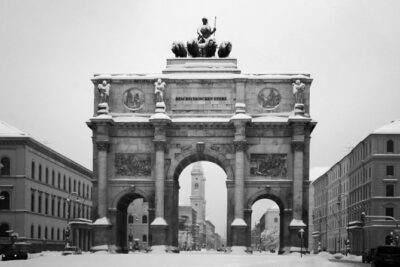
Munich World War II Sites Including Dachau Concentration Camp
Read our review →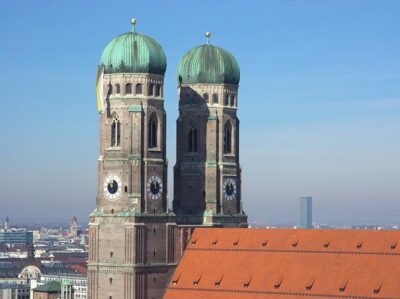
Munich City Walking Tour, includes Third Reich & Viktualienmarkt
Read our review →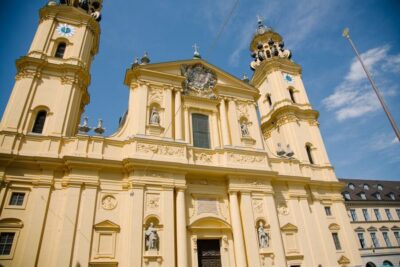
Munich 3-Hour Segway Tour: Nazi Munich & Royal Architecture
Read our review →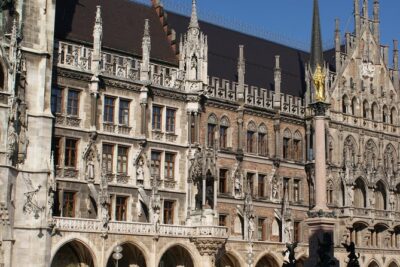
Dachau Concentration Camp Memorial Site And Third Reich Day Tour From Munich
Read our review →
Eagle’s Nest-Berchtesgaden-Obersalzberg Private Half Day WWII Historical Tour
Read our review →
Third Reich and World War II Segway Tour of the City
Read our review →Browse the lists this tour appears in