
Reviewed · MUNICH NIGHT TOURS
Augsburg: Illuminated Guided Evening Walking Tour
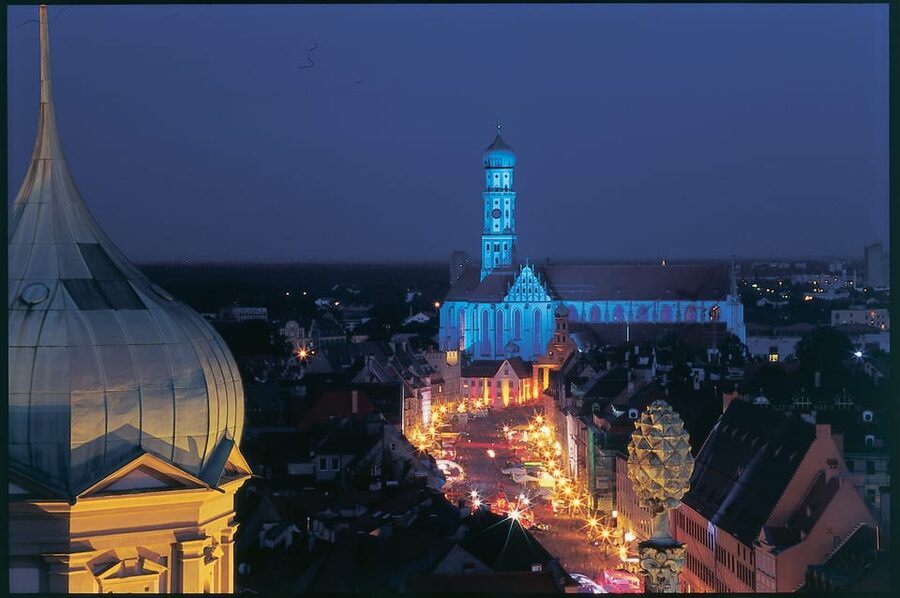
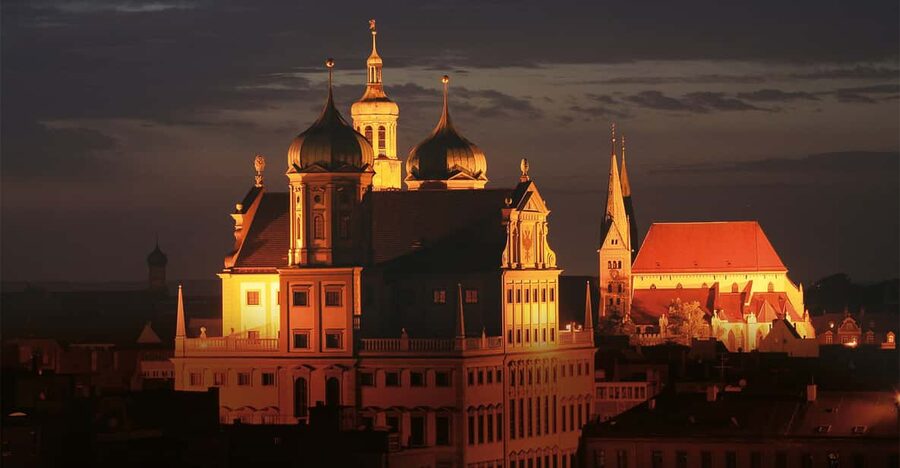
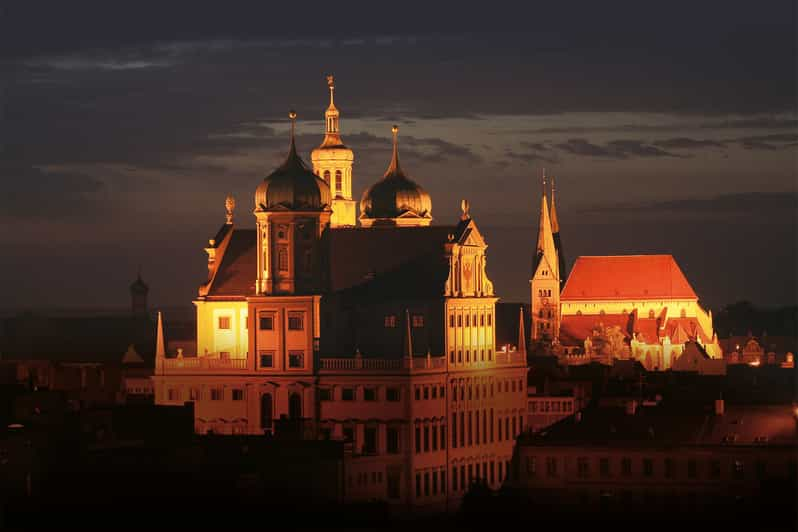
Augsburg’s grand buildings change character after dark. On this 90-minute walk, you’ll see the town hall, three fountains, the cathedral and St. Ulrich and Afra Basilica under evening lights, with a German-speaking guide to explain what you’re looking at. I like that the route brings together major landmarks and varied architectural styles, rather than sticking to one kind of sight.
I also like the chance to walk along Maximilianstraße, Augsburg’s Imperial Mile, where palaces and Fugger houses line one of the city’s most handsome promenades. One consideration: the tour is in German, so it may not be the right fit if you need English commentary. The pace and route can be adjusted for someone who has difficulty walking, but comfortable shoes are still a good idea.
Key points to know before you book
- Three illuminated fountains give the walk a memorable focus beyond churches and civic buildings.
- The route starts at the town hall’s main door, then takes in Augsburg landmarks including the cathedral and St. Ulrich and Afra Basilica.
- Maximilianstraße is the architectural centerpiece, lined with Fugger houses and palaces in Renaissance, Baroque and Rococo styles.
- The tour lasts 1.5 hours and is in German, so check that the language suits you before booking.
- The guide can adapt the walk to a participant’s needs, and the activity is listed as wheelchair accessible.
- The advertised price is about $20 per person, with the local fare shown as €14 plus a €3 administration fee.
Augsburg after dark, with the city’s grand details in view
Augsburg is a city of impressive civic architecture, churches and fountains, and evening light gives those sights a different feel from a daytime visit. You’re not just crossing the center to tick off a list. A guide helps connect the buildings to the city’s past and points out the details you might otherwise pass without noticing.
The walk is run by Regio Augsburg Tourismus GmbH and lasts about an hour and a half. That’s long enough for several landmark stops and a look at the city’s architectural range, without taking over your whole evening. The format also suits an early visit: you can get an introduction to the center, then return to a favorite building or street in daylight.
Augsburg’s evening illumination is the main draw, but it’s not the only reason to go. The route joins three fountains, two major religious buildings, the town hall and a long stretch of Maximilianstraße. That mix gives the walk variety, while the guide’s explanations help you make sense of the city’s different eras.
The experience earns a strong overall rating of 4.6 from 67 ratings. The clearest themes in the feedback are the guides’ command of Augsburg’s history, the pleasant atmosphere after dark and the care taken to keep the group at a manageable size. One group was split in two so people could hear more easily. That can make a real difference on a walking tour, where missing a few words can mean missing the story behind a building.
More evening and night tours in Munich:
- Munich: Night Watchman Walking Tour
★ 4.7 · 2,092 reviews - Munich Ghosts and Spirits Evening Walking Tour
★ 5.0 · 1,900 reviews - Bavarian Beer and Food Evening Tour in Munich
★ 4.5 · 1,575 reviews
Starting at the town hall
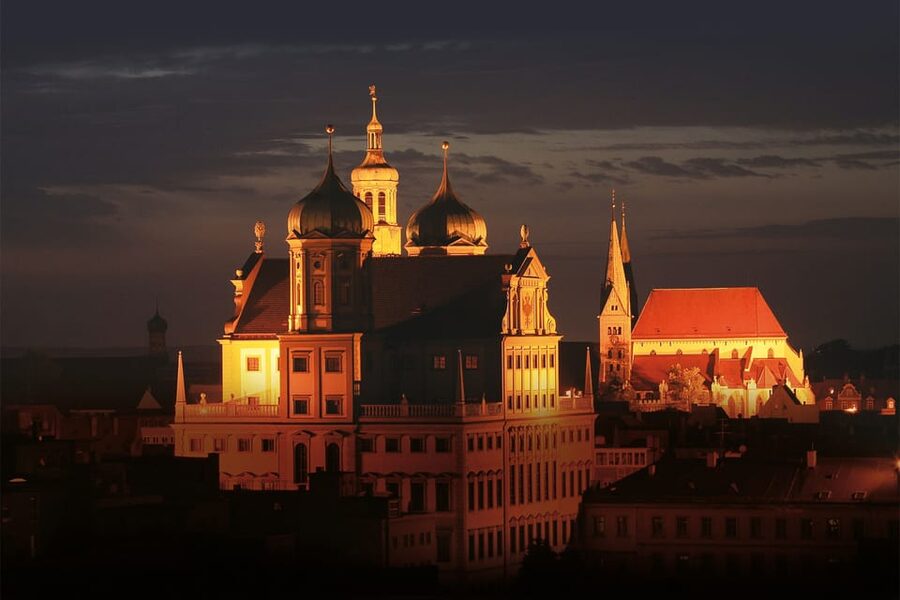
Meet at the main door of Augsburg’s town hall. It is a practical landmark and a fitting place to begin: the town hall is one of the key sights on the walk, and the city’s civic center provides a natural starting point for understanding Augsburg’s public buildings.
As the tour begins, your guide introduces the city and its landmarks while you move through the center. The specific order of sights can vary, so think of the route as a guided evening circuit rather than a fixed list of stops in a guaranteed sequence. You’ll see the illuminated town hall, the cathedral, St. Ulrich and Afra Basilica, the fountains and the historic buildings along Maximilianstraße.
The guide is an important part of the value here. A lit facade can be beautiful on its own, but a short explanation of its history, style or place in the city gives you more to take away. The tour’s best use is to help you notice what you’re seeing and understand how Augsburg’s landmarks fit together.
The language is German. If you speak German comfortably, that means you can follow the stories and ask questions directly. If you don’t, the buildings and night views may still be enjoyable, but the historical explanation is a central part of the experience, so language is a meaningful booking consideration.
Three fountains and the city’s evening glow
The three magnificent fountains are among the most distinctive stops. Rather than treating them as passing street furniture, the tour gives them space as part of Augsburg’s public face. At night, their lighting adds a different mood, and the pause lets you take in the setting around them.
The supplied details don’t name the fountains, so it’s best not to expect a particular one by name or assume each receives equal time. What you can count on is that the route includes three fountains as well as the major buildings. If fountains are a special interest, this is a useful feature; if your priority is a long architectural lecture at each stop, the 90-minute limit means the guide has to keep the walk moving.
The evening setting also changes how you read the center. Light picks out facades and creates a strong sense of place, while the guide fills in the human and historical context. One attendee described the city as showing a different side at night, which captures the appeal well: you get familiar sights presented in a setting that feels distinct from a daytime city walk.
Do keep expectations grounded. This is a walking tour, not a staged light show, and the appeal comes from real city landmarks after dark. If a street festival or other event is taking place, the center may be lively and the route may feel busier. A guide has still been able to make the visit worthwhile in that sort of setting, but crowds can affect how quietly you take in a stop.
The cathedral and St. Ulrich and Afra Basilica
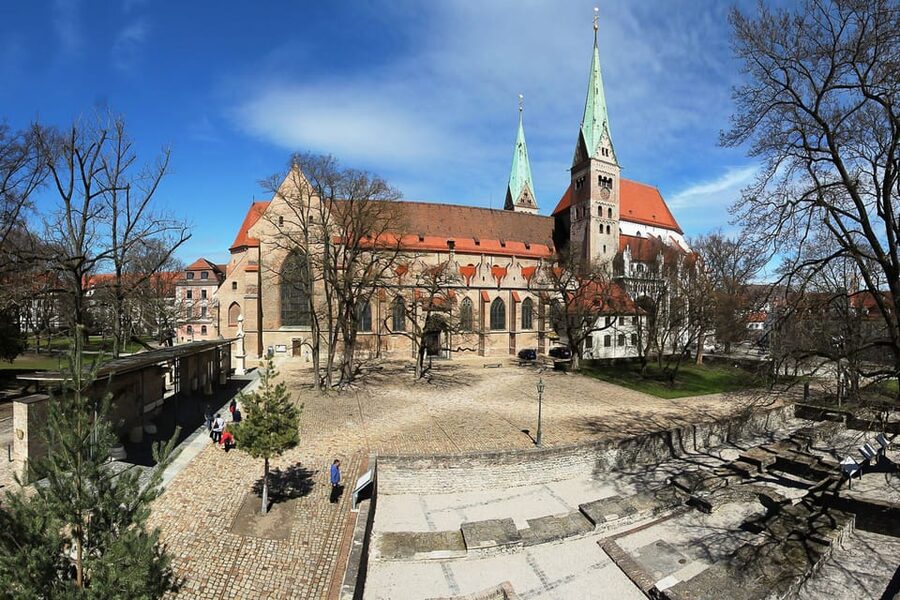
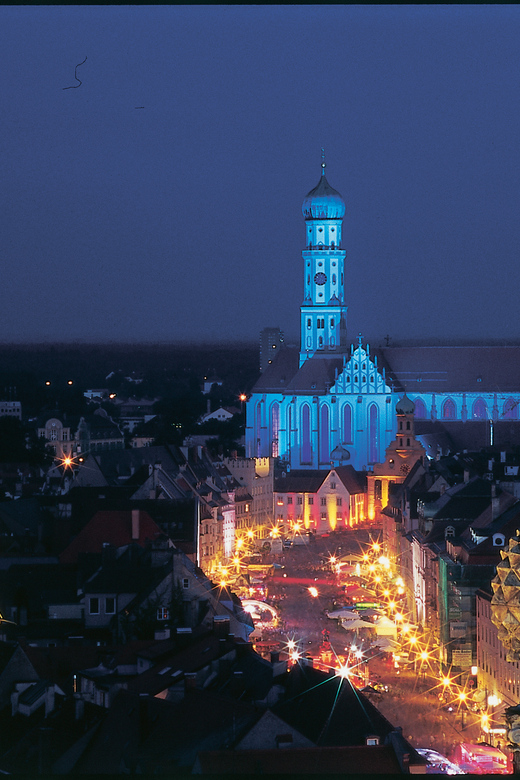
The tour includes Augsburg Cathedral and the Basilica of St. Ulrich and Afra, two major religious landmarks with very different architectural presence. Seeing them as part of one walk helps you grasp the scale and variety of the city’s ecclesiastical architecture, rather than treating either building as an isolated photo stop.
The tour’s focus is on the buildings illuminated from outside and the stories shared as you walk. The information provided does not promise interior visits, so don’t book expecting to enter either church. Even from outside, an evening view can draw attention to a building’s outline and decorative details, while the guide gives the setting a historical frame.
These stops also help balance the route. Civic buildings and fountains show the public life of the city; the cathedral and basilica add a religious dimension. You’ll get a broader introduction to Augsburg’s center in a short span, though anyone wanting a full church visit should plan separate time during opening hours.
More walking tours in Munich:
- Munich: Third Reich & WWII Walking Tour
★ 4.6 · 6,181 reviews - Third Reich Walking Tour Munich
★ 4.5 · 4,291 reviews - Munich: Old Town & Viktualienmarkt City Walk in German
★ 4.7 · 2,304 reviews - Munich Old Town Walking Tour
★ 4.5 · 1,287 reviews
Maximilianstraße, the Imperial Mile
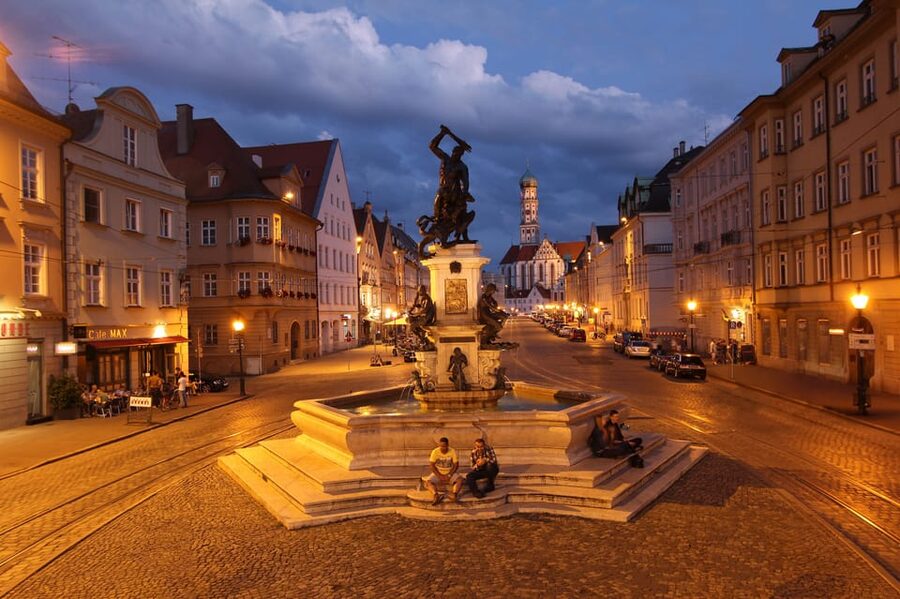
Maximilianstraße is presented as Augsburg’s most beautiful promenade and is one of the walk’s key stretches. Its historic houses and palaces reveal the city’s architectural range, from Renaissance to Baroque and Rococo. The changing styles make the street more than a pretty backdrop: they give you a quick visual lesson in how Augsburg’s built character developed across different periods.
The Fugger houses are a particular point of interest. The Fugger family is closely associated with Augsburg, and seeing their historic residences along the route adds a personal and civic layer to the city’s story. The walk also includes other palaces, so you can compare the different facades rather than seeing a single style repeated.
For architecture-minded visitors, this is likely the most rewarding section. Look up as you walk, but don’t expect to absorb every detail at street level while keeping pace with a group. If a building catches your eye, make a note to come back in daylight, when you can study its features at your own speed.
The Imperial Mile is also a practical part of the experience because it brings several historic buildings into one stretch. You don’t need to plan separate visits to each palace to get a sense of the city’s architectural variety. The tradeoff is that a guided walk moves on; you’ll get an overview rather than a long stop at every facade.
What the guide adds to a short walk
The strongest reason to choose a guided tour over a solo evening stroll is the interpretation. You can see lights and stonework on your own, but a guide can connect a fountain, church or palace to Augsburg’s past and point out details that may not be obvious at first glance. The guide’s local knowledge has been singled out as a real strength, with visitors describing the historical information as engaging and the explanations as easy to follow.
Group size matters, too. A group was divided into two so participants could hear the guide clearly. That is a simple but useful detail: on a street walk, a large crowd can make it hard to catch the commentary, especially when the group gathers around a facade or fountain. Smaller groups help preserve the conversational feel.
The tour can also be adjusted for someone who is not confident on foot. One participant’s needs were considered when choosing the walk, which suggests the guide is attentive to the group rather than rigidly following a route at all costs. The activity is listed as wheelchair accessible. If you have specific mobility needs, it is sensible to check what the current route and conditions will allow before booking.
Price, pace and practical details
The tour is listed at about $20 per person. The local price information breaks that down as €14 plus a €3 administration fee, or €17 total based on those figures. Prices can vary with exchange rates and booking details, so check the amount shown when you reserve.
For the cost, you get a guide and 90 minutes of walking through several of Augsburg’s central landmarks. That is fair value if you want context as well as evening views. It is less compelling if you only want to see the buildings lit up and do not need commentary, since you can walk through the center independently.
Wear comfortable shoes. The tour is on foot, and the supplied information gives no distance or detailed surface description, so it’s wise to choose footwear you can walk in easily. The activity is wheelchair accessible, but accessibility can depend on the route and individual needs.
The tour is offered in German. Starting times depend on availability, so check the date and time that suit your plans. You can cancel up to 24 hours in advance for a full refund, and a reserve-now, pay-later option is available, which gives you some flexibility if your schedule is still taking shape.
Who should book this Augsburg evening tour?
I’d book this if you want a compact introduction to Augsburg’s historic center and enjoy learning as you walk. The combination of the town hall, three fountains, two landmark churches and Maximilianstraße gives you a useful overview in one evening, while the illumination adds atmosphere without requiring a special event or long excursion.
It is particularly well suited to German speakers, architecture fans and first-time visitors who want a guide to explain the city’s public buildings and historic streets. It can also work for someone who needs a more considerate walking pace, since the route has been adjusted for a participant with limited walking ability and is listed as wheelchair accessible.
I’d skip it if you need an English-language tour, want to spend substantial time inside churches, or prefer to explore each building at your own pace. For everyone else, the modest price and focused 90-minute format make it a sensible way to see Augsburg’s center after dark. Book it for the stories and the variety of landmarks, with the evening lighting as a welcome extra.
FAQ
How long is the Augsburg evening walking tour?
The tour lasts 1.5 hours.
What language is the tour in?
The live tour guide speaks German. No other tour language is specified.
Where is the meeting point?
Meet at the main door of Augsburg’s town hall.
What sights are included?
The walk includes the illuminated town hall, three fountains, Augsburg Cathedral, the Basilica of St. Ulrich and Afra, Maximilianstraße, Fugger houses and other palaces.
What should I bring?
Bring comfortable shoes for the walking tour.
Is the tour wheelchair accessible?
Yes, the activity is listed as wheelchair accessible. The route has also been adjusted to suit a participant who was not able to walk as easily.
Can I cancel for a refund?
Yes. You can cancel up to 24 hours in advance for a full refund.
Just added in Munich
- Private day trip from Munich to Eagle’s Nest, Salzburg and back★ 4.5 · 15 reviews
- Private Castle Tour from Munich: Neuschwanstein, Hohenschwangau, and Linderhof★ 4.5 · 12 reviews
- Private Eagle’s Nest Tour from Munich ending in Salzburg★ 5.0 · 8 reviews
- Private Day Trip from Munich to Eagle’s Nest and Hallstatt★ 4.5 · 9 reviews
- Private day trip from Munich to Salzburg and Hallstatt★ 4.5 · 17 reviews
- Private Day Trip from Munich to Neuschwanstein and Linderhof★ 4.0 · 11 reviews
- Private Day Trip Munich to Harburg, Dinkelsbuhl & Rothenburg★ 4.5 · 24 reviews
- Private day trip from Munich to Eagle’s Nest and Salzburg★ 4.5 · 9 reviews
Munich Night Tours, compared.
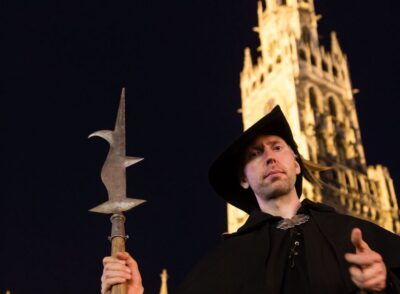
Munich Ghosts and Spirits Evening Walking Tour
Read our review →
Bavarian Beer and Food Evening Tour in Munich
Read our review →
Der Nachtwächter für Kinder – Führung auf Deutsch
Read our review →
Night Watchman Tour for Kids (6 – 12 years) – 75 min
Read our review →Browse the lists this tour appears in