
Reviewed · MUNICH HISTORY TOURS
Munich’s Hidden Architecture Guided Tour
Munich’s southern districts offer a different city from the grand squares and polished streets near the center. This two-hour walk with architect Philipp takes you through Giesing and other lesser-known areas, linking street art and cultural spaces with the Isar River, an old bridge and more than 700 years of local history.
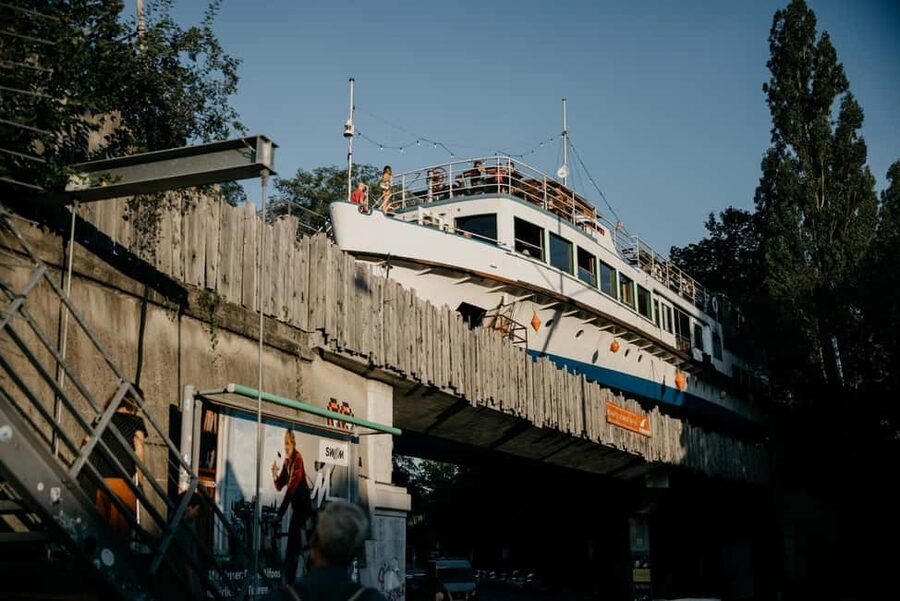
I like the contrast between Alte Utting, a boat set on a bridge, and the quieter riverside scenery nearby. I also like that Philipp brings an architect’s eye to the route, helping you notice how art, buildings and neighborhood life fit together.
The main consideration is the season: this is a winter walk, and the evening air can feel cold beside the river. You’ll need warm clothes and comfortable shoes, and the route is not suitable for wheelchair users or people with mobility impairments.
At a glance: Munich’s south on foot
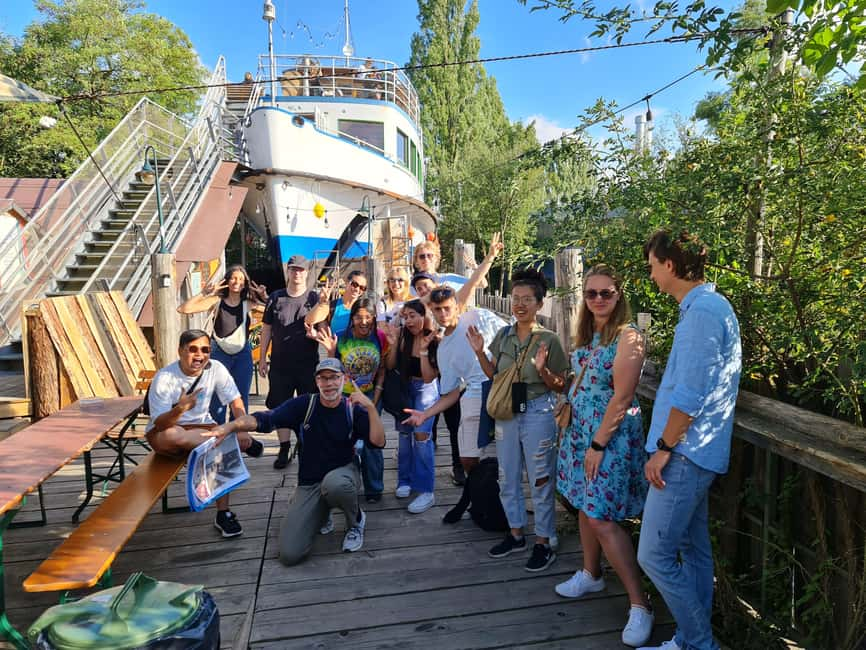
- A different side of the city: Walk through southern neighborhoods, including Giesing, away from the best-known central sights.
- An architect as your guide: Philipp leads in English or German and brings professional knowledge of architecture and art.
- Three alternative Christmas markets: The tour includes visits to three markets, though their names and exact offerings are not specified.
- A striking landmark: See MS Utting, the boat on the bridge at Lagerhausstrasse.
- River and neighborhood views: Follow the route toward the Isar, Wittelsbacherbrücke and the area known as Little Venice.
- A short winter outing: The walk lasts two hours and costs $36 per person. Food, drinks and transport to and from the meeting point are extra.
A Munich walk beyond the central sights
This tour is for you if you want to look beyond Munich’s familiar center and see how the city changes as you walk south. Rather than concentrating on famous monuments, Philipp connects neighborhoods, cultural spaces, public art and the river. The result is less a checklist of major sights and more a guided introduction to places you might not think to visit on your own.
The route touches on more than 700 years of history, but it also makes room for present-day Munich. That mix matters: older districts are not simply backdrops to the past. Street art, shipping containers, timber structures and cultural hubs show how people use and reshape urban space now.
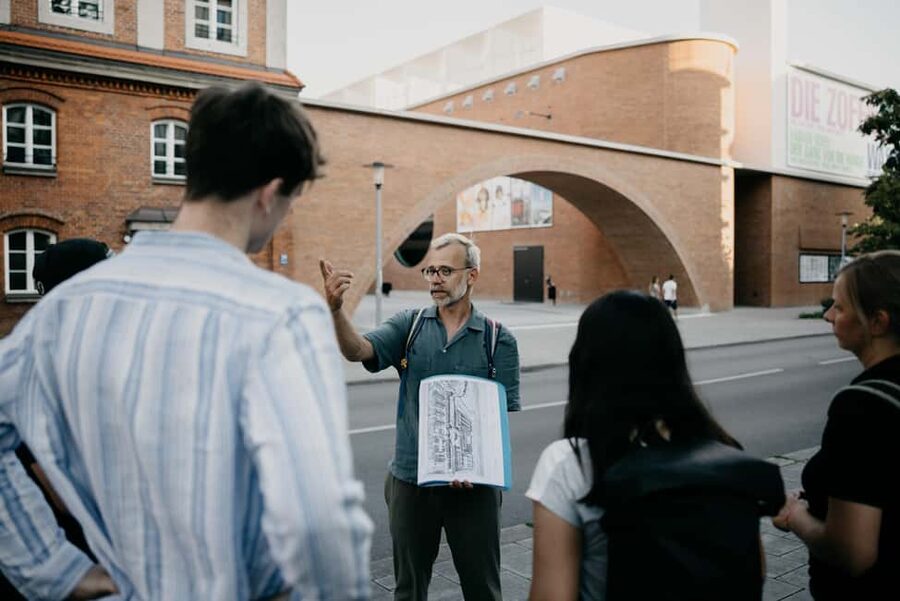
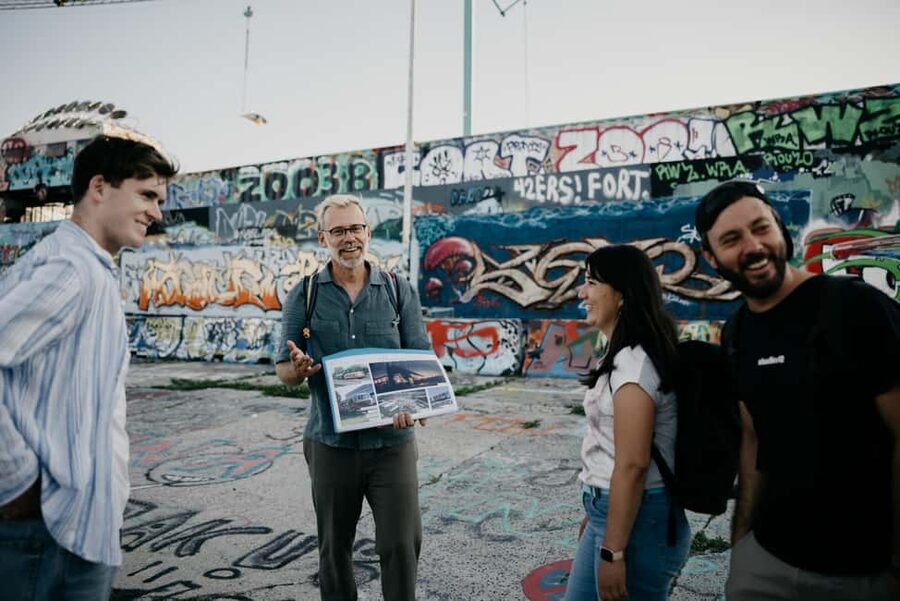
Philipp is a professional architect, and that gives the tour a useful focus. You can expect him to draw attention to details in the surroundings and explain how to read them, rather than simply point out landmarks. Several people who took the walk valued his explanations, his ability to answer questions and the way he made small architectural details easier to notice. Even if you live in Munich, the route may offer a new way to see familiar streets.
The experience is advertised as an alternative winter tour, with Christmas markets as part of the plan. It is not a dedicated architecture lecture or a full market crawl. Instead, the appeal is the combination: neighborhoods, buildings, creative spaces, river scenery and seasonal stops, all in a compact two-hour walk.
More history tours in Munich:
- Munich: Old Town & Viktualienmarkt City Walk in German
★ 4.7 · 2,304 reviews - Munich Old Town Walking Tour
★ 4.5 · 1,287 reviews - Munich: Spooky Tour of Old Town in German
★ 4.6 · 1,112 reviews
Starting at Piazza Zenetti
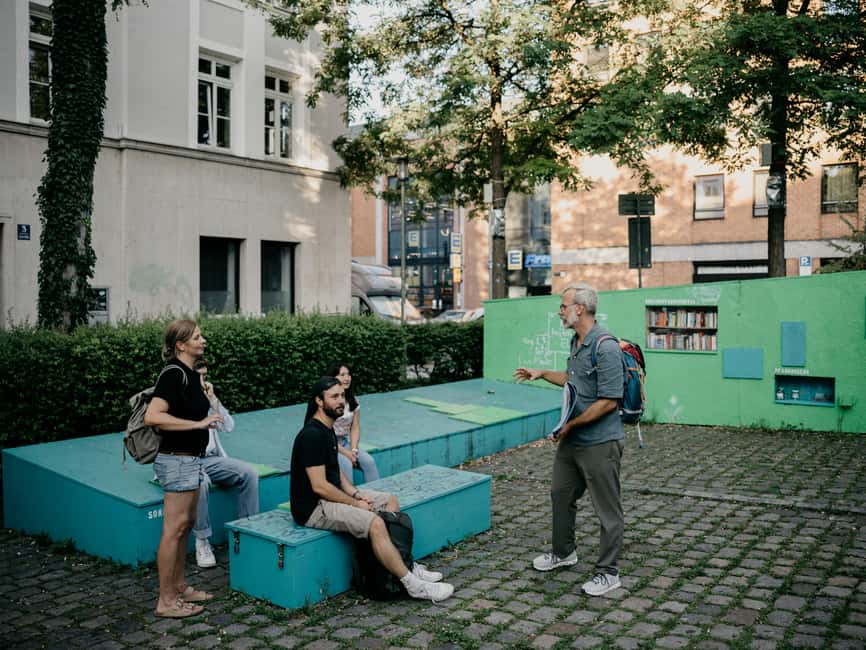
The meeting point is Piazza Zenetti, at the street intersection of Tumblingerstrasse and Zenettistrasse. Look for the turquoise and green outdoor furniture and small trees in boxes. Philipp says he will carry a colorful backpack and a blue folder, which should help you spot him.
The nearest suggested subway stop is Goetheplatz on the U3 or U6 lines. From there, allow about ten minutes to walk to the meeting point. Transport to and from the tour is not included, so remember to factor that into the cost and timing.
The first named stop is Münchner Volkstheater. It is included as a guided stop, but no specific performance or interior visit is promised. Think of it as an early point of reference on a route that uses cultural places to introduce the character of Munich’s south.
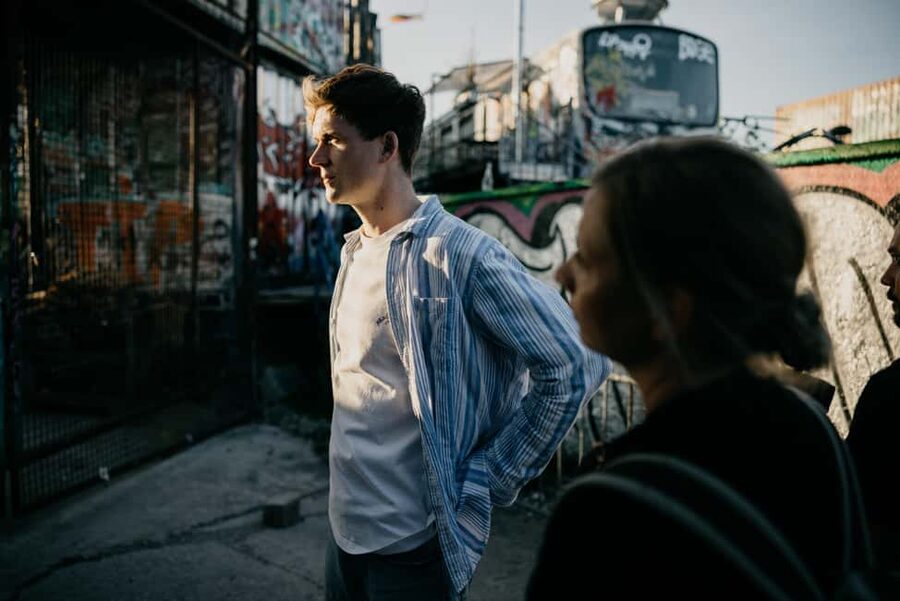
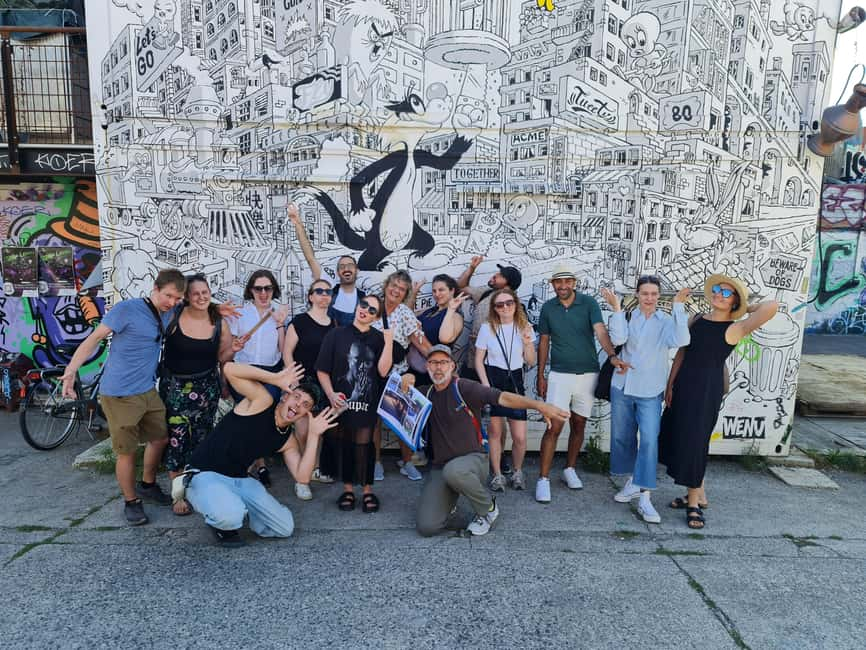
The walk then heads to Bahnwärter Thiel, a cultural hub described as part of the area’s alternative scene. The tour’s overview mentions spaces made from shipping containers and wood, alongside street art. This is where the route’s modern, improvised side comes into view. You are not just looking at polished facades; you are seeing how a city makes room for new uses and creative activity.
Alte Utting: a boat above the street
The most unusual named stop is MS Utting on Lagerhausstrasse. The boat sits on a bridge, an odd and memorable sight that gives the tour one of its clearest landmarks. The New York Times has also drawn attention to the boat-on-a-bridge setting, so it is a place with a story beyond its novelty.
The visit is a guided stop, not a promise of a meal or a drink. Food and beverages are not included, and the tour information does not say that you will go aboard. Treat it as an opportunity to see and hear about the site, rather than as a dining reservation.
This stop also helps explain why the route suits travelers who enjoy urban oddities and changing neighborhoods. Alte Utting is not a grand historic monument. Its appeal lies in the way an unexpected structure has become part of the city’s cultural life. Philipp’s architectural perspective can help you look past the photo opportunity and consider how such a place fits into its surroundings.
From Dreimühlenstrasse to the Isar
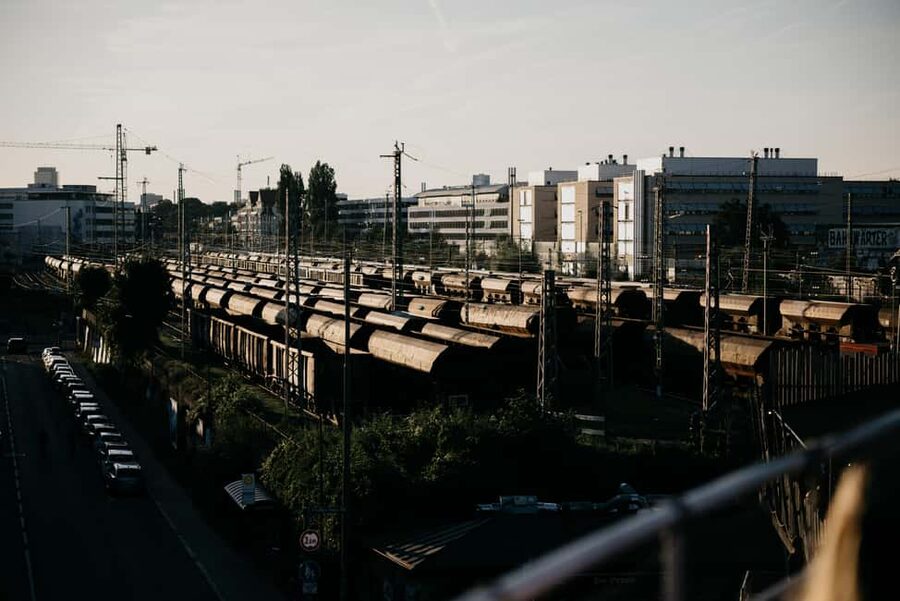
After the boat, the route passes through Dreimühlenstrasse and continues toward Wittelsbacherbrücke. These stops bring the walk closer to the Isar, one of the tour’s natural counterpoints to its street art and cultural spaces.
The river section is especially appealing in winter, when the city can feel quieter and the light may suit a short evening walk. The tour includes an opportunity to see Munich and the Isar by night. That does not mean every departure will take place after dark: starting times vary, so check the available options before booking if evening views are important to you.
At Wittelsbacherbrücke, the route reaches a bridge over the river. The tour’s focus is not only on architecture in the narrow sense. It also asks you to notice how streets, bridges, water and public spaces shape a neighborhood. That broader view is useful if you like understanding a city as a place people live, rather than a string of isolated attractions.
From there, the route includes Claude-Lorrain-Straße and Little Venice. The supplied details do not specify a particular building or viewpoint at either stop, so it is best to think of them as parts of the neighborhood walk rather than guaranteed photo spots. The value lies in seeing how these places connect with the river and the wider southern route.
More guided tours in Munich:
- Munich 3-Hour Guided Bike Tour
★ 4.5 · 1,731 reviews - Munich’s Beer Halls and Breweries: 3-Hour Guided Tour
★ 4.6 · 928 reviews - Guided Dachau Concentration Camp Memorial Site Tour with Train from Munich
★ 5.0 · 920 reviews - Munich: Birthplace of the Third Reich Guided Walking Tour
★ 4.6 · 771 reviews
Giesing and three Christmas markets
Giesing is presented as one of Munich’s last authentic neighborhoods, with a character of its own and more than 700 years of history. That is a broad description, not a promise that every street will look untouched by modern life. The interest is in experiencing a district that feels distinct from the central areas most people visit first.
The tour includes three alternative Christmas markets. Their names, opening hours and specific stalls are not provided, so you should not book expecting a particular market or a set amount of shopping time. The markets are part of the walk, and the seasonal atmosphere is one of the reasons this experience is designed for winter.
There is a practical trade-off here. A two-hour tour with several stops gives you a taste of the area, not a leisurely visit to each market. If you want time to eat, shop or linger, plan to return to a market afterward. Food and drinks are at your own expense.
The final named stop is Gans Woanders. The route information gives this as the finish, while the activity details also say the tour ends back at the meeting point. Those instructions do not match, so confirm the exact end location with Philipp before you go. It matters if you have dinner plans or need to catch transport.
What $36 buys you
At $36 per person, the price buys a two-hour guided walk through districts that can be difficult to appreciate without local context. You get an English- or German-speaking guide, visits to three alternative Christmas markets and a route that joins cultural spaces, architectural points of interest and the Isar.
The strongest value is the interpretation. You can walk through these areas on your own, but Philipp’s background in architecture and art gives the route a point of view. The walk can help you notice details and connections you might otherwise pass without a second thought. People who took the tour particularly valued his explanations, engaging style and recommendations during and after the walk.
Still, keep the limits in mind. The price does not cover food, drinks or transport to the meeting point. The tour is also only two hours, so it is an introduction rather than an in-depth exploration of every stop. If you want a long museum visit, a full meal or an extended market outing, this is not the right format.
The booking terms offer flexibility: you can reserve without paying immediately and cancel up to 24 hours in advance for a full refund. Private groups are available, and you can contact Philipp about special requests or a private tour.
Who should book this walk?

I’d choose this tour if you have already seen central Munich’s main sights, or if you would rather spend an afternoon learning how a city works than ticking off another famous building. It should suit people interested in architecture, street art, local culture and neighborhoods with a strong sense of place.
It is also a good fit for residents who want a fresh perspective. The route is not only for first-time visitors; the walk has helped people who have lived in Munich for many years discover places and details they had not noticed before. That is a useful sign that the tour’s appeal rests on more than basic sightseeing.
The timing and pace make it easy to add to a winter city break, but dress for the weather. Bring warm clothing, comfortable walking shoes and a camera if you want to record the river and street scenes. Smoking is not allowed during the activity.
This is not the right choice if you need a wheelchair-accessible route or have significant mobility limitations. It is also not suitable for people over 95, according to the activity details. The walk is taken at your own risk, so consider your comfort with an outdoor route before booking.
Should you book it?
Book if you want a compact, guided look at Munich’s southern districts, especially if architecture, art and urban culture interest you. Philipp’s professional background and the mix of river scenery, Giesing, the boat on the bridge and Christmas markets make this more distinctive than a standard city-center walk.
Skip it if you prefer major landmarks, indoor attractions or plenty of time at each stop. Before booking, check the starting time, dress for winter and confirm whether the tour finishes at Gans Woanders or returns to Piazza Zenetti. With those details settled, this is a thoughtful way to spend two hours seeing a less familiar side of Munich.
FAQ
How long is the tour?
The tour lasts two hours. Starting times vary, so check availability for the date you want.
How much does it cost?
The listed price is $36 per person.
What languages does Philipp speak on the tour?
The tour is offered in English and German.
Where does the tour start?
It starts at Piazza Zenetti, at the intersection of Tumblingerstrasse and Zenettistrasse.
How do I get to the meeting point?
The suggested route is to take the U3 or U6 to Goetheplatz and walk about ten minutes to Piazza Zenetti. Transport is not included.
Which places are included on the route?
Named stops include Münchner Volkstheater, Bahnwärter Thiel, MS Utting on Lagerhausstrasse, Dreimühlenstrasse, Wittelsbacherbrücke, Claude-Lorrain-Straße, Little Venice and Gans Woanders.
Are Christmas markets part of the tour?
Yes. The tour includes visits to three alternative Christmas markets. Their names are not specified.
Are food and drinks included?
No. Food and drinks are not included in the price.
Is the tour wheelchair accessible?
No. The activity is not suitable for wheelchair users or people with mobility impairments.
Just added in Munich
- Private day trip from Munich to Eagle’s Nest, Salzburg and back★ 4.5 · 15 reviews
- Private Castle Tour from Munich: Neuschwanstein, Hohenschwangau, and Linderhof★ 4.5 · 12 reviews
- Private Eagle’s Nest Tour from Munich ending in Salzburg★ 5.0 · 8 reviews
- Private Day Trip from Munich to Eagle’s Nest and Hallstatt★ 4.5 · 9 reviews
- Private day trip from Munich to Salzburg and Hallstatt★ 4.5 · 17 reviews
- Private Day Trip from Munich to Neuschwanstein and Linderhof★ 4.0 · 11 reviews
- Private day trip from Munich to Eagle’s Nest and Salzburg★ 4.5 · 9 reviews
- Private day trip: Munich to Neuschwanstein Castle, local driver★ 4.5 · 3 reviews
Munich History Tours, compared.
Old Town & Viktualienmarkt City Walk in German
Read our review →

Mystic Munich – Sagas and Legends of the Old Town
Read our review →
Munich 3-Hour Segway Tour: Nazi Munich & Royal Architecture
Read our review →
Fall in Love with Munich in a Private Old Town Walking Tour
Read our review →Browse the lists this tour appears in