
Reviewed · DACHAU CONCENTRATION CAMP TOURS
Munich WWII and Dachau Concentration Camp Private Tour with Licensed Guide
Munich’s Nazi past is written into its streets, grand buildings, memorials, and even the route people once took to avoid giving a salute. This private 9.5-hour tour connects those places with Dachau, the concentration camp that opened six weeks after Hitler became chancellor. You get a guide for the history and a driver for the long hops across town.
I like two things in particular: the tour links familiar central sights, such as Marienplatz and the Hofbräuhaus, to less obvious locations like the former Nazi settlement in Ramersdorf; and it gives you time at Dachau rather than treating the memorial as a quick photo stop. A review names guide Max and praises his effort to show the group everything it came to see, and more.
The main consideration is the $804.18 per-person price. Private transport and a licensed guide all day add real convenience, but this is a costly choice for one or two people. The schedule is also packed, so expect a serious day with many short stops, some driving, and a sobering final visit.
Key points to know before booking
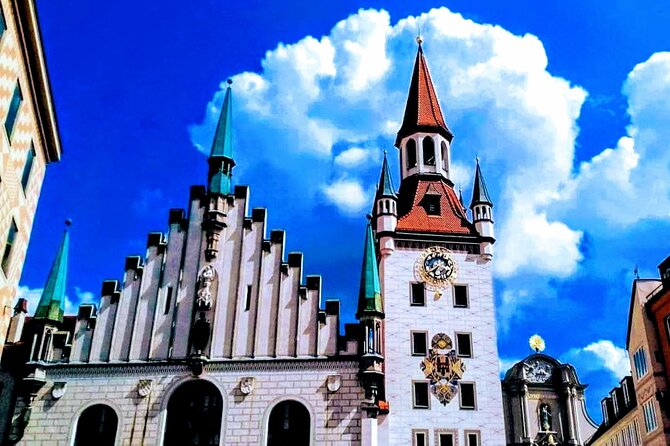
- Marienplatz is the starting point for Munich’s story: The old town walk begins with the civic center and its Nazi-era changes.
- The White Rose memorial is a major stop: At the university, your guide explains the resistance group and its members’ execution in 1943.
- Dachau gets two hours: The memorial visit follows a full day of sites around Munich, and the actual time there may average 1.5 to 2.5 hours.
- You travel in a private vehicle: A chauffeur-driven minivan is used for groups of up to seven; larger groups use a small coach.
- Lunch is not included: The tour pauses at the Hofbräuhaus, where you can eat at your own expense.
- Wear sturdy shoes: Some paths at Dachau are made of coarse pebbles.
A full day tracing Munich’s Nazi past
This tour is less a conventional city sightseeing loop than a guided account of how the Nazi movement took root, built power, shaped the city, and left sites of remembrance behind. The route covers central Munich and its outskirts before continuing to Dachau. That breadth is useful if you want context beyond the best-known landmarks, but it also means some stops are brief.
Your guide meets you at your Munich hotel or another address, and a chauffeur handles the driving. Pickup is offered at 8:00, 9:00, or 9:30 a.m., with other times possible by arrangement. The private format means only your group joins the tour, a welcome advantage when the subject calls for questions or a slower pace at certain memorials.
The tour is offered in English and includes a licensed guide for both Munich and Dachau. Mineral water and transport in an air-conditioned VW or Mercedes minivan are included, with a small coach used for groups larger than seven. The itinerary is extensive, so consider the day a connected history lesson, not a leisurely wander through every neighborhood.
More Dachau memorial tours from Munich:
- Dachau Concentration Camp Memorial Site Tour from Munich by Train
★ 4.5 · 5,637 reviews - From Munich: Dachau Memorial Site Day Tour
★ 4.8 · 2,723 reviews - From Munich: Dachau Memorial Site Half-Day Trip
★ 4.7 · 2,526 reviews
The old town: civic landmarks and wartime scars
The first hour centers on the old town. At Marienplatz, Munich’s civic heart since the 12th century, your guide sets the scene: the square was once called Schrannenplatz, and during Nazi rule the neo-Gothic town hall displayed swastika flags. The old town hall was also altered with a wider passage to accommodate rising traffic. These details make a familiar central square part of the political story rather than just a picturesque place to begin.
At the Frauenkirche, the focus shifts to the damage caused by Allied bombing and the changes made during reconstruction. Historical images help show how the late-Gothic church looked before and after the war. The stop lasts about 15 minutes, enough for explanation and comparison, but not a full visit inside.
The same approach continues at St. Michael, whose vast barrel vault is one of the largest in the world. Your guide uses images to explain wartime destruction and rebuilding. These church stops are valuable because they make the scale of Munich’s wartime damage visible, though the short timing favors an exterior account over a long architectural visit.
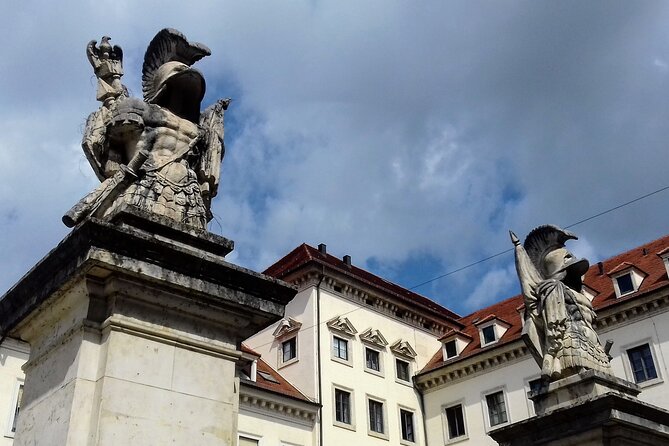
At the Residenz, a huge complex with seven courtyards, the story turns to power and spectacle. SS Brigade Leader Christian Weber established a residence here in 1933. Your guide explains the building’s different architectural periods from outside, and points out the lions at the side entrances, whose paws visitors traditionally touch for luck. It is a quick stop, but the contrast between the palace’s long history and its Nazi-era use gives the setting added weight.
A short walk leads to Viscardigasse, known as Drückebergergäßchen, or the alley of shirkers. Your guide explains why the name matters. The stop is only a couple of minutes, but it offers a memorable example of how ordinary people found ways to resist or avoid Nazi demands.
At the Feldherrnhalle, the 1923 Hitler putsch ended in bloodshed. It sits at the end of Ludwigstrasse, a grand boulevard commissioned by King Ludwig I. This marks the point where the chauffeur waits for the next leg by vehicle. The shift from walking to driving is practical: Munich’s Nazi-era sites are spread far beyond the old town.
Resistance, propaganda, and public memory
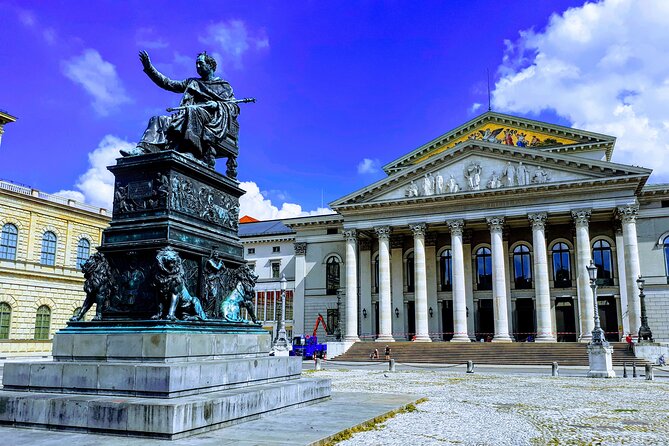
The Memorial to the Victims of National Socialism is a brief but important pause. An eternal flame burns within a symbolic dungeon, a monument to freedom erected in 1985 on the site of a destroyed Schiller memorial. The five-minute stop is compact, so listen closely to the guide’s explanation.
At Ludwig Maximilian University, the tour gives more time to the White Rose memorial. Hans and Sophie Scholl, Christoph Probst, Alexander Schmorell, Willi Graf, and Professor Kurt Huber were members of the resistance group; they were executed in 1943. The memorial visit lasts about 25 minutes, making it one of the more substantial stops in central Munich. I would pay attention here: the story gives human scale to a day otherwise filled with political buildings and urban history.
The nearby Schwabing district brings together art, media, and private life. Hitler frequented the Osteria Italiana, which still exists, while the Völkischer Beobachter newspaper and Heinrich Hoffmann’s National Socialist picture publishing business were based in the area. Hitler also met Eva Braun at the later Photohaus Hoffmann in 1929. The stop lasts about 20 minutes and helps explain how political messaging and personal networks operated in the city.
At the Hofbräuhaus, you get an hour, including time for lunch if you wish. Hitler and his associates met in a first-floor niche, while the ground-floor beer hall and courtyard offer a chance to see the famous inn for yourself. Lunch is not included, so budget for it separately. This is the day’s most relaxed pause, though the setting can feel odd: it is both a functioning restaurant and a place tied to Nazi political history.
Buildings and neighborhoods beyond the center
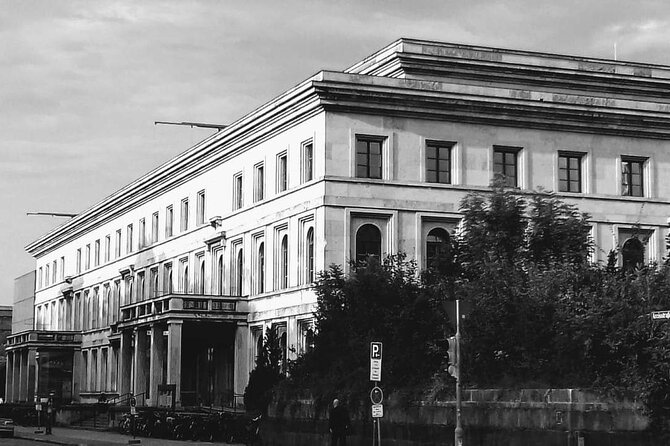
The tour then takes in sites that are easy to miss without a vehicle. In Altstadt-Lehel, you see the former Reich Aviation Ministry building, erected in 1937 for Luftgaukommando V. Its 225-meter main front and Nazi-era details, including swastikas on window grilles and steel helmets on the walls, make the building’s intended authority unmistakable. The stop is short and viewed from outside.
At Haus der Kunst, your guide introduces the first representative Nazi building in Munich, once called the House of German Art. Its long row of pale granite columns led to the joking nickname Weißwurst-Allee. The building displayed art approved by the regime, and Nazi decoration remains visible. This is a concise stop, but it shows how architecture and culture were used to promote an official image.
Nearby, the tone briefly changes at the Eisbach wave, where surfers ride an artificial standing wave. The ten-minute stop offers a pause from the heavy subject matter and a glimpse of a very different Munich. It is not a history stop, but that contrast can be welcome during a day that asks you to absorb a lot.
In Bogenhausen, you see the exterior of Hitler’s former home, a luxurious nine-room, 317-square-meter apartment where he lived from 1929. The building now houses a police station and cannot be viewed from inside. The tour also points out the property where Eva Braun lived in a villa from 1936; that house has since been demolished. These are brief exterior visits, best understood as pieces of the larger story rather than sites with much to see on their own.
On Prinzregentenstraße, a residential block built with flanking air-raid shelters for the Nazi upper class illustrates an unusual attempt to combine elite housing with wartime protection. It was intended as a model for similar buildings, but became the only one completed. The stop is only five minutes, so the guide’s explanation is central to making the building legible.
In Ramersdorf, you see a listed model settlement built in 1934. Nearly 200 houses with gardens were constructed for people the regime described as German national comrades. The short visit gives the tour a useful domestic angle: Nazi planning was not limited to imposing government buildings and parade grounds.
The stop at Stadelheim prison recalls the executions of White Rose members in 1943. Their graves are in a nearby cemetery in the Perlacher Forest. Allow 15 minutes for the guide’s account. It is a difficult stop, and its value lies in connecting the resistance story at the university with the place where its members were killed.
More Third Reich and WWII tours in Munich:
- Munich: Third Reich & WWII Walking Tour
★ 4.6 · 6,181 reviews - Third Reich Walking Tour Munich
★ 4.5 · 4,291 reviews - Munich: Birthplace of the Third Reich Guided Walking Tour
★ 4.6 · 771 reviews - Munich World War II Sites Including Dachau Concentration Camp
★ 4.5 · 570 reviews
Königsplatz and Hitler’s early Munich years
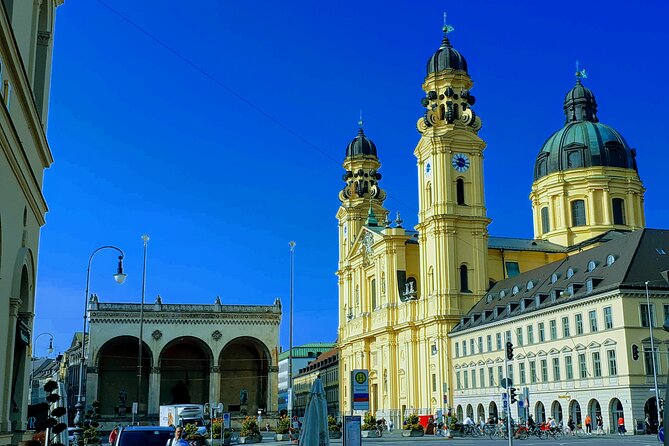
At Königsplatz, the tour examines the former center of Nazi Party power. The area between Königsplatz and Karolinenplatz held administrative buildings and the Führerbau. Many Nazi buildings survived the bombing largely intact. The NS Documentation Center, opened in 2015, stands on the site of the destroyed Brown House. With about 25 minutes here, you have time to take in the setting and understand how the party marked the city.
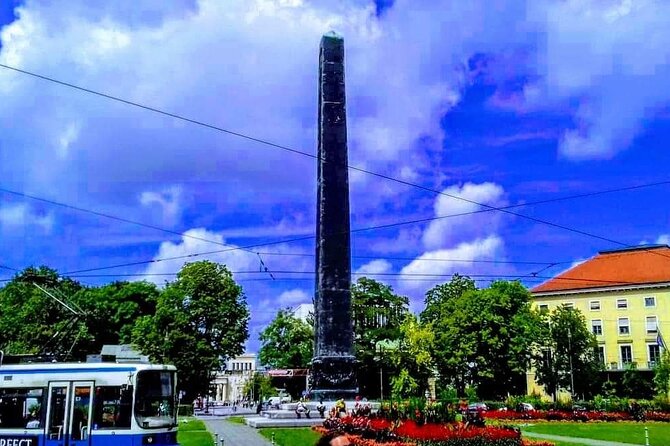
The nearby Karolinenplatz and its obelisk add a layer of older history. The monument was built in 1833 by order of King Ludwig I, while the Nazi power center developed around it a century later. This juxtaposition helps show how the regime claimed existing civic spaces for its own purposes.
In Maxvorstadt, you see the apartment building where Hitler lived in a shabby room with Rudolf Häusler after moving from Vienna to Munich in 1913 as an unsuccessful postcard painter. The building has since been renovated. Your guide also identifies the location of a mausoleum and Hall of the Party that Hitler planned but never built. The stop ties the day’s story back to his early years in Munich, before his rise to power.
Dachau: allow time for a difficult visit
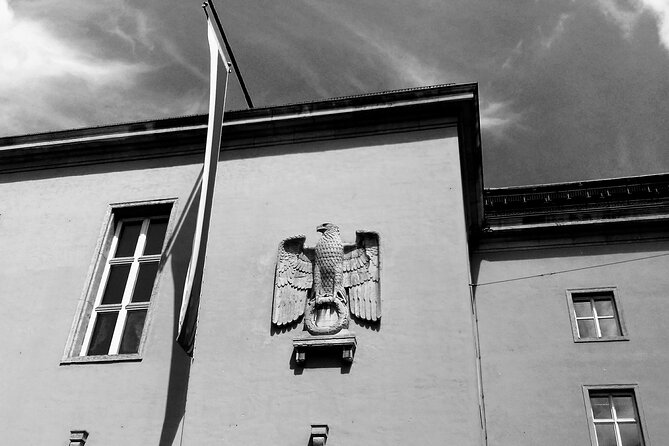
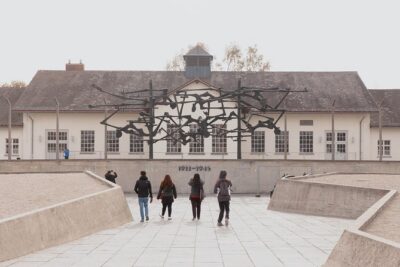
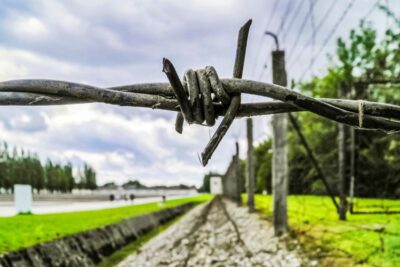
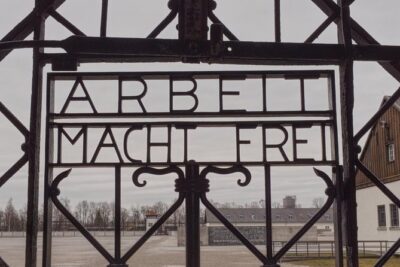
The final major stop is the Dachau Concentration Camp Memorial Site. The camp opened six weeks after Hitler became chancellor. More than 200,000 people were imprisoned there during its 12 years, and 41,500 were murdered. Those numbers are hard to take in; a licensed guide can help you approach the site with context rather than treating it as another stop on a sightseeing checklist.
Before entering the memorial, the tour shows you some of the luxurious villas on the former SS grounds. You then have roughly two hours at the memorial, though the average stay is described as 1.5 to 2.5 hours. Two hours is meaningful, but this is a large and emotionally demanding site. If you prefer a longer visit, ask how the timing can work before booking.
Some footpaths are made of coarse pebbles, so wear suitable shoes. The memorial is not recommended for children under 12. Given the subject matter, think carefully about whether the visit is appropriate for everyone in your group.
Is the private price worth it?
At $804.18 per person, this is a premium tour. Its strongest value is convenience: private pickup, a chauffeur, and a licensed guide take care of a complicated route that stretches from central Munich to outlying neighborhoods and Dachau. You avoid arranging separate transport and get one guide to connect the locations into a single account.
The price may make sense if you are traveling with a group that values privacy, has limited time, or wants expert guidance at both the city sites and the memorial. Group discounts are offered, but no discount amount is specified, so confirm the actual total for your party before booking. For a solo traveler or couple, the per-person cost is harder to justify unless the private format is especially important to you.
One review names Max and says he made sure the group saw everything it had come to see and more. That is a useful sign of the kind of flexible, attentive guiding this private format can allow, but it does not establish who will lead your tour. Ask about the assigned guide when arranging your booking if a particular guide matters to you.
The day is long and contains many stops, some lasting only five to 15 minutes. That pace works well if you want a broad overview, but less well if you prefer extended museum visits or time to explore each neighborhood on foot. There are only three published ratings, so the available feedback is limited. The one detailed comment is positive, but it is not enough to treat one guide’s style as guaranteed.
Who should book this tour?
I would consider this tour if you want to understand Munich’s Nazi-era history across the city, not just at Königsplatz and Dachau. It suits history-focused visitors who value a licensed guide, private transport, and the chance to visit both famous landmarks and less obvious sites in one day.
I would look elsewhere if you want a low-cost outing, a slow-paced city walk, or a long independent visit at Dachau. This is an intense, tightly scheduled day. Book it for the breadth and the guided context, and go in ready to give the memorial the attention it deserves.
FAQ
How long is the tour?
The tour lasts about 9 hours and 30 minutes. The Dachau memorial visit is generally 1.5 to 2.5 hours.
Is the tour private?
Yes. Only your group takes part.
Where can pickup take place?
Pickup is offered at a hotel or address in Munich. Pickup or return outside Munich, including Munich Airport, can be requested, and may involve additional costs.
What time can pickup be arranged?
The listed pickup times are 8:00, 9:00, or 9:30 a.m. Another time can be requested.
What kind of vehicle is used?
Groups of up to seven travel in a chauffeur-driven, air-conditioned VW or Mercedes minivan. Groups larger than seven use a small coach with a driver.
Is lunch included?
No. Lunch is not included. The tour stops at the Hofbräuhaus, where you can buy a meal.
Is the tour offered in English?
Yes. English is one of the offered languages.
Is Dachau suitable for children?
Visiting the Dachau Concentration Camp Memorial is not recommended for children under 12.
What should I wear for the Dachau visit?
Wear suitable footwear. Some of the memorial’s footpaths consist of coarse pebbles.
More private tours in Munich
- Munich Private Tour with a Local – Highlights & Hidden Gems
★ 5.0 · 469 reviews - Mike’s Neuschwanstein & Linderhof Private Tour from Munich
★ 5.0 · 197 reviews - Dachau Concentration Camp Private Tour by Train from Munich
★ 5.0 · 185 reviews - Neuschwanstein & Linderhof Castle Luxury Private Tour from Munich
★ 5.0 · 171 reviews
Just added in Munich
- Private day trip from Munich to Eagle’s Nest, Salzburg and back★ 4.5 · 15 reviews
- Private Castle Tour from Munich: Neuschwanstein, Hohenschwangau, and Linderhof★ 4.5 · 12 reviews
- Private Eagle’s Nest Tour from Munich ending in Salzburg★ 5.0 · 8 reviews
- Private Day Trip from Munich to Eagle’s Nest and Hallstatt★ 4.5 · 9 reviews
- Private day trip from Munich to Salzburg and Hallstatt★ 4.5 · 17 reviews
- Private Day Trip from Munich to Neuschwanstein and Linderhof★ 4.0 · 11 reviews
- Private Day Trip Munich to Harburg, Dinkelsbuhl & Rothenburg★ 4.5 · 24 reviews
- Private day trip from Munich to Eagle’s Nest and Salzburg★ 4.5 · 9 reviews
Dachau Concentration Camp Tours, compared.
Dachau Concentration Camp Memorial Site Tour from Munich by Train
Read our review →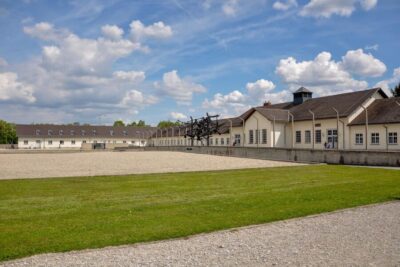
Early-Start Dachau Memorial Half-Day Tour from Munich
Read our review →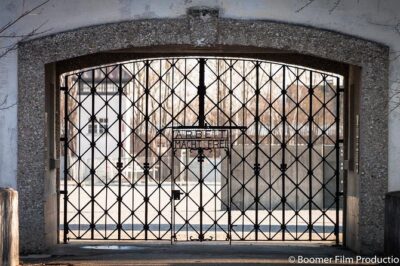
Full-Day Dachau Concentration Camp Memorial Site Tour from Munich
Read our review →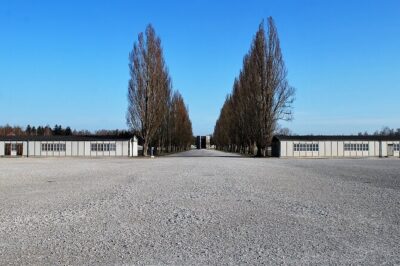
Dachau Small-Group Half-Day Tour from Munich By Train
Read our review →
Munich World War II Sites Including Dachau Concentration Camp
Read our review →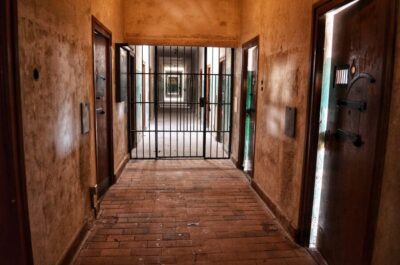
Browse the lists this tour appears in