
Reviewed · MUNICH THIRD REICH TOURS
Munich: National Socialism Historical Tour in GERMAN
Munich’s Nazi past is not tucked away in a distant museum: this two-hour walk connects the places where the movement gained ground and where its leaders left a lasting mark on the city. I like the route’s focus on specific streets and buildings, and the guide’s use of historical photographs to show how Munich looked in the 1920s and 1930s.
One consideration: the tour is in German, so it may not suit you if you need explanations in another language. It also covers ground on foot, and the activity information both calls it wheelchair accessible and says it is not suitable for people with mobility impairments. Check that point before booking if access is a concern.
Key points to know
- Königsplatz starts the story: Meet in front of the main entrance to the Staatliche Antikensammlungen.
- The route links landmarks to events: Walk past the former Führerbau, along Briennerstrasse and by the former Gestapo headquarters before reaching Feldherrnhalle.
- November 9, 1923 is a central topic: The guide discusses the Beer Hall Putsch and the rise of the NSDAP.
- Old photographs add visual context: The guide brings black-and-white images of Munich in the 1920s and 1930s.
- You can book privately or in a group: The tour lasts two hours and costs $34 per person.
- Bring comfortable shoes: The tour goes ahead rain or shine.
Following Munich’s story from Königsplatz
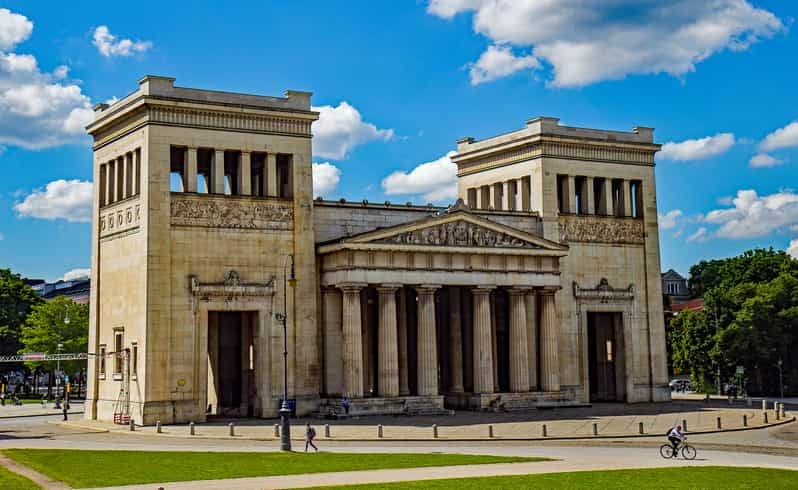
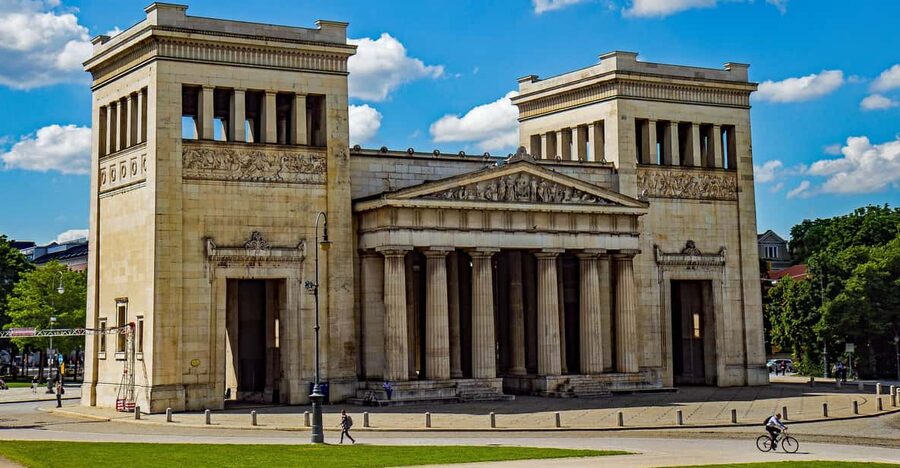
Munich is often called the City of the Movement because of its role in the rise of National Socialism. This tour gives that phrase a physical setting. Instead of treating the subject as a sequence of dates alone, your guide takes you through central locations tied to the period and explains what happened there.
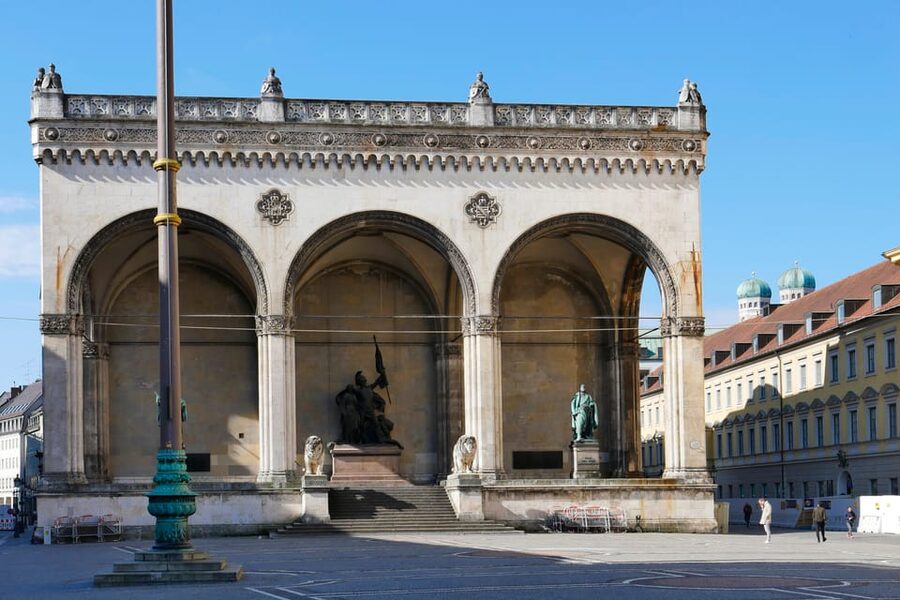
The walk begins at Königsplatz, in front of the main entrance to the Staatliche Antikensammlungen. From there, the route heads toward the former Führerbau, continues along Briennerstrasse, passes the former Gestapo headquarters and ends at Feldherrnhalle on Odeonsplatz. The sequence matters: each stop helps place the history in the streets and buildings where it unfolded.
Expect a guided walk, not a museum visit. Entrance fees are not included, and the description does not include entry to the Munich Documentation Centre for the History of National Socialism. The centre is part of the route’s historical setting, but the tour’s main value is the guide’s interpretation of the places you pass.
More Third Reich and WWII tours in Munich:
- Munich: Third Reich & WWII Walking Tour
★ 4.6 · 6,181 reviews - Third Reich Walking Tour Munich
★ 4.5 · 4,291 reviews - Munich: Birthplace of the Third Reich Guided Walking Tour
★ 4.6 · 771 reviews
The former Führerbau and the Munich Agreement
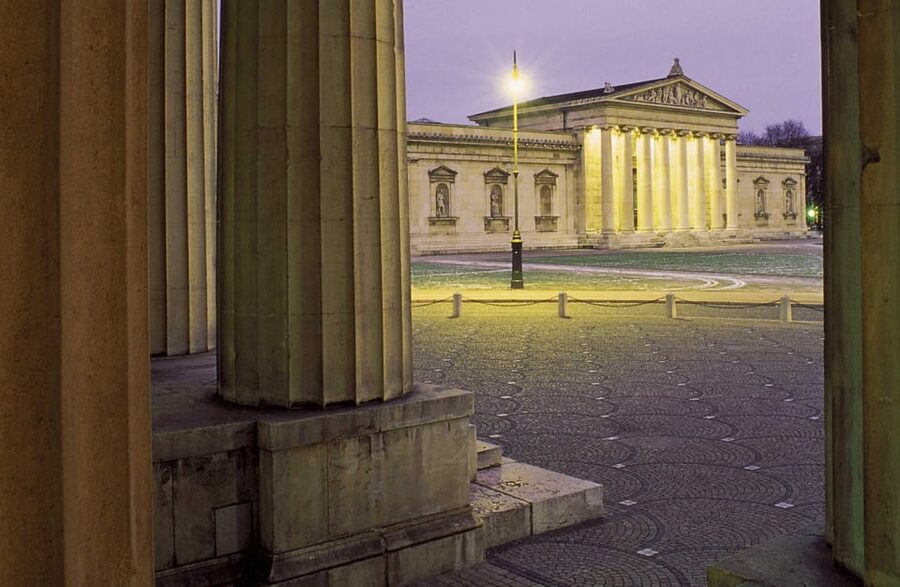
One of the route’s key stops is the former Führerbau, the building where the Munich Agreement was signed in 1938. Its place in the walk gives the guide a concrete starting point for discussing Germany under National Socialism and the events that shaped this period.
The building is now associated with the Munich Documentation Centre for the History of National Socialism. That makes the stop useful even if you are not visiting the centre itself: you can connect the building’s present-day setting with the event the guide explains. The tour does not include admission, so plan a separate visit if you want time inside the centre.
The guide also brings historic black-and-white photographs. These are a practical aid, not just decoration. A photograph can help you compare a past view with the street or building in front of you, making changes over time easier to grasp. You will not be relying on dates and names alone.
Briennerstrasse and the former Gestapo headquarters
The walk continues along Briennerstrasse, then passes the former Gestapo headquarters. These stops help expand the story beyond a single building or political event. Your guide discusses the rise of the NSDAP and Germany during National Socialism while moving through places associated with that history.
The route is a useful way to see how a city’s past can be traced through its public spaces. A street name or façade may look ordinary at first glance; the guide’s account gives it historical meaning. The photographs add another layer, offering a view of Munich in the 1920s and 1930s alongside the present-day route.
There is a trade-off to keep in mind. This is a two-hour walking tour, so you will hear about several sites rather than spend a long time inside any one of them. If you want extended museum time or a close study of one subject, you may want to pair the walk with further reading or a separate visit to the documentation centre.
Feldherrnhalle and November 9, 1923
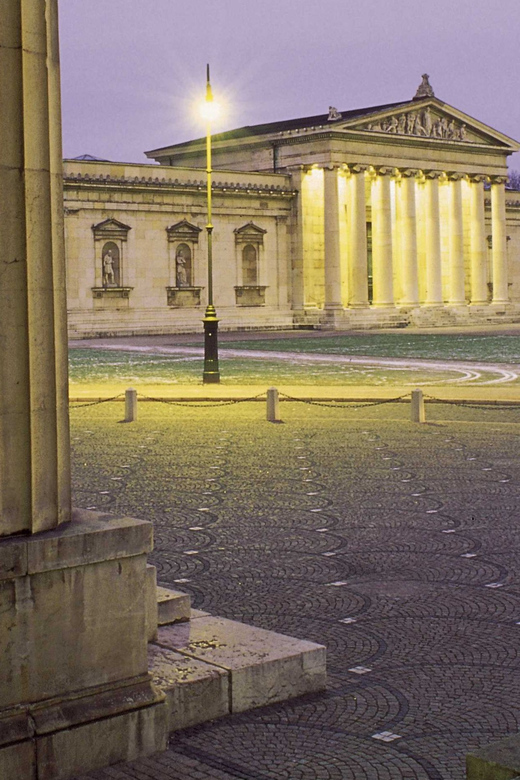
The final stop is Feldherrnhalle at Odeonsplatz, linked to the Beer Hall Putsch of November 9, 1923. The event is one of the tour’s central subjects, alongside the process by which the NSDAP rose to power. Hearing about it at the location gives the guide a natural way to connect the events with the city around you.
This stop also brings the route’s themes together. The tour begins with Munich as a place where National Socialism took root, then follows a chain of buildings and streets that help explain the movement’s local presence and Germany’s later experience under it. You get a concise, place-based introduction rather than a broad survey of every aspect of the period.
The tour description refers to the Beer Hall Putsch as taking place on November 9, 1933 in its route details, but identifies November 9, 1923 in its highlights. The correct date for the Beer Hall Putsch is November 9, 1923. If you hear a different date during the tour, it is worth asking your guide to clarify.
More history tours in Munich:
- Munich: Old Town & Viktualienmarkt City Walk in German
★ 4.7 · 2,304 reviews - Munich Old Town Walking Tour
★ 4.5 · 1,287 reviews - Munich: Spooky Tour of Old Town in German
★ 4.6 · 1,112 reviews - Munich: Walking Tour Old Town and Viktualienmarkt
★ 4.7 · 839 reviews
What the photographs and guide add
The historic photographs are one of the tour’s most useful features. The guide brings images of Munich in the 1920s and 1930s and uses them to illustrate events and topics along the route. That gives you a visual reference while standing in the city, rather than asking you to imagine every change from a spoken explanation.
The guide is the only included service, so the quality of the experience depends on how clearly the history is explained and how well the stops are connected. The tour is listed with a live guide in German; no guide names are provided. If you are comfortable listening to a historical discussion in German, the format offers a focused introduction without requiring you to plan a route or research every site in advance.
If you are still learning German, consider how much detail you can follow in a two-hour spoken tour. The topic involves historical events and political context, so basic conversational German may not be enough for everyone. The activity does not list another language option.
Is $34 a fair price for two hours?
At $34 per person, the price buys a two-hour guided walk, the guide’s historical explanations and the use of photographs along the route. You are paying for interpretation and a planned connection between sites, not transport, food, drinks or museum admission.
That can be good value if you want a clear introduction to Munich’s National Socialist past and prefer to learn while walking through the relevant locations. A private option is available as well as a group tour, but the price information is listed per person and does not explain how private-tour pricing works. Check the booking details for the total cost before choosing that format.
The tour may be less worthwhile if you already know the history well, need a guide in a language other than German, or want entry to museums included. It is also not a substitute for a longer visit to the documentation centre. Think of it as a guided orientation to key places, with time to explore further on your own afterward.
Meeting point, pace and what to bring
Meet in front of the main entrance of the Staatliche Antikensammlungen at Königsplatz. Look for a guide carrying a big blue bag with the white words Weis(s)er Stadtvogel. That distinctive marker should make the meeting point easier to identify.
Wear comfortable shoes. The route takes you through several central locations, and the tour runs in rain or shine, so dress for the forecast. No food or drinks, hotel pickup or drop-off, or entrance fees are included.
The activity is described as wheelchair accessible, but it is also marked as not suitable for people with mobility impairments. Those statements do not make the practical access conditions clear. If you have mobility needs, verify the route and suitability with the provider before reserving.
Who should book this Munich history walk?
I would choose this tour if you want a short, structured introduction to Munich’s role in the rise of National Socialism and can follow a German-language guide. Its strongest feature is the route itself: Königsplatz, the former Führerbau, Briennerstrasse, the former Gestapo headquarters and Feldherrnhalle turn a difficult history into a series of places you can see and discuss.
It is also a sensible choice if you have only two hours and want a guide to link the sites rather than piece together the story alone. The historic photos are a welcome extra, and the option of a private or group tour gives you a choice of format.
Look elsewhere if you need another tour language, want museum entry included, or need a clearly confirmed accessible route. For everyone else, this is a focused walking introduction, best followed by more time at the Munich Documentation Centre if you want to continue studying the subject.
FAQ
How long is the tour?
The tour lasts two hours.
What language is the tour in?
The live guide speaks German. No other language is listed.
Where does the tour meet?
Meet in front of the main entrance of the Staatliche Antikensammlungen at Königsplatz. The guide carries a big blue bag with Weis(s)er Stadtvogel written on it in white.
Which locations does the route include?
The route begins at Königsplatz, goes to the former Führerbau, follows Briennerstrasse, passes the former Gestapo headquarters and reaches Feldherrnhalle at Odeonsplatz.
Does the tour include entry to the Munich Documentation Centre?
No entrance fees are included. The former Führerbau is now the site of the Munich Documentation Centre for the History of National Socialism, but entry is not part of the tour.
What is the tour price?
The listed price is $34 per person.
Is the tour available as a private tour?
Yes. You can choose between a private tour and a group tour.
What should I bring, and does the tour run in bad weather?
Bring comfortable shoes. The tour takes place rain or shine.
Just added in Munich
- Private day trip from Munich to Eagle’s Nest, Salzburg and back★ 4.5 · 15 reviews
- Private Castle Tour from Munich: Neuschwanstein, Hohenschwangau, and Linderhof★ 4.5 · 12 reviews
- Private Eagle’s Nest Tour from Munich ending in Salzburg★ 5.0 · 8 reviews
- Private Day Trip from Munich to Eagle’s Nest and Hallstatt★ 4.5 · 9 reviews
- Private day trip from Munich to Salzburg and Hallstatt★ 4.5 · 17 reviews
- Private Day Trip from Munich to Neuschwanstein and Linderhof★ 4.0 · 11 reviews
- Private Day Trip Munich to Harburg, Dinkelsbuhl & Rothenburg★ 4.5 · 24 reviews
- Private day trip from Munich to Eagle’s Nest and Salzburg★ 4.5 · 9 reviews
Munich Third Reich Tours, compared.

Munich World War II Sites Including Dachau Concentration Camp
Read our review →
Munich City Walking Tour, includes Third Reich & Viktualienmarkt
Read our review →
Munich 3-Hour Segway Tour: Nazi Munich & Royal Architecture
Read our review →
Dachau Concentration Camp Memorial Site And Third Reich Day Tour From Munich
Read our review →
Eagle’s Nest-Berchtesgaden-Obersalzberg Private Half Day WWII Historical Tour
Read our review →Browse the lists this tour appears in