
Reviewed · MUNICH THIRD REICH TOURS
National Socialism WWII with licensed guide – private tour
Munich was where Hitler’s political career took root and the Nazi movement grew. This private walk connects that history to real places: the Feldherrnhalle, where the 1923 coup attempt ended, and Königsplatz, the party’s Munich center.
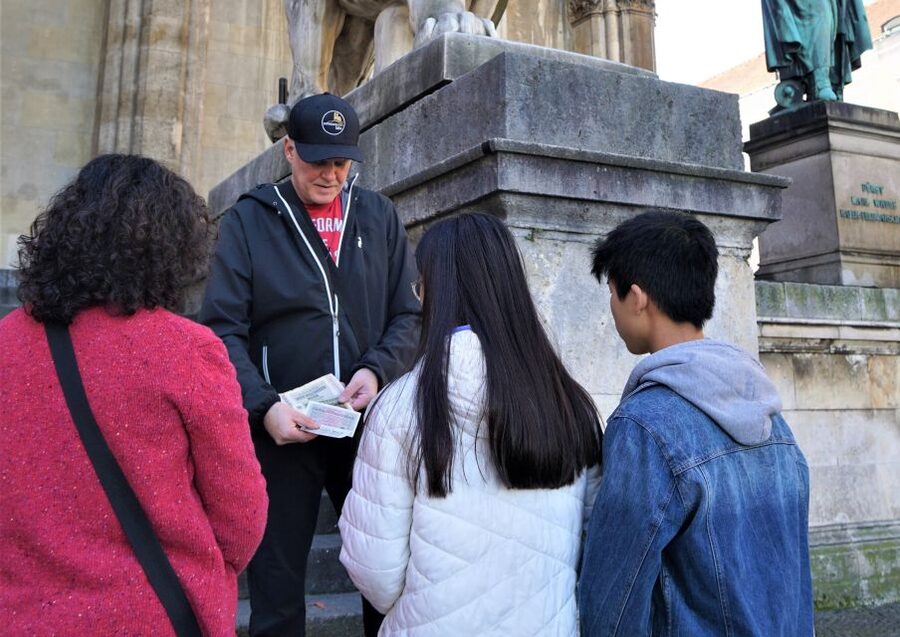
I like two things in particular: the tour includes resistance as well as Nazi power, with time devoted to the White Rose and other opponents, and the guide uses extensive photographs to help explain what the sites looked like and how they were used. The route also ends beside the NS Documentation Centre, so you can continue learning there.
The main consideration is time. Two hours covers a lot of ground and many difficult subjects, so this is a focused introduction, not a substitute for a museum visit. Entry to the documentation centre is not included in the $259 group price.
At a glance
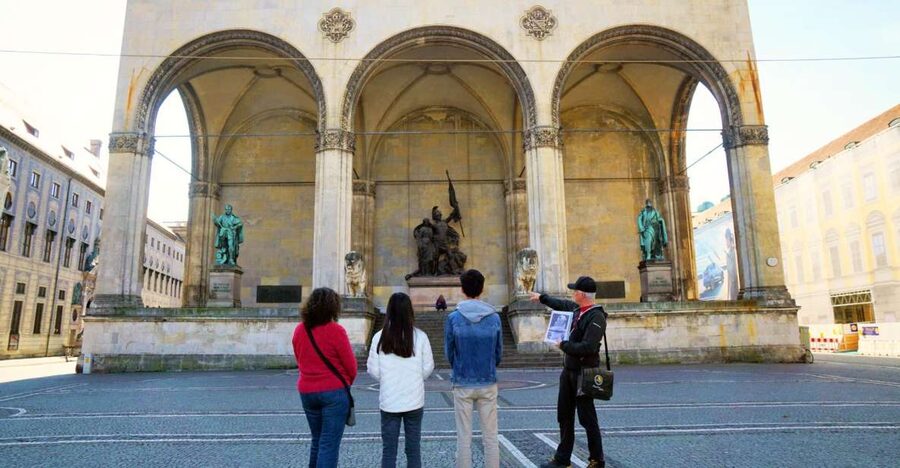
- Start at the Feldherrnhalle: Begin at Odeonsplatz, a central place to understand the failed Hitler coup and its aftermath.
- Look beyond the Nazi leaders: Hear about resistance in Munich, including the White Rose group at LMU.
- See how art became political: At Haus der Kunst and nearby Galeriestraße, consider Nazi control of cultural life and the Degenerate Art exhibition.
- Finish at Königsplatz: Learn about the Brown House, the Führerbau and other party buildings.
- Book a private group: The two-hour walk costs $259 for up to 30 people and is offered in English or German.
Munich’s Nazi past, read on the streets
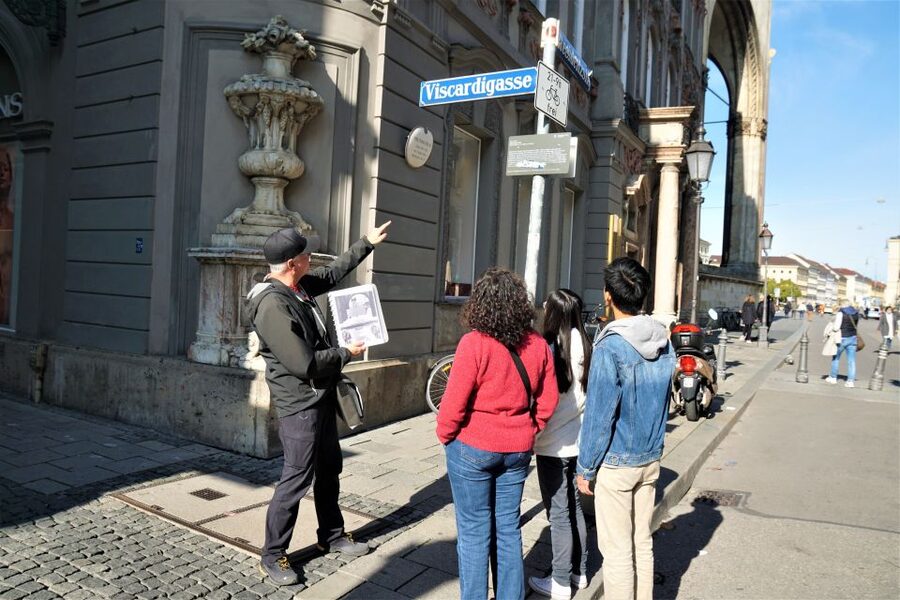
This tour makes sense of a chapter of history by linking events to the places where they unfolded. In Munich, political speeches, attempted coups, Nazi party offices, artistic propaganda and acts of resistance are tied to streets and buildings you can still locate today. The point is not simply to pass a list of landmarks. It is to understand how the Nazi movement took shape and how it left its mark on the city.
The guide is Wolfgang Brehm, a certified professional with more than 10 years of experience. His use of extensive photo material matters on a walk like this: the buildings you see now do not always show what stood there or how a site functioned at the time. Photographs can help bridge that gap while the guide explains the political context.
Expect a serious subject and a direct approach. The tour is explicitly not intended for right-wing radicals or Nazi fans. It is designed for people seeking historical understanding, including those interested in the origins of National Socialism, the city’s role in the movement, and the people who opposed it.
More Third Reich and WWII tours in Munich:
- Munich: Third Reich & WWII Walking Tour
★ 4.6 · 6,181 reviews - Third Reich Walking Tour Munich
★ 4.5 · 4,291 reviews - Munich: Birthplace of the Third Reich Guided Walking Tour
★ 4.6 · 771 reviews
Odeonsplatz and the Feldherrnhalle
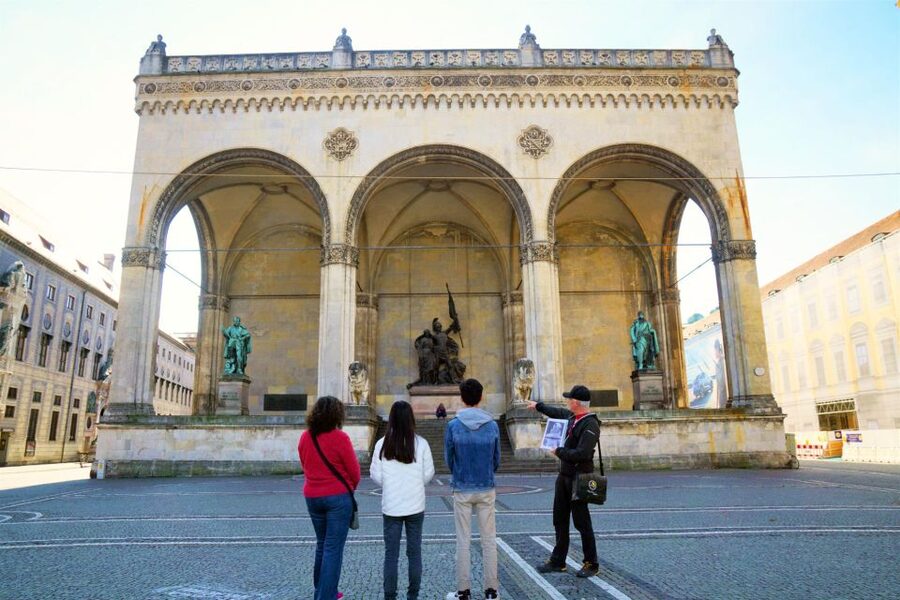
The meeting point is the steps at the Feldherrnhalle on Odeonsplatz. The tour starts here with the story of Hitler’s arrival in Munich, where he lived, how he earned a living, and how the NSDAP began. That background helps explain why this city became central to his political rise.
The Feldherrnhalle is especially important because the failed 1923 Hitler coup ended here. The guide explains the event and points out where a monument to the putschists once stood. This is a useful place to see how political memory can be shaped: the tour puts the monument’s purpose and the coup’s consequences into context rather than treating the site as just another landmark.
The schedule allocates two short guided stops at the Feldherrnhalle, for a total of about 15 minutes. That is enough for an introduction, but not a long seminar. If you already know the history of the putsch, you may want to ask the guide how the site changed over time or how the event shaped the Nazi movement.
From the Residenz to the White Rose
The route also includes the Munich Residenz and the court garden, or Hofgarten. The Residenz stop is scheduled for about 10 minutes. Here, the tour moves through central Munich’s historical setting before turning attention to resistance against the regime. The provided route does not describe a separate interior visit, so treat this as a guided stop rather than a palace tour.
At the University of Munich, known as LMU, the focus shifts to the White Rose. This student resistance group distributed leaflets opposing the Nazi regime. Its members were arrested and executed, including by beheading. The tour’s attention to their actions gives you an essential counterpoint to the buildings and political symbols associated with Nazi power.
I like that this subject is built into the walk rather than left as a footnote. It helps keep the story from becoming only a tour of leaders and institutions. If you are visiting with a student, the White Rose material may be especially useful: one young visitor studying GCSE history found the tour helpful, and the clear route from site to site should make the subject easier to follow.
The Square for the Victims of National Socialism
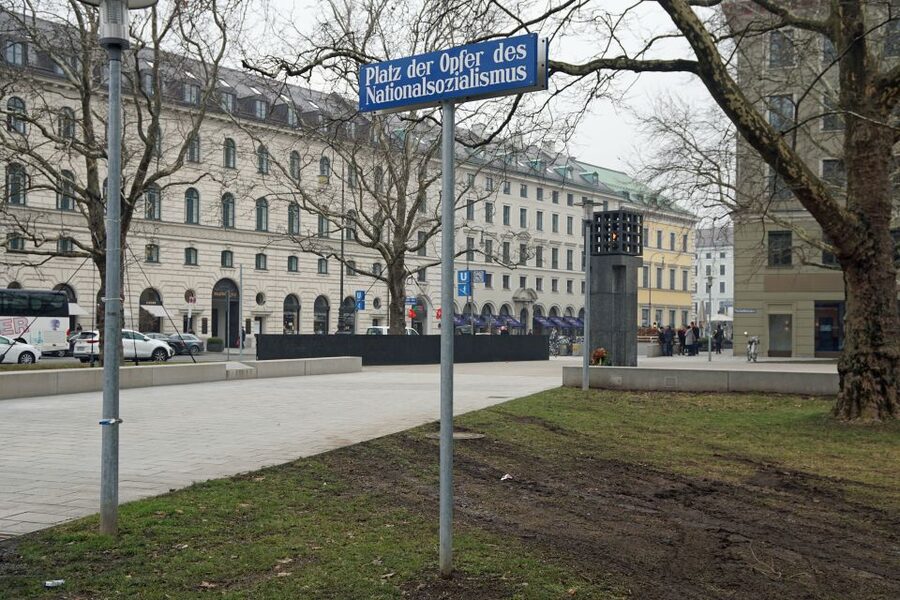
The Square for the Victims of National Socialism gives the tour a moment to consider who was persecuted and killed under the regime. The guide addresses who the victims were, making this more than a brief pause at a memorial.
The stop is scheduled for about 10 minutes. That is a concise introduction to a vast subject, so you may want to note questions to take with you to the NS Documentation Centre afterward. The tour’s strength here is its placement: after seeing sites of power and resistance, you are asked to consider the human cost.
More private tours in Munich:
- Munich Private Tour with a Local – Highlights & Hidden Gems
★ 5.0 · 469 reviews - Mike’s Neuschwanstein & Linderhof Private Tour from Munich
★ 5.0 · 197 reviews - Dachau Concentration Camp Private Tour by Train from Munich
★ 5.0 · 185 reviews - Neuschwanstein & Linderhof Castle Luxury Private Tour from Munich
★ 5.0 · 171 reviews
Haus der Kunst and the Degenerate Art exhibition
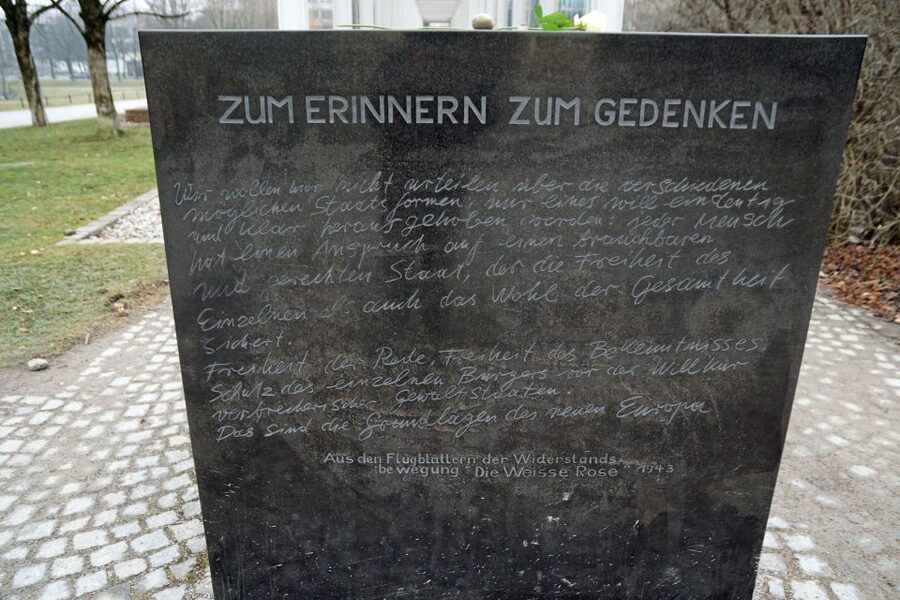
At Haus der Kunst, the guide explains how the Nazis influenced art. The tour then points out where the exhibition known as Degenerate Art was held in Galeriestraße. Together, these locations show that Nazi control was not limited to political offices or public ceremonies. It extended into cultural life and the way art was judged and displayed.
The Haus der Kunst stop is scheduled for about 15 minutes. The extra time is useful because the subject requires more than a quick label. Still, the tour is an outdoor walk, not a gallery visit, and the supplied details do not include admission to Haus der Kunst. Come expecting a historical explanation at the site, not an art museum session.
Karolinenplatz and the party center at Königsplatz
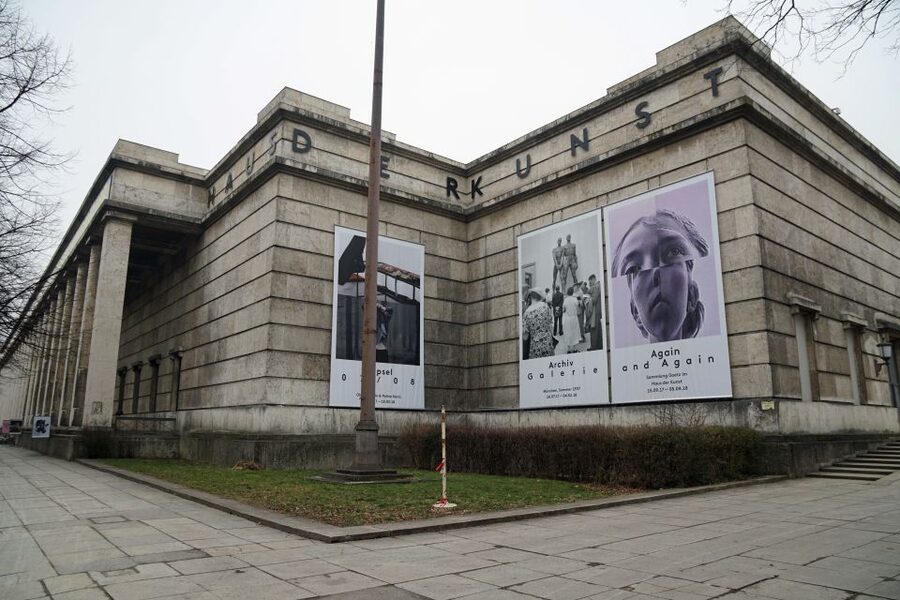
At Karolinenplatz, the guide discusses the main sponsors of the Nazi movement. This stop adds a practical question to the story: political movements need money and support, not just leaders and followers. It helps connect the movement’s growth to the people and resources behind it.
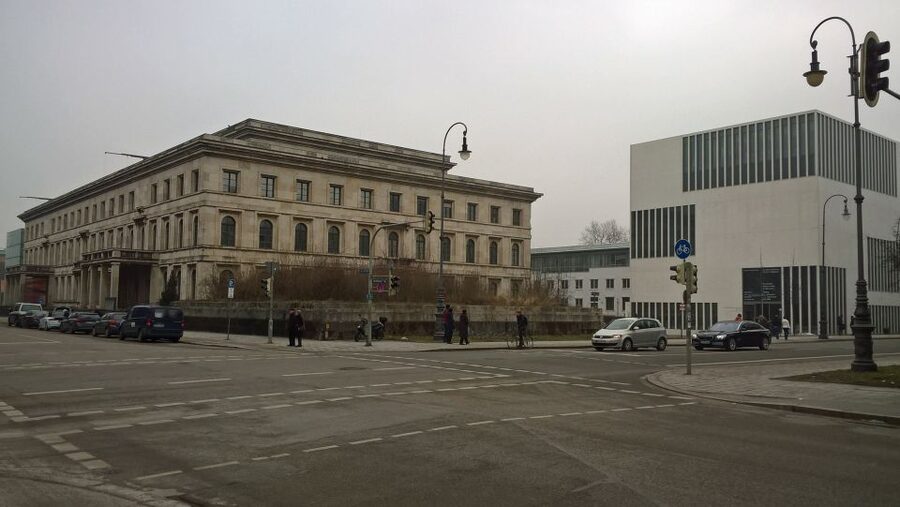
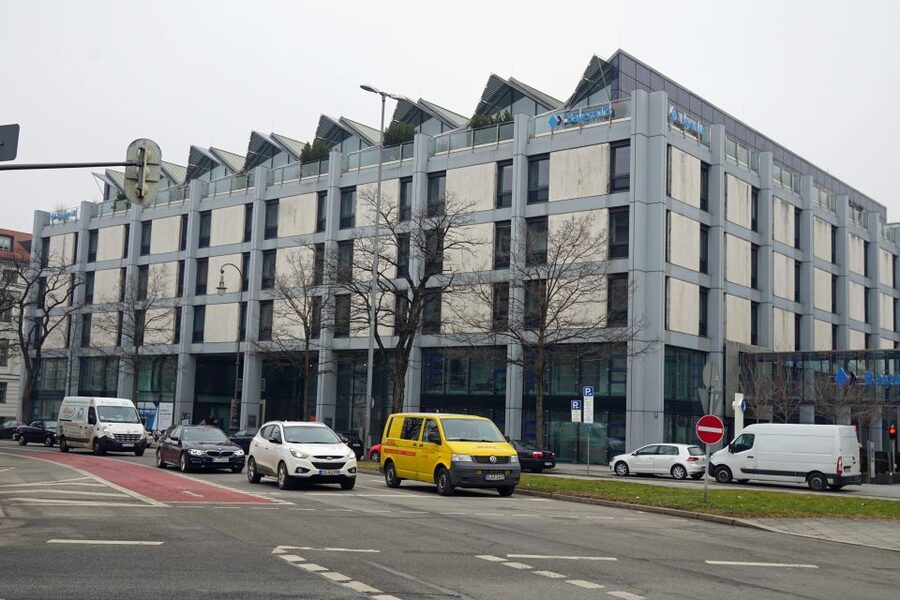
The walk ends at Königsplatz, the Nazi party center in Munich. Here you learn about the Brown House, the Führerbau, Hitler’s office, and the NSDAP administration. These sites make the city’s role as a headquarters tangible, while the guide can use photographs to show how the area functioned during the Nazi period.
The final stop is the NS Documentation Centre, which opened in 2015. The guided tour includes about 15 minutes here, but admission is not part of the $259 price. You can visit the centre after the walk for a fuller account of National Socialism’s history in Munich. That is a sensible way to extend the visit: the walk gives you the street-level framework, and the centre lets you spend more time with the subject.
What two hours can and cannot do
The tour lasts two hours and links several sites across central Munich. The scheduled stops range from about 10 to 15 minutes, which means the guide has to keep the story moving. You will get a structured overview rather than a long discussion at every location.
That compact format is useful if you have limited time or want a clear introduction before exploring on your own. It is less suitable if you want hours of discussion at the White Rose memorial or inside a museum. The tour’s use of photographs helps give the short stops more substance, but it cannot replace extended reading or the documentation centre.
The tour is a walking activity. It is listed as wheelchair accessible, and it is offered in English and German. Since the tour covers multiple sites in two hours, check the available start times and consider whether that pace suits your group.
Does the private price make sense?
The price is $259 for a private group of up to 30 people, not $259 per person. That makes the cost easier to justify if you are sharing it: for four people, it works out to about $64.75 each; for 10, about $25.90 each. At the maximum group size, the per-person cost falls further, though a group that large may find it harder to ask individual questions.
You are paying for a private guide rather than a ticketed attraction. The value is in having the sites connected by one coherent account, with time for your group’s questions and photographs that help explain what the locations once looked like. The guide is certified and has more than a decade of experience, while the provider is Wolfgang Brehm.
Remember to budget separately if you plan to enter the NS Documentation Centre. The tour includes a guided stop there, but not admission. If your main goal is a museum visit, the walk is best treated as an introduction rather than the whole day’s history lesson.
Who should book this Munich history walk?
I would choose this tour if you want to understand why Munich is often described as the cradle of National Socialism, and you prefer learning through places rather than a lecture alone. It also suits a group with mixed levels of background knowledge: the route gives newcomers a clear sequence, while the guide’s photos and local stops can add detail for people who already know the broad history.
It is a strong fit for families with older students, especially those studying modern European history. The material is serious, and the account of the White Rose includes execution, so consider your child’s age and readiness. The tour is also a good option for visitors who want to include resistance and victims in their understanding of the period, not only the rise of the Nazi party.
You may want a different format if you need a slow-paced visit, long discussions at each memorial, or museum admission bundled into the price. The walk covers a lot in two hours. Book it for the guided context and then allow extra time at the NS Documentation Centre if you want to continue.
Practical details
The private tour costs $259 for a group of up to 30 and lasts two hours. It is available in English or German, starts at the steps of the Feldherrnhalle on Odeonsplatz, and finishes at Königsplatz 1. The NS Documentation Centre’s admission fee is extra.
You can cancel up to 24 hours in advance for a full refund, and a reserve-now, pay-later option is available. Those terms are useful if plans are still taking shape, but the key decision is whether you want a compact, guided walk or a longer museum-focused visit.
FAQ
Where does the tour start?
It starts at the steps at the Feldherrnhalle on Odeonsplatz, at Residenzstraße 1.
Where does the tour finish?
The tour finishes at Königsplatz 1, 80333 Munich.
How long is the tour?
The walking tour lasts two hours.
What languages are available?
The live guide is available in English or German.
Is the tour private?
Yes. It is a private group tour for up to 30 people.
Is admission to the NS Documentation Centre included?
No. The tour includes a guided stop, but admission to the centre is not included.
Is the tour wheelchair accessible?
Yes, the activity is listed as wheelchair accessible.
What is the cancellation policy?
You can cancel up to 24 hours in advance for a full refund.
Just added in Munich
- Private day trip from Munich to Eagle’s Nest, Salzburg and back★ 4.5 · 15 reviews
- Private Castle Tour from Munich: Neuschwanstein, Hohenschwangau, and Linderhof★ 4.5 · 12 reviews
- Private Eagle’s Nest Tour from Munich ending in Salzburg★ 5.0 · 8 reviews
- Private Day Trip from Munich to Eagle’s Nest and Hallstatt★ 4.5 · 9 reviews
- Private day trip from Munich to Salzburg and Hallstatt★ 4.5 · 17 reviews
- Private Day Trip from Munich to Neuschwanstein and Linderhof★ 4.0 · 11 reviews
- Private Day Trip Munich to Harburg, Dinkelsbuhl & Rothenburg★ 4.5 · 24 reviews
- Private day trip from Munich to Eagle’s Nest and Salzburg★ 4.5 · 9 reviews
Munich Third Reich Tours, compared.

Munich World War II Sites Including Dachau Concentration Camp
Read our review →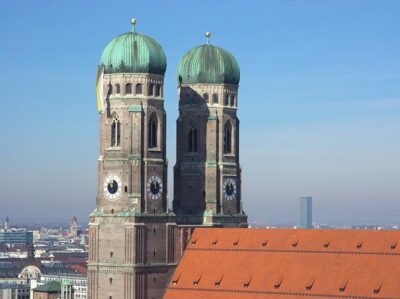
Munich City Walking Tour, includes Third Reich & Viktualienmarkt
Read our review →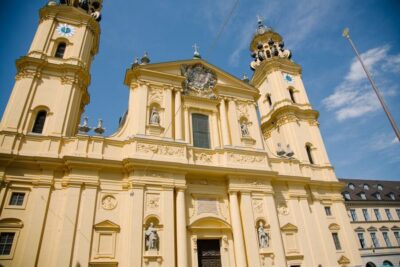
Munich 3-Hour Segway Tour: Nazi Munich & Royal Architecture
Read our review →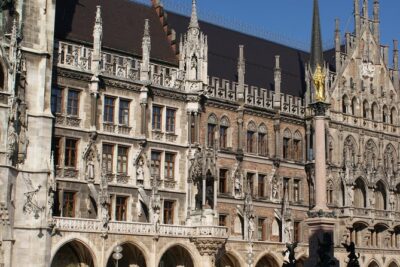
Dachau Concentration Camp Memorial Site And Third Reich Day Tour From Munich
Read our review →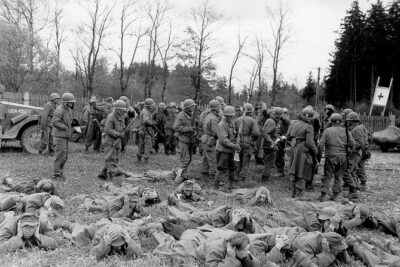
Eagle’s Nest-Berchtesgaden-Obersalzberg Private Half Day WWII Historical Tour
Read our review →Browse the lists this tour appears in