
Reviewed · MUNICH THIRD REICH TOURS
Munich: Third Reich Guided City Walking Tour
Munich’s Nazi-era history is written into places you can still walk past today. This 2.5-hour tour links the early Nazi movement, the Beer Hall Putsch, Nazi cultural policy, and German resistance, giving you a clear route through a difficult chapter of the city’s past.
I like two things about the experience: the route connects major events to actual Munich landmarks, and it gives space to stories of resistance, including Georg Elser and the White Rose. The reported strengths of the guide’s friendly manner, substantial historical detail, and measured pace also suit a subject that needs care, not a hurried checklist.
The main consideration is language: this tour is only for Spanish speakers, and children under 13 cannot join. It also needs at least four participants to run, so keep the minimum group requirement in mind when planning.
Key points before you book
- Start at Marienplatz: Meet your guide in front of the Tourist Information Office, a central and easy-to-identify meeting place.
- Follow Munich’s Nazi-era story on foot: The route includes the Hofbräuhaus, Haus der Kunst, Führerbau, and Königsplatz.
- Expect a focused history lesson: Topics include the Nazi party’s early days, the Beer Hall Putsch, Nazi art policy, and German resistance.
- The tour is in Spanish only: It is not open to people who do not speak Spanish.
- Plan for 2.5 hours of walking: Comfortable shoes are the one item specifically recommended.
- The price is $23 per person: The guide and walking tour are included; food and drinks are not.
A walking route through Munich’s political past
This is a city walk with a serious purpose. Rather than treating the Third Reich as a detached history lesson, the route puts its political beginnings and later landmarks into the streets and squares of Munich.
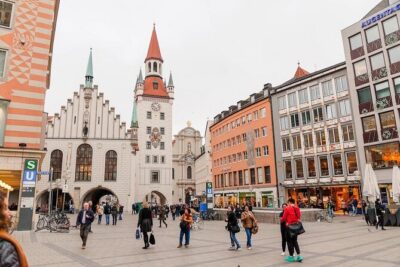
You begin at Marienplatz, meeting in front of the Tourist Information Office. From there, your guide leads you through the city’s key sites, explaining how Munich became central to the Nazi movement and how events unfolded in the places you are passing.
The format works well for visitors who want an introduction with a clear thread. In two and a half hours, you move from the movement’s origins to its use of art and architecture, then to the people who resisted it. The subject is broad, so expect a guided overview rather than an exhaustive account of every event.
More Third Reich and WWII tours in Munich:
- Munich: Third Reich & WWII Walking Tour
★ 4.6 · 6,181 reviews - Third Reich Walking Tour Munich
★ 4.5 · 4,291 reviews - Munich: Birthplace of the Third Reich Guided Walking Tour
★ 4.6 · 771 reviews
Marienplatz sets the scene
Starting at Marienplatz gives you a straightforward place to meet and a central point from which to begin the walk. It also gives the guide a chance to orient you before the tour shifts toward the locations tied more directly to Nazi political activity.
The meeting point is specific: in front of the Tourist Information Office. Arrive with enough time to find it and get settled before the tour starts. The exact start times vary, so check availability for the date you want.
The tour is conducted in Spanish, not offered as a multilingual walk. That matters here: the details and context are the heart of the experience, so you will get much more from it if you can comfortably follow a Spanish-language explanation.
Hofbräuhaus and the Beer Hall Putsch
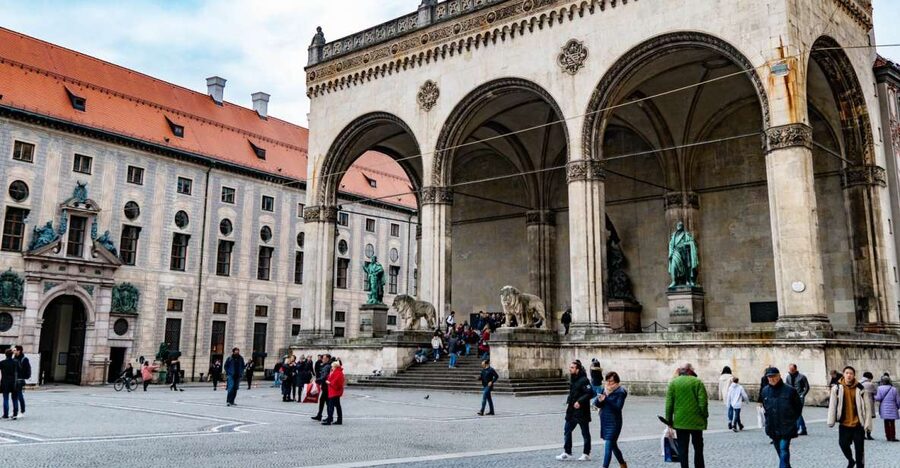
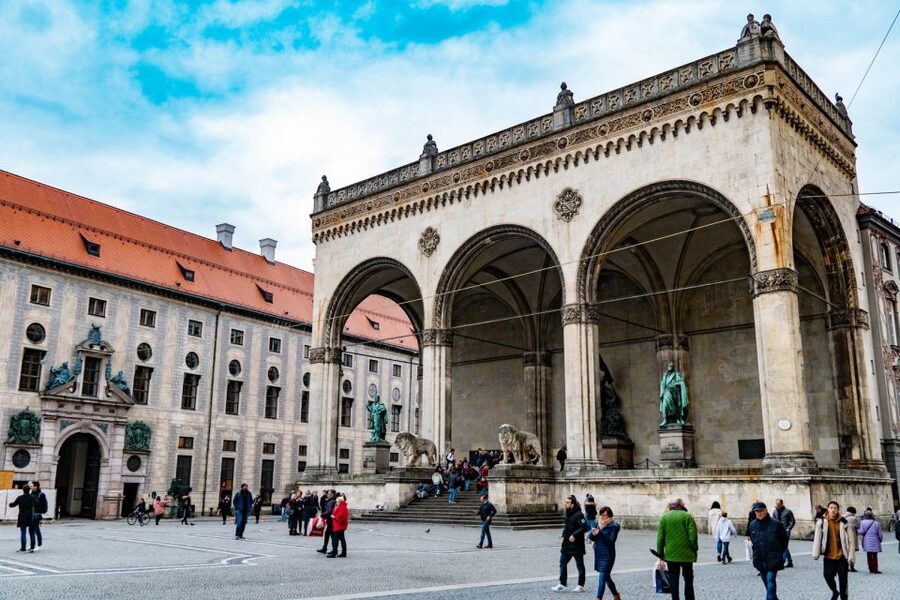
From Marienplatz, the route heads toward Odeonsplatz and the Hofbräuhaus. Here, the guide covers the origins of the National Socialist German Workers’ Party and the Beer Hall Putsch, one of the tour’s central subjects.
The value of this stop is the connection between political history and a recognizable Munich landmark. You are not simply hearing that the Nazi movement began in the city; you are tracing its beginnings through places associated with its early activity. The guide’s account gives the walk its historical backbone.
The Beer Hall Putsch is a complex episode, and the tour promises to explain its history rather than leave you with a name and a date. If you have already read widely on the subject, you may want to treat this section as a structured refresher. If you are new to it, the city setting should help you keep the events and locations connected.
Haus der Kunst and Nazi art policy
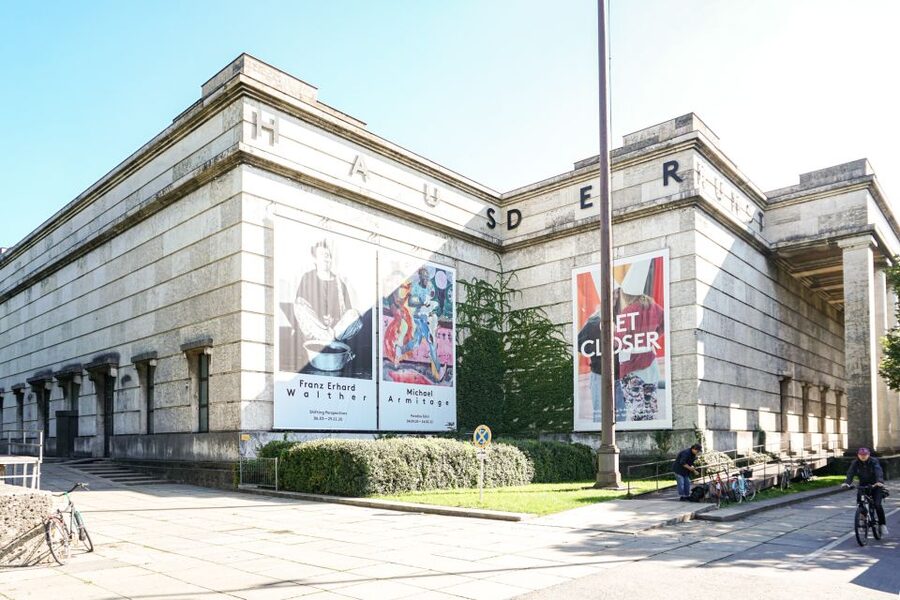
Next, the tour stops outside Haus der Kunst, identified in the tour as the first propaganda building in Nazi Germany. The guide discusses the regime’s influence on art and the banning of what it called degenerate art.
This section is a useful change of focus. The earlier stops center on political organization and attempted power; here, the story turns to how the regime sought to shape culture. It helps explain that control was not limited to political institutions. Art, too, was subject to the regime’s demands and exclusions.
You visit the front of the building, so think of this as an outdoor historical stop rather than an indoor museum visit. The tour does not include entry to Haus der Kunst. Its emphasis is the building’s role in the period and the stories the guide connects to it.
More walking tours in Munich:
- Munich: Old Town & Viktualienmarkt City Walk in German
★ 4.7 · 2,304 reviews - Munich: Night Watchman Walking Tour
★ 4.7 · 2,092 reviews - Munich Ghosts and Spirits Evening Walking Tour
★ 5.0 · 1,900 reviews - Munich Old Town Walking Tour
★ 4.5 · 1,287 reviews
The resistance stories add necessary balance
The tour also covers German resistance, including Georg Elser and the White Rose. That is an important part of the route’s design: it does not leave you with a story only about the Nazi movement and its leaders.
These accounts offer a different way to understand the period, through people who opposed the regime. The tour names key figures, giving you a starting point for learning more after the walk. Since the full experience lasts 2.5 hours and covers several major subjects, this section is an introduction, not a complete history of resistance in Germany.
I especially value that these stories are included alongside the sites of Nazi power. A city tour can easily focus on imposing buildings and political milestones. Here, the route also asks you to consider the people who challenged the regime, and what it means to remember them in the same city.
Führerbau and the Munich Agreement
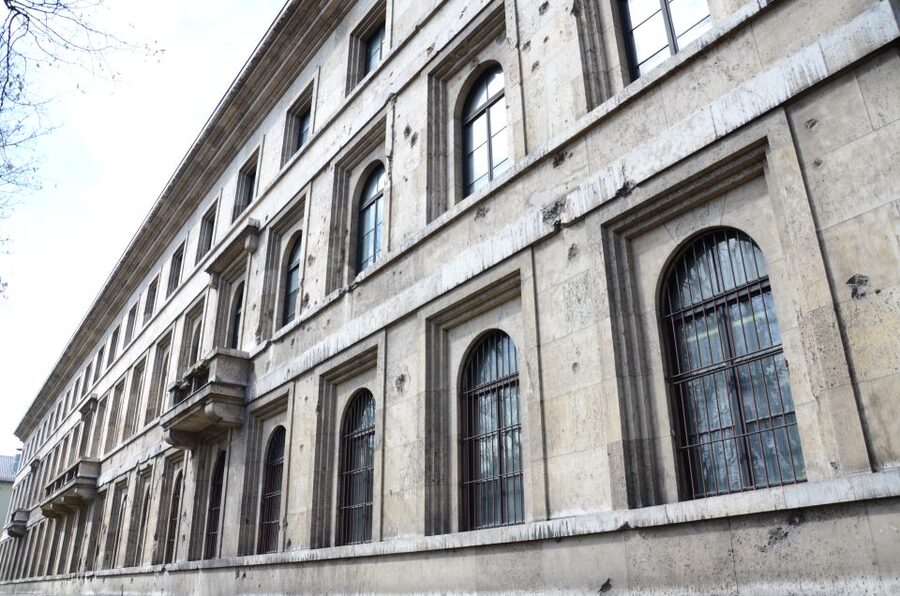
The walk continues to Führerbau, where the Munich Agreement was signed in 1938. This stop connects the city’s local history to a major diplomatic event and gives the tour another way to show how Munich’s buildings were used during the Nazi period.
The significance lies in the contrast between the ordinary act of walking through the city and the weight of what happened at the site. Your guide can supply the context that a building alone cannot: why it mattered, what was signed there, and how the place fits into the wider story.
The itinerary identifies Königsplatz as the conclusion of the tour. There is a small point to clarify before you go: the activity details also state that the tour ends back at the Marienplatz meeting point. If your plans depend on the exact endpoint, check with the provider when booking.
What $23 gets you
At $23 per person, the price covers a live guide and a 2.5-hour walking tour. Food and drinks are not included, and the experience does not list museum admission or transport as part of the package.
For a history-focused walk, the value is in the route and the explanation. You visit several sites linked to the Third Reich and cover distinct themes: the Nazi movement’s beginnings, the Beer Hall Putsch, art policy, resistance, and the Munich Agreement. If you want an organized introduction without spending half a day, the duration and price make this a practical option.
The guide’s role matters more than the number of stops. The available feedback particularly praises friendly guiding, plentiful historical information, and a well-paced route. Those are useful qualities for this subject: a fast march between landmarks would leave little room to understand them, while a good pace helps you follow a complicated story without turning the walk into a lecture marathon.
There are limits to the value, depending on what you want. This is an outdoor walking tour, not a museum visit, and it is delivered only in Spanish. If you want entry to exhibitions, a longer specialist seminar, or an English-language explanation, this is not the right fit.
Practical details for a comfortable walk
Allow 2.5 hours for the experience and wear comfortable shoes. The tour moves between city locations on foot, so shoes that are easy to walk in will make the time more pleasant.
The minimum group size is four participants. If that number is not reached, the local provider will contact you and offer an alternative. Children under 13 are not allowed, so this is not a family option for younger children.
The guide and walking tour are included; food and drinks are not. Plan any meal or refreshment separately rather than expecting a stop to be part of the tour.
You can reserve without paying immediately, and cancellation is free up to 24 hours in advance for a full refund. Those terms give you some flexibility, but still check the start time and confirm the endpoint if you need to be somewhere directly after the walk.
Who should book this Munich history tour?
This tour suits adults and older teens who speak Spanish and want a compact, guided introduction to Munich’s role in the Third Reich. It is especially useful if you prefer to understand a city through its locations rather than read about its history in a hotel room.
It is also a good choice if you want the story to include both the Nazi movement and those who opposed it. The route gives attention to political origins, the Beer Hall Putsch, cultural control, and resistance, all within one walk.
I would look elsewhere if you do not speak Spanish, are traveling with a child under 13, or want to visit the interiors of the listed buildings. For a reasonably priced, carefully paced outdoor overview, though, this is a strong way to begin learning about a difficult part of Munich’s past.
FAQ
How long is the tour?
The walking tour lasts 2.5 hours.
What language is the tour conducted in?
The guide speaks Spanish. The tour is not open to people who do not speak Spanish.
Where does the tour start?
Meet the guide in front of the Tourist Information Office at Marienplatz.
Which places are included on the route?
The route includes Marienplatz, Odeonsplatz, the Hofbräuhaus, Haus der Kunst, Führerbau, and Königsplatz.
Are children allowed to join?
Children under the age of 13 are not allowed to participate.
What is included in the price?
The price includes the guide and walking tour. Food and drinks are not included.
Just added in Munich
- Private day trip from Munich to Eagle’s Nest, Salzburg and back★ 4.5 · 15 reviews
- Private Castle Tour from Munich: Neuschwanstein, Hohenschwangau, and Linderhof★ 4.5 · 12 reviews
- Private Eagle’s Nest Tour from Munich ending in Salzburg★ 5.0 · 8 reviews
- Private Day Trip from Munich to Eagle’s Nest and Hallstatt★ 4.5 · 9 reviews
- Private day trip from Munich to Salzburg and Hallstatt★ 4.5 · 17 reviews
- Private Day Trip from Munich to Neuschwanstein and Linderhof★ 4.0 · 11 reviews
- Private Day Trip Munich to Harburg, Dinkelsbuhl & Rothenburg★ 4.5 · 24 reviews
- Private day trip from Munich to Eagle’s Nest and Salzburg★ 4.5 · 9 reviews
Munich Third Reich Tours, compared.

Munich World War II Sites Including Dachau Concentration Camp
Read our review →
Munich City Walking Tour, includes Third Reich & Viktualienmarkt
Read our review →
Munich 3-Hour Segway Tour: Nazi Munich & Royal Architecture
Read our review →
Dachau Concentration Camp Memorial Site And Third Reich Day Tour From Munich
Read our review →
Eagle’s Nest-Berchtesgaden-Obersalzberg Private Half Day WWII Historical Tour
Read our review →Browse the lists this tour appears in